

By Judith | BiteBrightly | Health & Nutrition
Introduction
You eat reasonably well. You're not overdoing it on sweets. You try to make healthy choices most of the time. And yet — you're still tired. Still bloated. Still waking up feeling like your body is working against you instead of with you.
What if the problem isn't how much you're eating, but what's quietly hiding in the food you think is healthy?
Hidden sugar is one of the most overlooked drivers of chronic inflammation — and it's in far more places than most people realise. From your morning granola to your afternoon salad dressing, sugar hides under dozens of names and slips into your body multiple times a day, triggering an inflammatory response every single time.
The result? A body that's constantly on high alert. A body that's inflamed, sluggish, and struggling — not because you're failing, but because you simply haven't been told the full truth about what's in your food.
In this post, we're going to change that. We're going to look at what inflammation actually is, how sugar feeds it, what it's doing to your body right now, and — most importantly — what you can do about it starting today.
What Is Inflammation, Really?
Inflammation gets talked about a lot, but it's often misunderstood. Let's clear that up first.
Inflammation is actually your body's natural defence mechanism. When you cut your finger or catch a cold, your immune system triggers an inflammatory response to fight off the threat and begin healing. In this context, inflammation is a good thing — it's your body protecting you.
The problem arises when that inflammatory response doesn't switch off. When inflammation becomes chronic — low-grade and persistent — it stops being protective and starts being destructive. It quietly damages tissues, disrupts hormones, impairs the gut, clouds the mind, and accelerates the development of serious health conditions including heart disease, type 2 diabetes, autoimmune disorders, and even certain cancers.
Chronic inflammation doesn't announce itself with a dramatic symptom. It whispers. It shows up as persistent fatigue that sleep doesn't fix. As joint stiffness in the morning. As skin that won't clear up. As a brain that feels foggy by early afternoon. As a digestive system that always feels slightly off.
Sound familiar? You're not imagining it. And sugar is one of the primary culprits.
How Sugar Drives Chronic Inflammation
When you eat sugar — whether it's white sugar in your tea, corn syrup in a flavoured yoghurt, or refined carbohydrates in white bread — your blood glucose spikes rapidly. Your pancreas responds by releasing insulin to bring those levels back down.
Do this repeatedly throughout the day, every day, and several harmful processes unfold:
Blood sugar rollercoaster: Repeated spikes and crashes stress the body and promote the release of pro-inflammatory cytokines — chemical messengers that keep your immune system in a state of alert.
Advanced glycation end products (AGEs): When sugar binds to proteins and fats in the body, it creates compounds called AGEs. These directly damage tissues and trigger inflammatory pathways throughout the body.
Gut microbiome disruption: Sugar feeds the harmful bacteria in your gut while starving the beneficial ones. An imbalanced gut microbiome is now understood to be one of the strongest drivers of systemic inflammation in the entire body.
Oxidative stress: Excess sugar generates free radicals — unstable molecules that cause cellular damage and fuel the inflammatory cycle.
The cruel irony is that the more inflamed your body becomes, the more it craves sugar. Inflammation disrupts the hormones that regulate hunger and satisfaction, making it genuinely harder to resist the foods that are making you feel worse.
The 50+ Names Sugar Hides Under
This is where it gets important. Most people avoid the obvious sugars — sweets, fizzy drinks, cakes. But sugar hides under more than 50 different names on food labels, and food manufacturers are experts at making sure you don't spot them.
Here are some of the most common disguises:
- Dextrose
- Maltose
- Fructose
- Corn syrup and high-fructose corn syrup
- Fruit concentrate and fruit juice
- Maltodextrin
- Sucrose
- Evaporated cane juice
- Rice syrup
- Agave nectar
You'll find these ingredients in foods marketed as "healthy" — protein bars, low-fat yoghurts, smoothie pouches, wholegrain cereals, shop-bought sauces, salad dressings, coleslaw, and flavoured rice cakes.
The rule is simple: read every label. If any form of sugar appears in the first three ingredients, put it back on the shelf.
The Foods That Fight Inflammation Instead
Here's the empowering part: while certain foods fuel inflammation, others actively fight it. And the anti-inflammatory diet is not a diet of restriction — it's a diet of abundance.
Eat the Rainbow
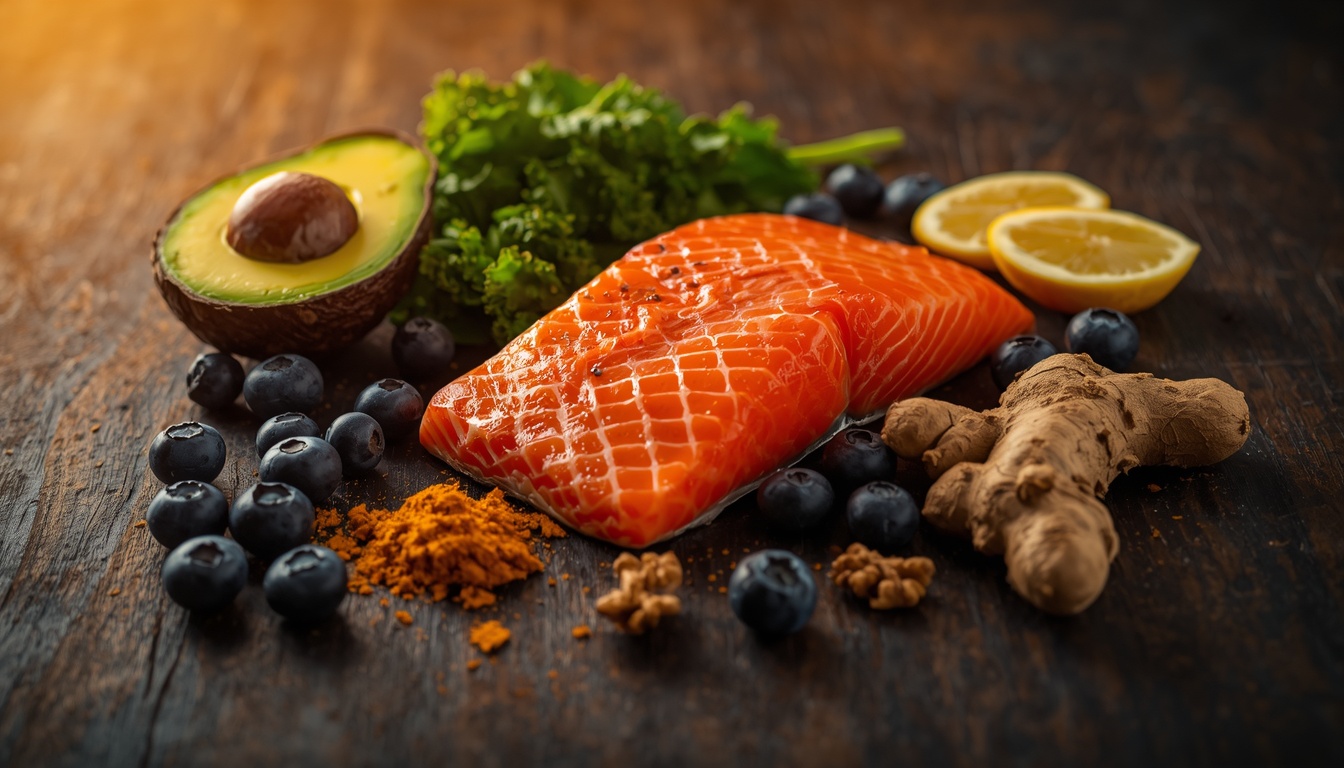
Each colour of fruit and vegetable contains unique antioxidants and phytochemicals that reduce inflammatory markers in the body. Blueberries, cherries, and pomegranate are particularly powerful. Dark leafy greens like kale and spinach are rich in anti-inflammatory flavonoids. Aim for at least three different colours on your plate every single day.
Prioritise Omega-3 Fatty Acids
Omega-3 fats directly reduce inflammatory markers in the body. The best sources are fatty fish like salmon, mackerel, and sardines — aim for at least three portions per week. For plant-based sources, walnuts, chia seeds, and ground flaxseeds are excellent daily additions.
Choose Whole Grains Over Refined Ones
White bread, white rice, and white pasta behave like sugar in the body — they spike blood glucose rapidly and trigger inflammation. Swap them for quinoa, brown rice, rolled oats, buckwheat, and sweet potato. These whole-food carbohydrates release energy slowly, keeping blood sugar stable and inflammation low.
Use Anti-Inflammatory Spices Every Single Day
Your spice rack is one of your most powerful health tools. Turmeric contains curcumin — one of the most studied anti-inflammatory compounds on earth. Always pair it with black pepper, which boosts curcumin absorption by up to 2,000%. Ginger, garlic, cinnamon, and rosemary all contain compounds that directly inhibit inflammatory pathways in the body.
Support Your Gut
Since gut health is so central to inflammation, include fermented foods like coconut yoghurt and miso, prebiotic-rich foods like garlic, oats, and banana, and plenty of leafy greens daily.
Upgrade Your Oils
Replace sunflower oil, canola oil, and vegetable oil — all of which promote inflammation — with extra virgin olive oil and coconut oil only.
What Happens to Your Body When You Cut Sugar and Go Anti-Inflammatory
The changes happen faster than most people expect. Here's a rough timeline of what to expect:
Days 1–3: Sugar cravings may peak, especially if your current diet is high in refined carbs. You may feel slightly foggy or fatigued. This is normal and temporary — it's your body adjusting.
Days 4–7: Cravings begin to ease. Energy becomes more stable throughout the day. Many people notice less bloating and improved digestion within the first week.
Weeks 2–3: Clearer skin. Better sleep quality. Sharper mental focus. Most people describe feeling noticeably "lighter" — not just physically, but mentally.
Week 4 and beyond: Stable, sustained energy. Reduced joint stiffness. Improved mood and emotional resilience. A body that feels like it's finally working with you.
These aren't promises — they're the consistent experiences of people who have committed to removing inflammatory foods and replacing them with whole, nourishing ones.
How the BiteBrightly 30-Day No Sugar Anti-Inflammatory Meal Plan Makes It Easy
Knowing what to eat is one thing. Actually doing it — every day, for 30 days, across breakfast, lunch, dinner, and snacks — is another. That's where most people get stuck. Not because of lack of willpower, but because of lack of a clear system.
The BiteBrightly 30-Day No Sugar Anti-Inflammatory Meal Plan removes every obstacle between you and a genuinely transformed body.
Here's what's inside:
- 30 full days of meals — breakfast, lunch, dinner, and snacks, all planned out for you
- Weekly grocery lists — print, shop, and tick off as you go
- Anti-inflammatory pantry checklist — stock it once and you're set up for success
- Anti-inflammatory spice guide — exactly how to use turmeric, ginger, garlic, cinnamon, rosemary, and black pepper every day
- Meal prep tips and time-saving guide — including the "power hour" method that prepares five meals in 60 minutes
- 7-day quick-start guide — for those who want to ease in and eliminate cravings within the first 72 hours
- Foods to eat and foods to avoid — a clear, no-confusion reference guide
Every recipe uses whole foods only. No added sugar. No inflammatory oils. No processed ingredients. Just real food, designed to heal.
Practical Tips to Get Started Today
You don't have to wait for the meal plan to begin making a difference. Here are five things you can do right now:
- Clear your kitchen — remove sugary drinks, white bread, processed snacks, and anything with sugar in the first three ingredients
- Add turmeric to your next meal — a pinch in scrambled eggs, oats, or soup is all it takes
- Drink more water — many sugar cravings are actually dehydration in disguise. Aim for 8 glasses per day with sliced lemon and fresh ginger
- Read one food label today — pick something you eat regularly and look for hidden sugar names
- Swap one refined carb this week — replace white rice with quinoa, or white bread with rye
Small changes compound quickly. Every meal is an opportunity to reduce inflammation or fuel it. The choice, once you have the knowledge, is entirely yours.
Final Thoughts
Chronic inflammation is not your destiny. It is not something you have to live with. In the vast majority of cases, it is a direct response to what we are putting into our bodies — and it can be reversed through food.
Judith at BiteBrightly built this platform on exactly that belief, rooted in personal experience and grounded in science. Food is medicine. The right food, eaten consistently, has the power to transform how you feel in your body — more than almost any other intervention available to you.
The 30-day reset is waiting for you. Your body is ready to heal.
Ready to Start Your 30-Day Reset?
👉 Download the BiteBrightly 30-Day No Sugar Anti-Inflammatory Meal Plan
No added sugar. Whole foods only. Anti-inflammatory. Printable PDF. Everything planned — all you have to do is follow it.
Found this helpful? Share it with someone who needs to hear it. And visit bitebrightly.com for more science-backed food and wellness content.