

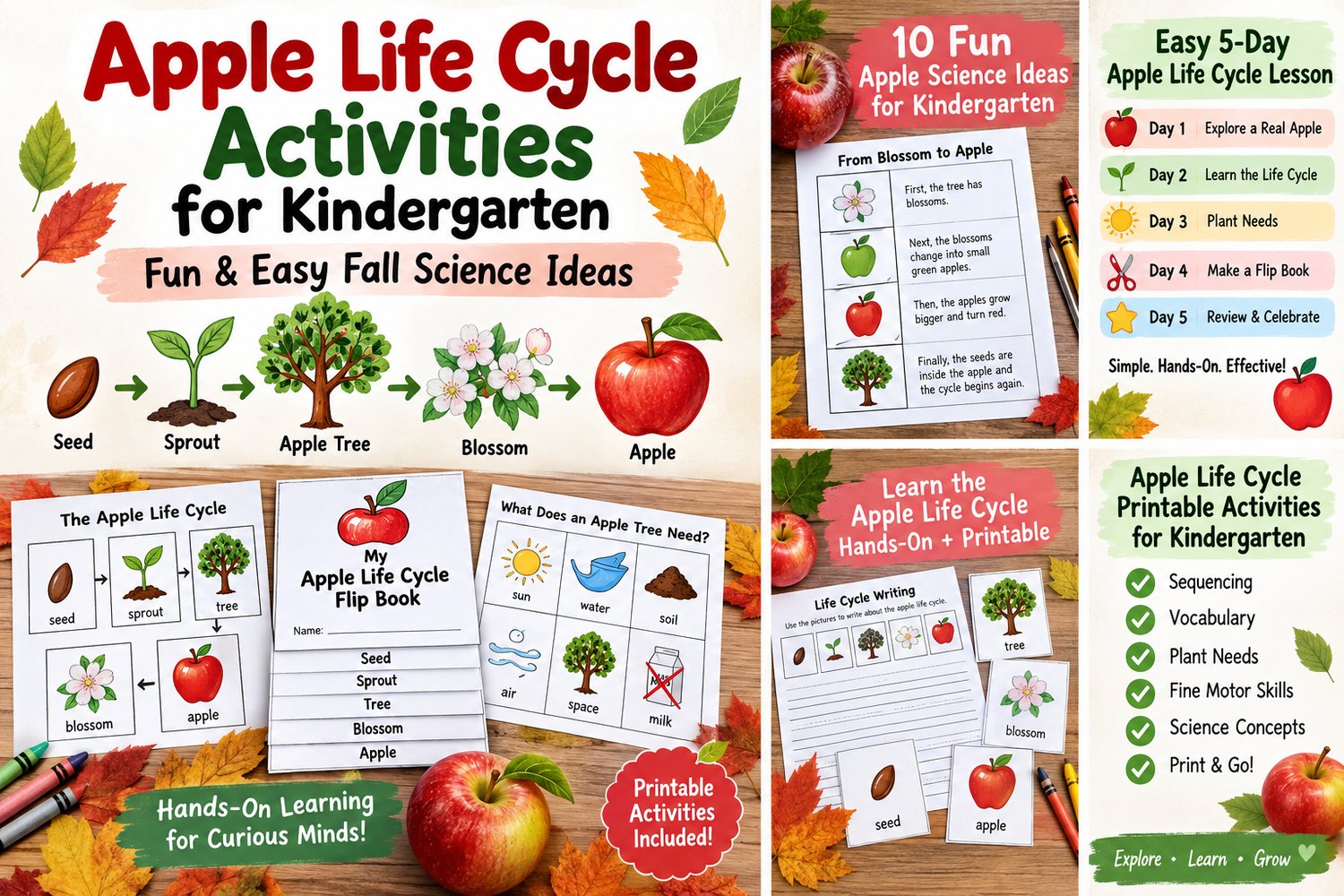
Apple Life Cycle Activities for Kindergarten | Fun Fall Science Ideas
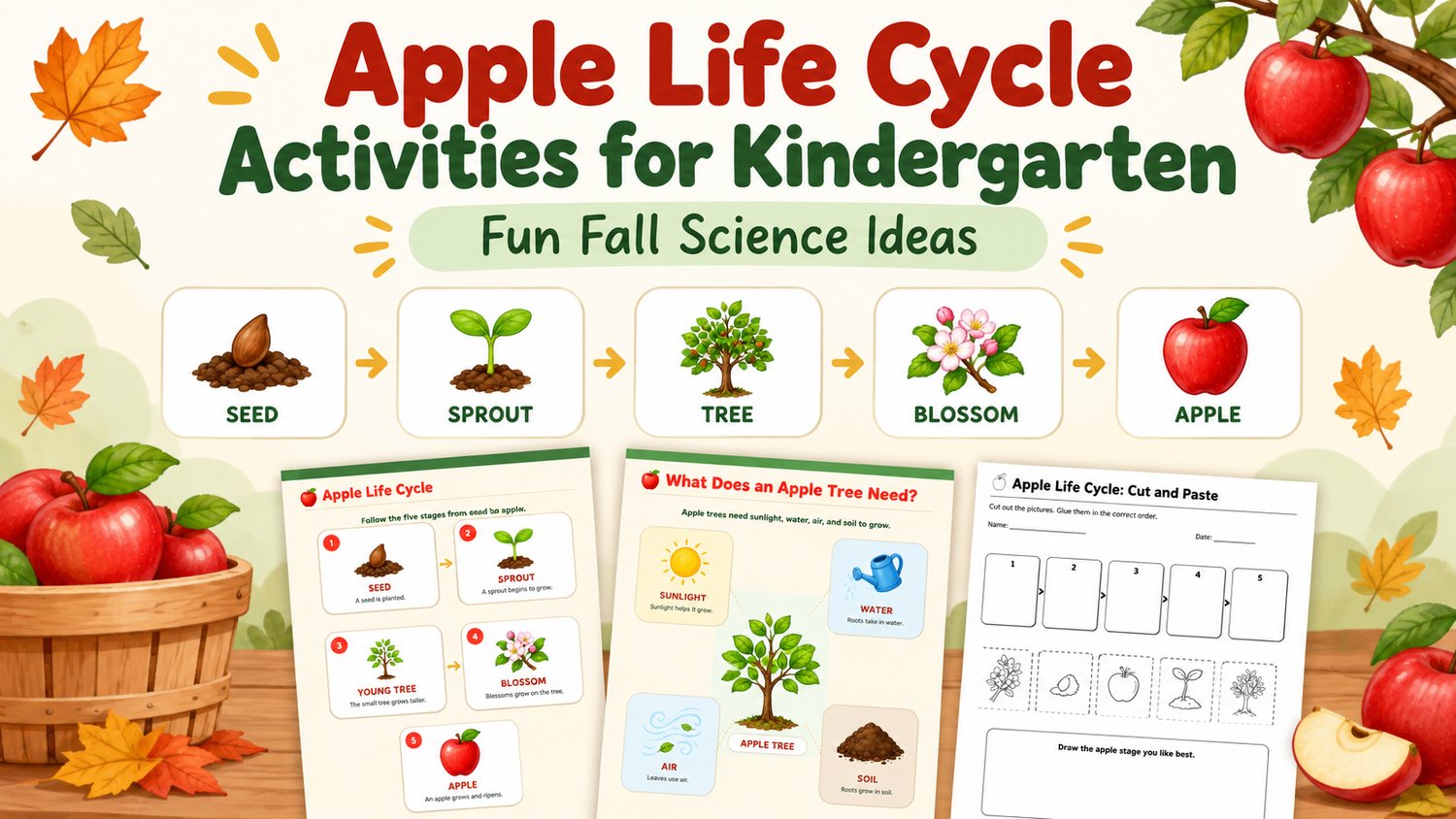
Fall is the perfect time to bring apples into your kindergarten science lessons.
Most young children already recognize apples, which makes them a great starting point for introducing bigger science ideas like seeds, plant growth, life cycles, and change over time.
And the best part?
Teaching the apple life cycle does not need to mean sitting through a long science lesson.
You can turn it into a hands-on learning experience with a real apple, sequencing activities, simple crafts, coloring, cut-and-paste practice, and an apple life cycle flip book.
Here are some simple apple life cycle activities for kindergarten that work well in the classroom or at home.
What Is the Apple Life Cycle?
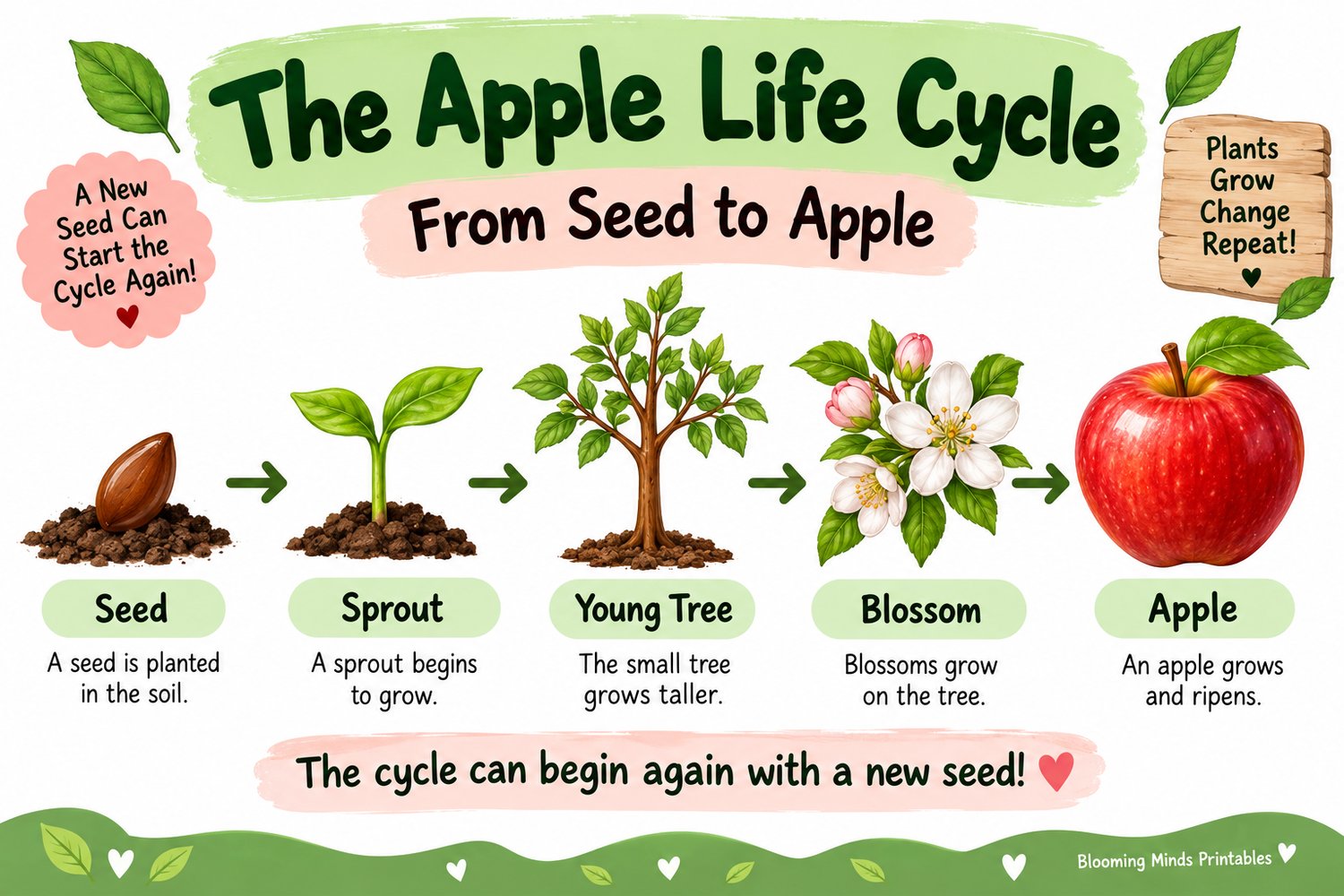
An apple begins with a seed.
With the right growing conditions, the seed can begin to sprout and eventually develop into an apple tree.
As a mature apple tree grows through the seasons, it produces blossoms. After pollination and fruit development, apples grow and ripen on the tree.
Inside those apples are seeds that can begin the cycle again.
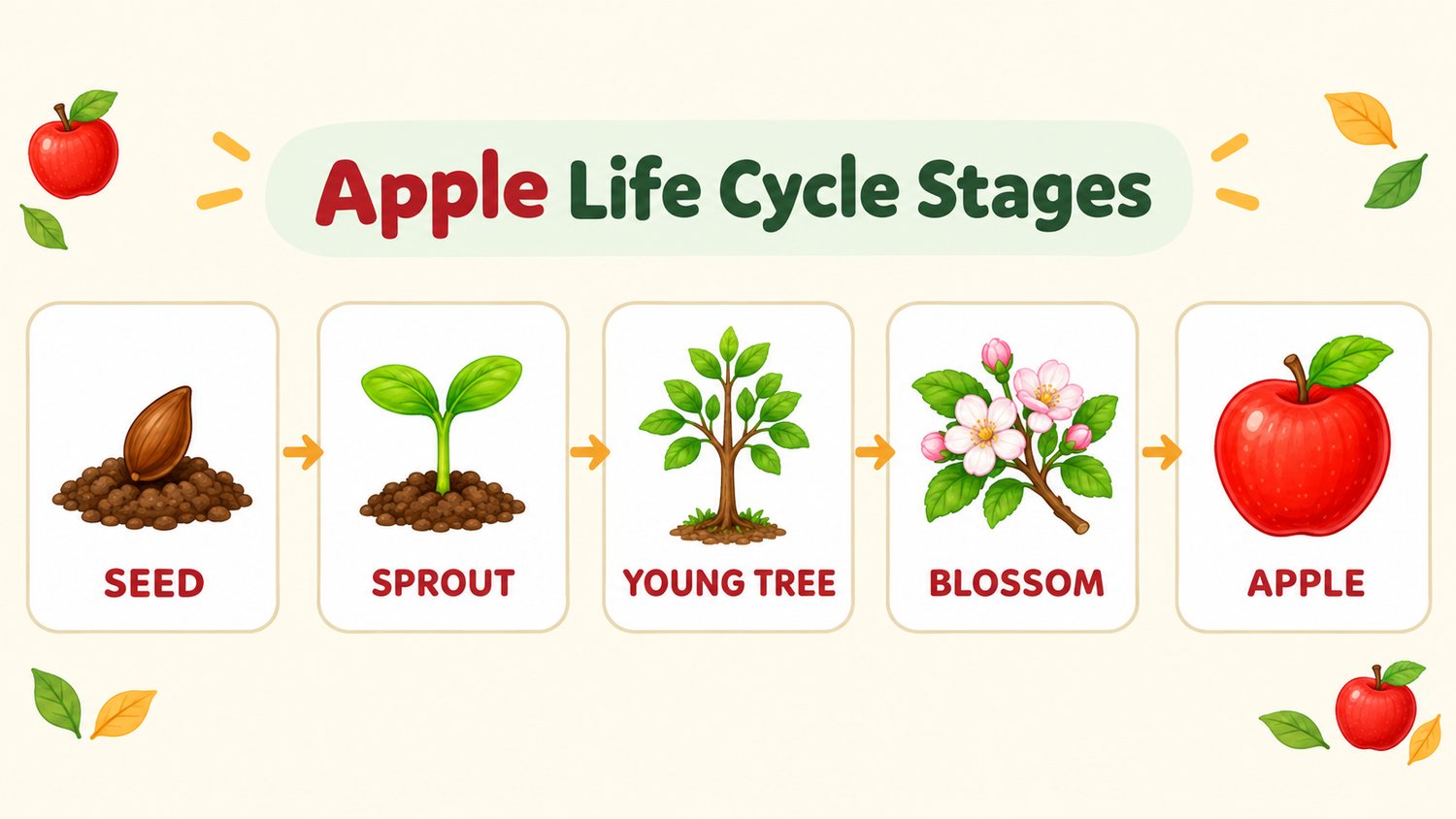
For kindergarten students, you can simplify the apple life cycle into easy-to-understand stages such as:
Seed → Sprout → Young Tree → Apple Tree → Blossom → Apple
At this age, children do not need complicated scientific vocabulary.
The main goal is for them to understand that living things grow and change over time and that these changes happen in an order.
1. Start Your Apple Science Lesson With a Real Apple
Before reaching for a worksheet, start with something children can see and touch.
Bring out a real apple.
Ask your students to look closely at it and describe what they notice.
You can ask:
- What color is the apple?
- Where do apples grow?
- What do you think is inside the apple?
- Does an apple have seeds?
- What might happen if we planted an apple seed?
Then cut the apple open.
Let children look at the seeds inside.
This immediately creates a connection between the apple they already know and the beginning of the apple life cycle.
For homeschool lessons, this is also an easy activity to do right at the kitchen table.
Young children often learn well when activities give them opportunities to investigate real objects and make observations rather than only listening to an explanation. Seasonal materials such as apples can provide an easy starting point for this kind of exploration. (Penn State Extension)
2. Sequence the Apple Life Cycle
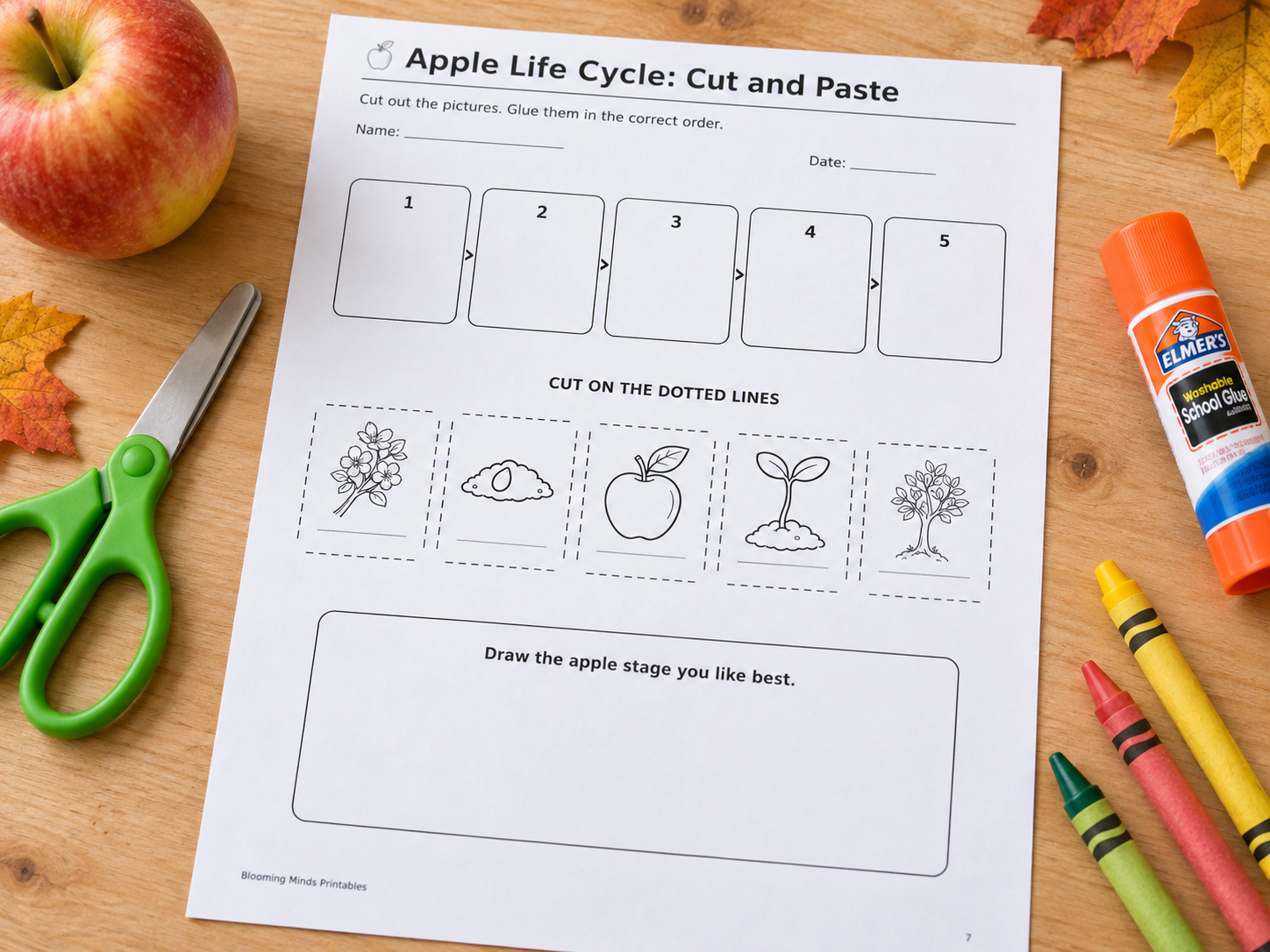
Once children understand the basic idea, introduce the life cycle stages.
Sequencing pictures is one of my favorite apple life cycle activities because it combines science with early literacy skills.
Give your child or students pictures representing several stages of the apple life cycle.
Start simply:
Seed → Sprout → Tree → Apple
Then add more stages as children become comfortable with the sequence.
Encourage them to describe what happens using words such as:
First
Next
Then
Last
For example:
“First, there is a seed. Next, it begins to grow.”
This allows children to practice science vocabulary and oral language at the same time.
Make It Easier
If your student is struggling, give them only three or four pictures at first.
Make It More Challenging
Mix all of the stages together and ask the child to arrange them independently before explaining their choices.
3. Make an Apple Life Cycle Flip Book
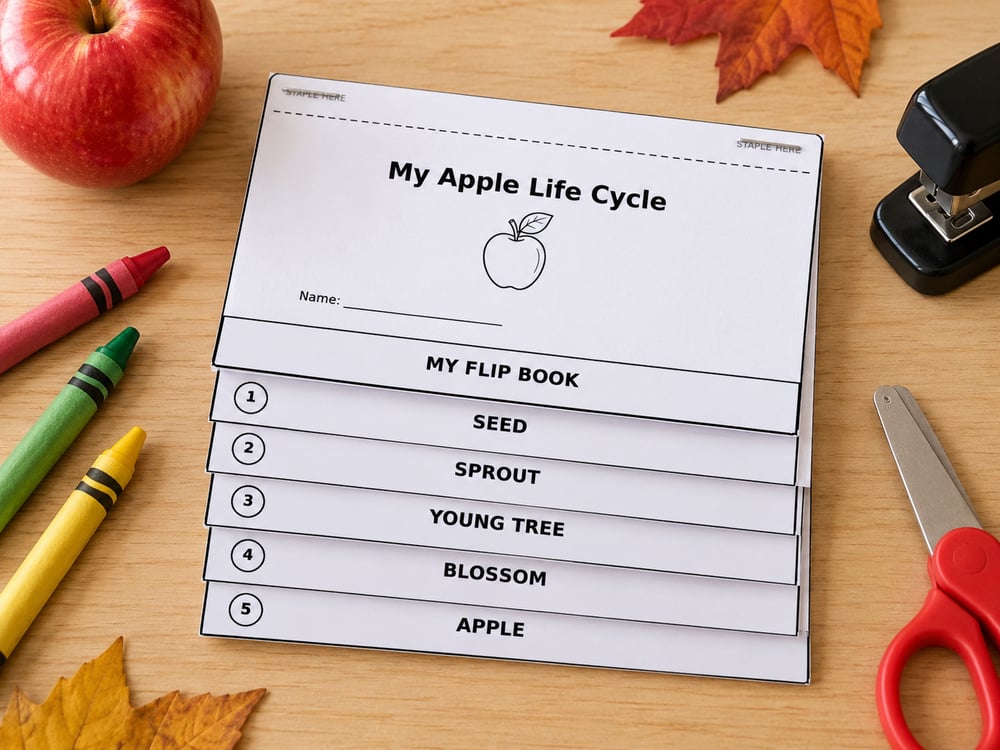
A flip book is another fun way to practice the apple life cycle without turning the lesson into repetitive worksheet practice.
Children can:
- Color the stages
- Cut out the pieces
- Put the stages in order
- Assemble their flip book
- Use it to retell the life cycle
After the flip book is finished, ask:
“What happens first?”
Then let the child flip through the pages and explain each stage.
You can also place the completed flip book in your science center so students can revisit it throughout your fall unit.
4. Try a Cut-and-Paste Apple Life Cycle Activity
Kindergarten students usually benefit from activities where they can physically move and arrange pieces.
A simple cut-and-paste sequencing page works perfectly for this.
Instead of giving the answer immediately, encourage children to think through the process.
Ask questions such as:
“What comes after the seed?”
“Which picture shows the tree beginning to grow?”
“What happens before we get an apple?”
These questions turn a simple printable into a mini science discussion.
5. Teach What an Apple Tree Needs to Grow
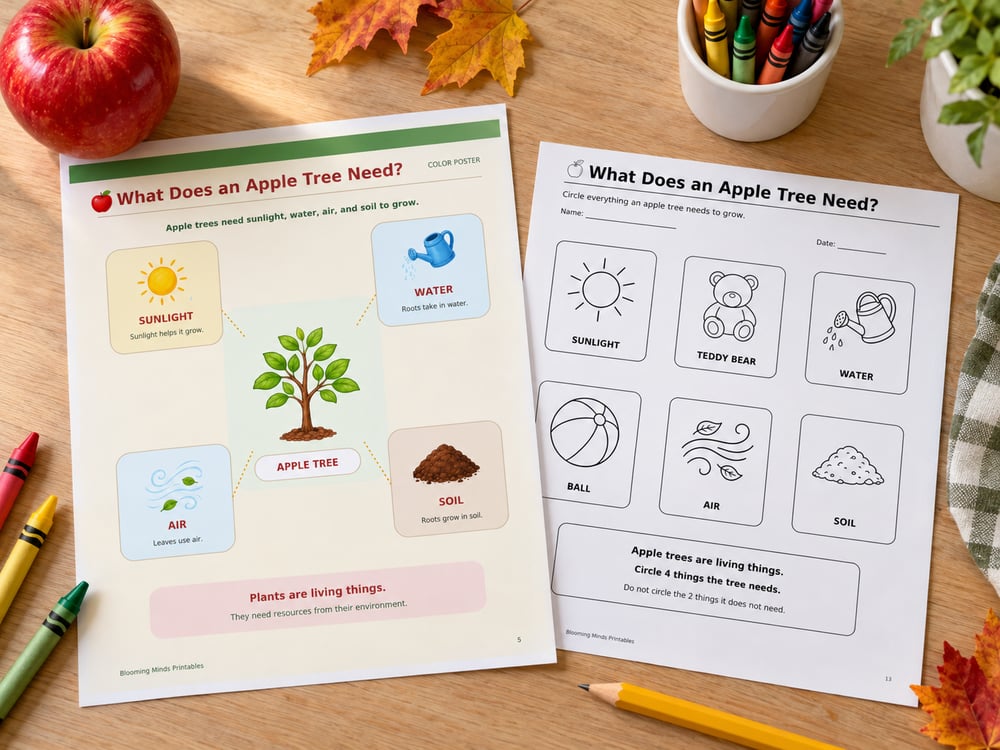
Your apple life cycle lesson is also a perfect opportunity to introduce plant needs.
Kindergarten students can learn that plants need things such as:
- Water
- Sunlight
- Air
- Soil
- Space to grow
Understanding basic plant needs such as water and sunlight is an appropriate introductory life-science concept for kindergarten learners. (Education.com)
Try giving students pictures of different items and asking:
Does a plant need this to grow?
Students can sort the pictures into:
Plants Need
and
Plants Do Not Need
You can even make it silly by including things like toys or shoes in the choices.
Young children usually love identifying the obviously wrong answers.
6. Add Apple Life Cycle Vocabulary
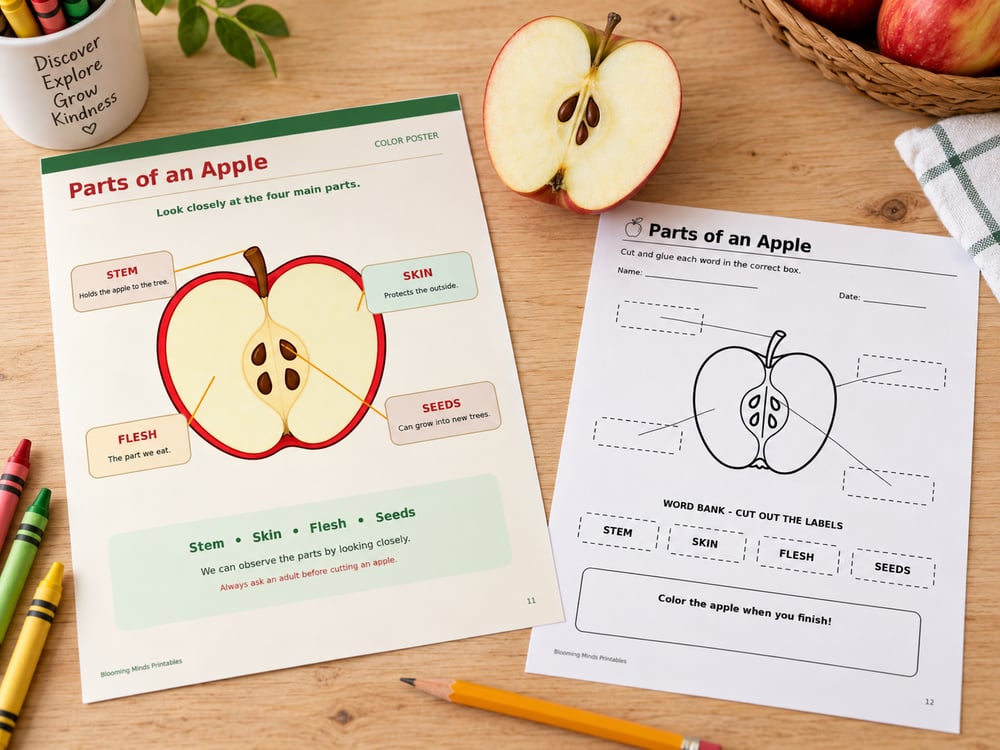
Science vocabulary does not have to be overwhelming for kindergarten.
Choose only a few important words.
For example:
seed
sprout
tree
blossom
apple
Students can trace the words, match them to pictures, or practice saying them aloud.
While they work, ask questions about the pictures.
This allows one activity to support:
- Science vocabulary
- Letter formation
- Fine motor skills
- Picture recognition
- Oral language
without needing four separate lessons.
7. Use Apple Coloring Pages With a Purpose
Coloring can be more than a filler activity.
Give students a picture showing one stage of the apple life cycle and talk about that stage while they color.
Ask:
“What is happening here?”
“Is this before or after the blossom?”
“What comes next?”
You can also let students draw the next stage themselves.
The important part is connecting the coloring activity back to the science concept.
8. Create an Apple Life Cycle Craft
Crafts are another great hands-on option.
Students could make:
- An apple life cycle wheel
- A foldable
- A flip book
- A sequencing craft
- A paper apple showing the different stages
But don’t stop when the craft is finished.
Use it as a teaching tool.
Ask your students to take their completed project home and explain the apple life cycle to someone in their family.
Or let students work with a partner and take turns explaining the stages.
The activity becomes much more meaningful when children use their finished craft to demonstrate what they learned.
9. Count the Seeds Inside an Apple
Here’s an easy way to combine science and math.
Cut open several apples.
Before opening each apple, ask children to predict how many seeds they think they will find.
Then count them together.
You can compare:
- Which apple had more seeds?
- Which had fewer?
- Did two apples have the same number?
- Was your prediction close?
This is a simple way to combine your apple science theme with early math skills.
10. Make a Simple Apple Observation Station
Create a small apple investigation area.
Include a few different apples and let students observe:
- Color
- Shape
- Size
- Seeds
- Stem
- Skin
- Inside of the apple
Children can draw what they see or talk about similarities and differences.
Hands-on fall activities can help children connect seasonal materials with broader concepts involving plants, life cycles, observation, and nature. (Education.com)
Questions to Ask During Your Apple Life Cycle Lesson
Good questions can turn a quick activity into a much richer learning experience.
Try asking:
- Where does an apple tree begin?
- What does a seed need to grow?
- What happens after the seed begins growing?
- Where do apples grow?
- What happens before an apple appears?
- What is inside an apple?
- Where can we find new apple seeds?
- Which life cycle stage comes first?
- Which stage comes next?
- Can you put the stages in order?
- Can you tell me the life cycle without looking at the pictures?
You do not need to ask every question.
Choose a few depending on your child’s or students’ level.
A Simple Apple Life Cycle Lesson Plan
If you don’t want to spend hours planning an apple unit, keep it simple.
Day 1: Explore a Real Apple
Cut open an apple, find the seeds, and discuss where apples come from.
Day 2: Learn the Life Cycle
Introduce the stages and practice putting them in order.
Day 3: Plant Needs
Talk about what apple trees and other plants need to grow.
Day 4: Apple Life Cycle Flip Book
Color, cut, assemble, and retell the life cycle.
Day 5: Review
Use a sequencing page, craft, or simple oral questions to see what children remember.
That’s already a full week of simple fall science learning without needing an overwhelming unit.
Apple Life Cycle Activities for Homeschool
You don’t need a classroom setup to teach the apple life cycle.
For homeschool, you can keep the lesson relaxed and hands-on.
Start at the kitchen table with a real apple.
Cut it open.
Find the seeds.
Talk about where the apple came from.
Arrange pictures showing how an apple tree grows.
Then finish with one short printable or craft.
For young children, several short learning experiences can often feel much more manageable than trying to complete a long worksheet packet at once.
Ready-to-Use Apple Life Cycle Activities
If you’d rather have the activities prepared for you, I created an Apple Life Cycle Activities & Flip Book for Kindergarten resource with simple activities designed specifically for young learners.
The activities help children explore the apple life cycle through visual and hands-on practice.
You can use the resource for:
- Kindergarten science
- Homeschool
- Fall units
- Science centers
- Small groups
- Morning work
- Independent practice
- Apple-themed learning
🍎 Explore the Apple Life Cycle Activities & Flip Book for Kindergarten:
Make Fall Science Simple
You don’t need an elaborate science experiment to help a kindergarten student understand the apple life cycle.
Start with a real apple.
Find the seeds.
Talk about how an apple tree grows.
Then reinforce the concept with sequencing, crafts, coloring, observation, and hands-on activities.
When young children can see it, touch it, move it, and explain it, science becomes much easier to understand.
And that’s what makes apples such a fun way to introduce life cycles during the fall season.