

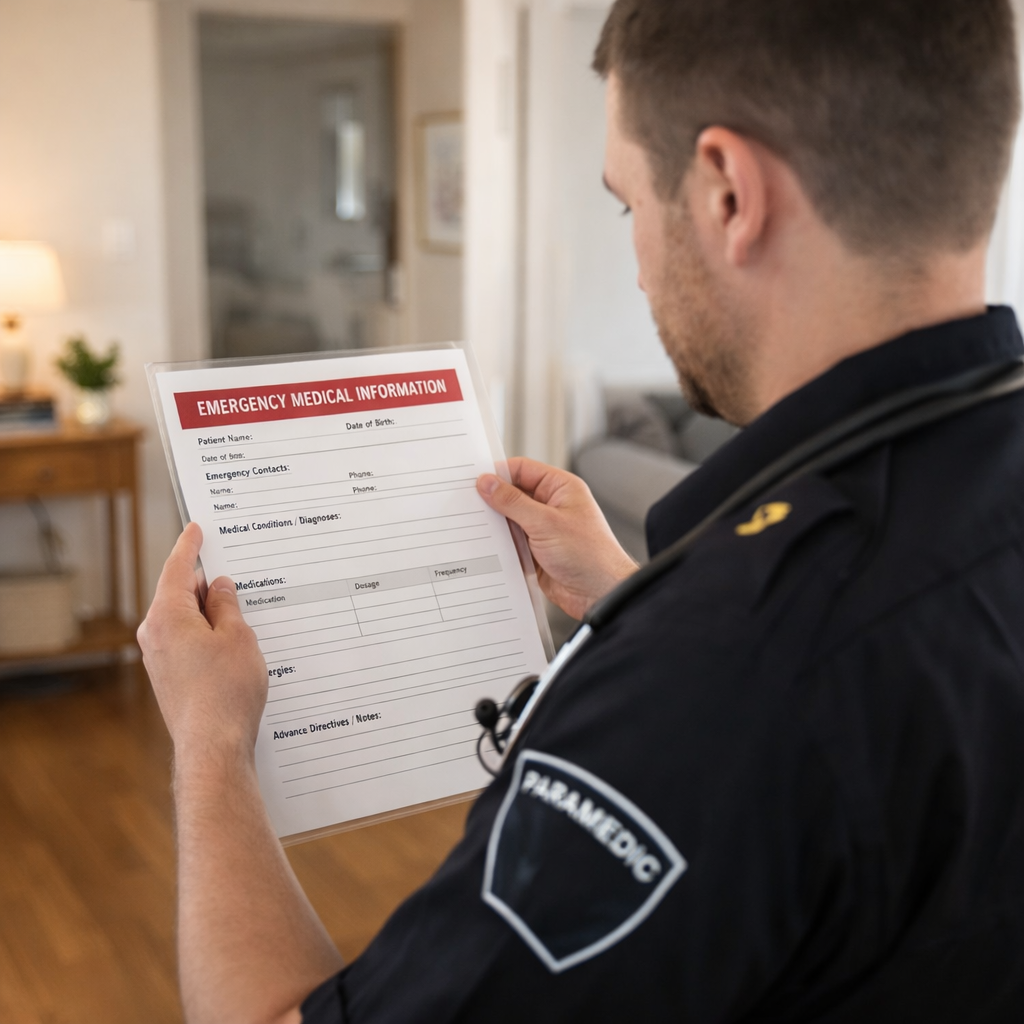
When paramedics arrive, there isn’t enough time to unlock a phone, locate the right app, and scroll through multiple screens to piece together critical information. First responders need immediate, visible access to medications, allergies, diagnoses, and advance directives to support safe and appropriate care decisions.
Consider what happens if your loved one experiences a medical emergency while you're not there. A neighbor calls 911. Paramedics arrive and ask about medications, allergies, and medical history. The neighbor doesn’t know because the information exists only on your phone... miles away.
Many caregivers assume they’ll “pull up” information when needed. That could mean information in a notes app, patient portal, or cloud folder. But emergencies move fast. And they don’t always happen when you are there to provide information.
Why digital storage fails in an emergency.
- Your phone might be out of battery.
- Apps require clicking through multiple screens.
- Cloud folders need internet connection.
- Information is scattered across multiple platforms.
- You might not be present to provide access.
A printed emergency summary placed in a visible location solves all of this:
- On the refrigerator door.
- Near the front door.
- Next to the bed.
This can ensure critical information is viewable right away. The emergency summary can also travel with your loved one to the emergency department so nothing important is lost during handoff.
However, an emergency summary is only as reliable as the information on it.
Medications change. Doctors change. Insurance plan selections may have changed. Diagnoses evolve.
Outdated information can create confusion at the very moment clarity is most needed.
This is where many caregivers run into an unexpected obstacle: the emergency summary works because the information is accurate and current. Keeping it that way requires a simple way to store, update, and coordinate details over time.
If you're looking for a dedicated place to record and print critical medical information, the Critical Emergency Document was designed to help caregivers keep essential details readily available during emergencies.
Get the Critical Emergency Document.
Caregiving is a series of events like appointments, hospital discharges, specialist visits, pharmacy calls, and insurance issues. When details of each event are scattered across apps, notepads, emails, and texts, updating information becomes challenging, and important changes can be missed.
Many caregivers begin with an emergency document. As care needs evolve, they often realize they need a consistent place to keep information current, coordinated, and ready when circumstances change.
The Emergency Information section is one part of the Caregiver Management Hub, which is a structured system designed to keep medical, insurance, and care coordination information organized and current.
Be prepared: have a system that keeps information accurate, accessible, and usable when decisions must be made quickly.
Learn more about the Caregiver Management Hub.