
Your Cart
Loading

Dialectical Behavior Therapy is a kind of therapy built for people who feel everything all at once—and often, too much. It’s used to treat things like intense emotions, black-and-white thinking, impulsive behavior, and feeling like you’re always either “too much” or “not enough.”

At the heart of DBT is one uncomfortable truth:

Life is full of contradictions.

You can hate someone and still miss them.

You can want to heal and still sabotage everything good.

You can be the victim and still be responsible for what comes next.

DBT doesn’t ask you to choose sides between your pain and your progress. It asks you to hold both. Not to fix it all right away—but to stay in it long enough to make a different choice.

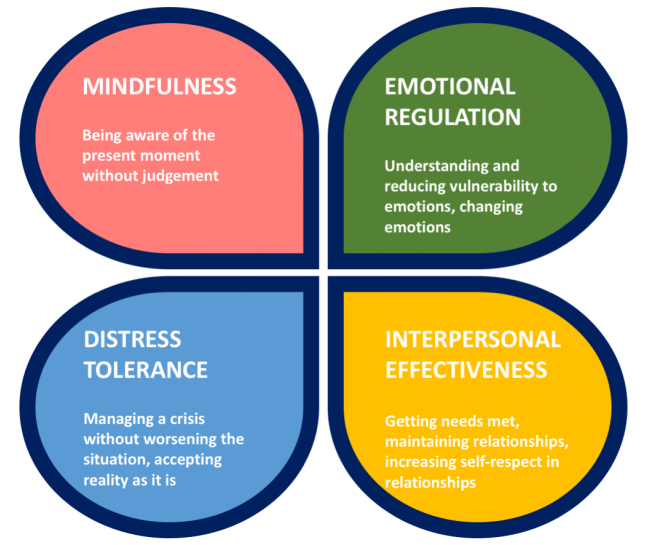
The Four Stages of DBT:

Stage 1:

Survive the Moment

Stop the bleeding. Get through the crisis. Make it to tomorrow without destroying yourself.

Stage 2:

Feel Without Falling Apart

Start to unpack what’s underneath—old wounds, patterns, trauma—and learn to sit with the pain instead of running from it.

Stage 3:

Build a Life That Feels Worth It

Create something stable. Learn how to want things. Practice staying instead of leaving.

Stage 4:

Radical Acceptance

Accept what’s real. Stop fighting the past. Let go of what “should’ve” happened.

Not to approve of it. Not to excuse it.

Just to stop letting it own you.

DBT Worksheets

Behavior Chain Analysis

Behavior chain analysis is a tool used in dialectical behavior therapy (DBT) to help you understand why you acted a certain way. Instead of focusing only on the behavior itself, you walk through what happened beforehand and how each event was connected. By looking at each step leading up to the behavior and noticing patterns, you can see where things went off track and discover what you could do differently in the future.

Emotion Myths

Research shows that emotional intelligence can have an even greater impact on your success and well-being than IQ. Yet most of us are never actually taught how to understand or work with our emotions, which leaves a gap that myths and misinformation quickly fill.

Distress Tolerance

In DBT, distress tolerance skills help you cope with painful or uncomfortable emotions. Instead of trying to change or “fix” what you feel, the goal is to help you get through the moment without making things worse. These skills are especially helpful when the emotion can’t be avoided or when acting on it could lead to serious consequences, such as addiction or relapse.

Wise Mind

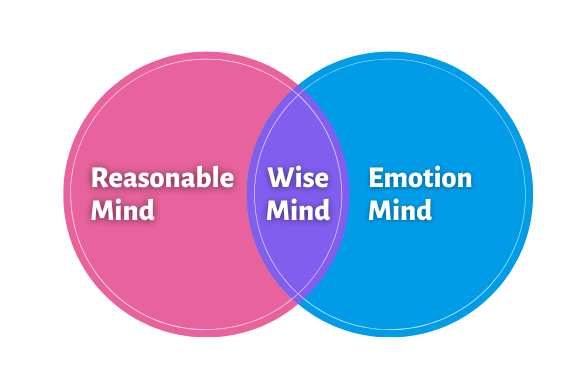
Wise Mind is the part of us that finds balance between our emotions and our rational thoughts. It’s the voice that can acknowledge how we feel while still seeing the situation clearly, helping us make decisions that are grounded, calm, and effective. Rather than being swept away by strong emotions or stuck in overthinking, Wise Mind allows us to respond with clarity and awareness, guiding us toward choices that feel right in both our heart and our mind.

Stay Connected

Want to keep these DBT skills handy? Add this page to your home screen so everything is just a tap away. I’m constantly updating the DBT skills section with new tips and resources… and I’d love to hear your thoughts. Use the comment sections on any blog post to share how you’re practicing these skills or reflections from your journey.