
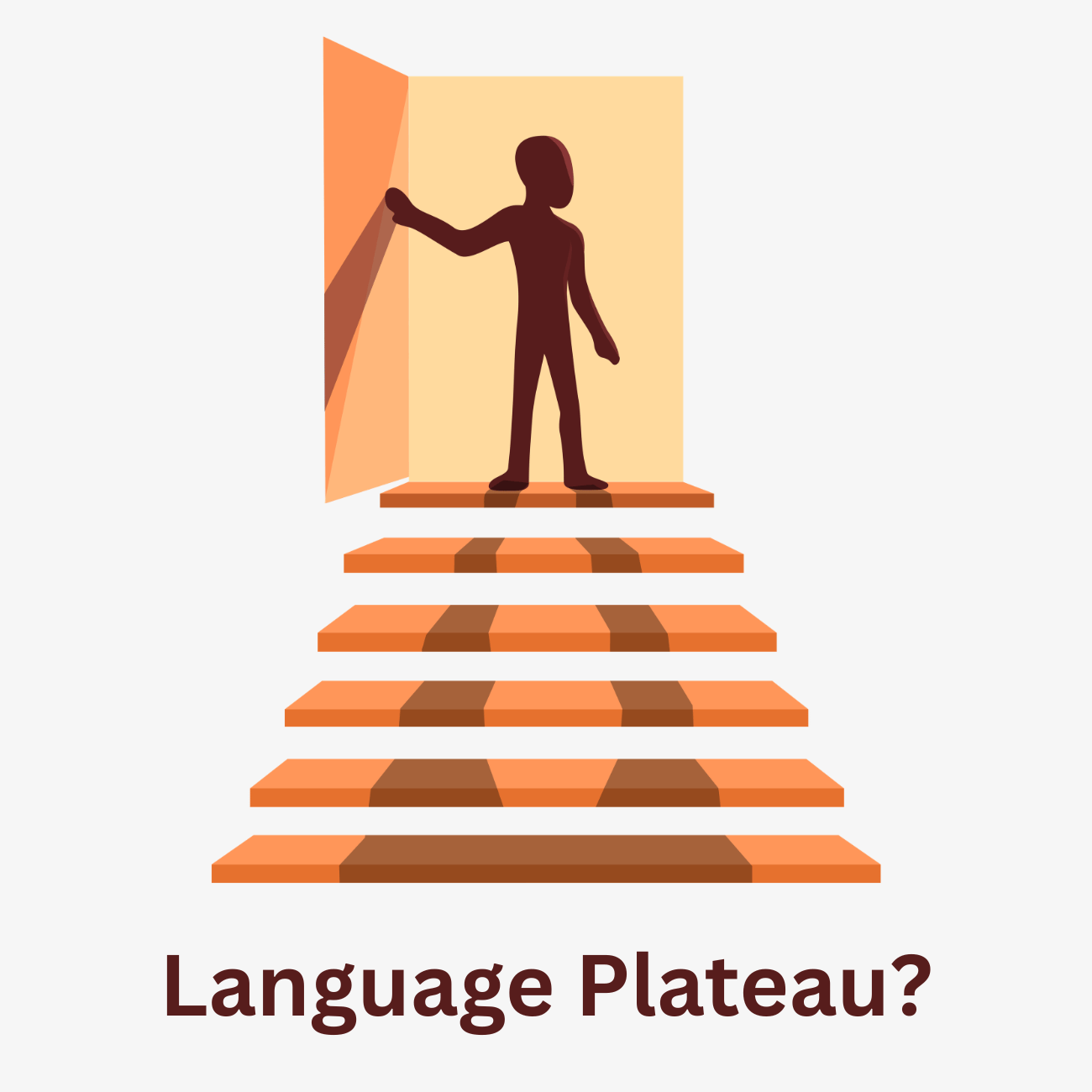
At some point in your English journey, progress slows down.
You’re no longer a beginner. You can communicate, join meetings, and write emails. But something feels stuck. You know you could say more, express yourself better, be more precise, yet the right words don’t come. Conversations feel effortful, and progress feels invisible.
This is what many non-native professionals experience: a language plateau.
It’s frustrating because your ideas are more advanced than your English. You lack the vocabulary, the fluency, or the confidence to fully express what you mean. And under pressure, especially at work, your brain often goes into overdrive. Stress levels rise, which affects key brain areas like the prefrontal cortex, responsible for focus and decision-making, and the hippocampus, which helps you retrieve and form memories. In simple terms: the more pressure you feel, the harder it becomes to access the language you already know.
That’s why “just immerse yourself” is not enough. Watching movies, listening to podcasts, or reading books can help, but only to a certain point. Many professionals consume a lot of English, yet see little progress. The missing piece is not exposure.
It’s engagement.
At this level, improvement comes from being consciously active with the language. For example, when you finish a podcast or a chapter of a book, don’t just move on. Take a moment to summarise what you’ve understood in your own words. Think about the key ideas, your takeaways, and how you would explain them to someone else. This simple habit forces your brain to retrieve vocabulary, structure thoughts, and actively produce language. This is exactly what you need to grow.
At the same time, start extracting what is useful. Not everything, just what is relevant for your professional life. Notice expressions, word combinations, and phrases you could actually use in meetings, emails, or presentations. Write them down and build your own personal language bank.
Most importantly, do something with what you learn. This is where real progress happens. Use a new phrase in an email. Bring an idea from a podcast into a meeting. Explain a concept you’ve read about to a colleague. When you apply what you’ve learned, you move from understanding English to actually using it. And that’s the shift that breaks the plateau.
If you feel stuck, it’s not because you’re not trying hard enough. It’s because your learning needs to evolve. At higher levels, progress doesn’t come from more input, but from deeper processing, active use, and relevant practice.
That feeling of “I know more than I can say” is not a failure. It’s a signal. You’re ready for the next level. You just need a smarter way to get there.
If you are ready to move beyond your plateau, let’s work together to turn your passive knowledge into confident English that you can actually use at work.
Thank you for reading this post.
Until next time,
Keep learning.
Bundle Deal: 3 E-Books - Payhip

Monika Brabers
mbrabers@planet.nl
www.fluencyandbeyond.nl
Connect with me on LinkedIn