
Your offer doesn't have to be perfect before you promote it. Here's how to stop overthinking, overcome the habit of endless editing and start taking action in your online business.
You've created your product.
You've written the sales page, designed the graphics and planned how you're going to promote it.
But something doesn't feel quite right.
Maybe the headline needs changing. Perhaps the price needs another look. The product description could be stronger. You might need a better graphic, a different launch strategy or a little more time to get everything ready.
So you make another edit.
Then another.
Before you know it, you've spent hours preparing to sell something you could have started promoting days ago.
Sound familiar?
If you're building an online business and constantly finding reasons to delay promoting your products, perfectionism could be getting in the way of your progress.
The frustrating part is that you might genuinely believe you're working towards success.
You're refining. Improving. Planning. Learning.
But if you never reach the point where you're comfortable putting your offer in front of potential customers, all that preparation can become another form of avoidance.
You don't need to stop caring about quality. You need to stop letting perfection become a condition for taking action.
Why you keep editing instead of selling
Running an online business requires you to make decisions without always knowing how people will respond.
Will customers like your offer? Will they think it's worth the price? Will your sales page convert? Will anyone buy?
Those questions can create uncertainty.
And when uncertainty feels uncomfortable, editing your offer can feel like a productive way to regain control.
You can change the headline. Rewrite the description. Adjust the design. Reorganise the product.
Every change gives you something tangible to work on.
Selling is different. Once you publish your offer, people can respond — or they might not.
You have to face the possibility of questions, rejection, silence or feedback that challenges your assumptions.
Sometimes, continuing to prepare feels safer than finding out what happens when you actually sell.
But preparation has a limit.
At some point, you need to put your offer in front of the people it was designed to help.
Five signs perfectionism is slowing down your business
1. You keep changing your offer
You've already decided what your product includes, who it helps and how much it costs.
But you keep reconsidering everything.
You change the name, rewrite the promise, adjust the inclusions and question the price again.
Some changes may genuinely improve the offer. Others may simply delay the moment you have to sell it.
Before making another change, ask yourself: Will this improvement make a meaningful difference to the customer's decision, or am I looking for another reason not to launch?
2. You're waiting until you feel confident
You tell yourself you'll promote your product when you feel more prepared.
When your content improves.
When you know more.
When you feel less nervous about what people will think.
But confidence doesn't always arrive before action. Often, it develops as you practise, learn and become more familiar with the process.
You can take a small, sensible step while still feeling uncertain.
3. You keep researching instead of implementing
You watch another tutorial, download another guide or study another marketing strategy.
You want to make sure you're doing everything correctly.
Learning has value, but collecting information won't help your business if you never apply it.
Choose one relevant strategy. Put it into practice. Observe the results before deciding what to do next.
4. You delay promoting products that are already ready
Your product works. The price is set. The purchase link is active.
Yet you still find something else to fix before you share it.
Ask yourself whether the issue is genuinely preventing a customer from purchasing or whether it can be improved after you've started gathering feedback.
Important errors, misleading claims, broken links and confusing purchase instructions should be fixed.
Minor aesthetic preferences usually don't need to prevent a launch.
5. You confuse being productive with making progress
You can spend an entire day working on your business without doing anything to help potential customers discover or purchase your offer.
The activity feels productive because you're getting things done.
But a business also needs visibility, sales conversations, clear offers and opportunities for customers to buy.
Your goal isn't to work on your business every minute. It's to make sure the right activities receive your attention.
 The difference between improving your offer and avoiding the sale
Not every delay is perfectionism. Some offers genuinely need more work.
The key is learning to distinguish between a meaningful improvement and an unnecessary delay.
Consider these examples.
A meaningful improvement:
- Fixing a broken checkout link.
- Correcting inaccurate information.
- Making the product's purpose clearer.
- Ensuring the price and inclusions are transparent.
- Addressing a genuine customer concern.
Potential perfectionism:
- Rewriting a headline for the tenth time without new evidence.
- Changing the graphics because you suddenly dislike the colour.
- Delaying promotion until you feel completely confident.
- Creating another product because selling the existing one feels uncomfortable.
- Researching more strategies instead of trying a reasonable one.
You don't have to publish something unfinished or compromise on quality.
You need a clear definition of what ready enough to sell means.
Once the essential elements are in place, you can begin promoting your offer and improve it using real feedback.
Try the 15-Minute Money Move Method™
What if you stopped giving yourself an entire day to complete one small sales task?
A large, vague task such as "work on marketing" leaves plenty of room for overthinking.
A specific 15-minute action gives you a clear starting point and a finish line.
Here's how to use the 15-Minute Money Move Method™.
Minute 1–3: Choose the action
Identify the one task most likely to help a potential customer discover, understand or purchase your offer.
Examples include:
- Writing a short promotional post.
- Explaining one benefit of your product.
- Adding a clear call to action to existing content.
- Sharing your product link with relevant content.
- Answering a common customer question.
- Following up with someone who has expressed interest.
Don't choose five tasks. Choose one.
Minute 4–6: Decide what needs to be said
Write down three things:
- Who is your offer for?
- What problem does it help address?
- What should the interested reader do next?
Use those answers to guide your message.
You don't need a complicated campaign for every promotional post.
Minute 7–12: Create and publish
Write the message. Check the essential details. Publish it or complete the chosen action.
Avoid reopening decisions you've already made unless you identify a genuine problem.
Your objective is not to create your greatest piece of marketing ever.
It's to complete one useful sales action.
Minute 13–15: Record and move on
Record what you did.
Note the link, platform or activity, and decide what you'll measure — such as clicks, enquiries, responses or purchases.
Then move on to your next priority.
You don't need to keep editing a post simply because you can think of another way to phrase a sentence.
Give yourself permission to complete the task.
Important: fifteen minutes is a practical focus window, not a guarantee that every sales task can be finished in that time.
 Your seven-day challenge: Stop preparing and start promoting
Use the next seven days to practise taking action instead of waiting for perfect conditions.
Day 1: Choose one offer. Select an existing product or service to focus on. Stop switching between multiple ideas.
Day 2: Identify what is genuinely unfinished. Fix essential issues, then write down the changes that can wait.
Day 3: Write one promotional message. Explain who your offer helps, what it includes and how to buy.
Day 4: Publish it. Set a 15-minute timer and complete the task instead of endlessly editing.
Day 5: Explain one benefit. Create a simple post showing how your offer addresses a specific customer problem.
Day 6: Take one follow-up action. Answer an enquiry, respond to a customer question or reconnect appropriately with someone who has expressed interest.
Day 7: Review your progress. Record what you completed, what you learned and what you want to repeat next week.
The aim isn't to guarantee seven days of sales. It's to build a more consistent habit of taking action, gathering information and improving your approach.
What if you still don't feel ready?
You might still feel nervous when you publish your next offer.
You might wonder whether the price is right or whether anyone will buy.
That's normal uncertainty in a business where results aren't completely under your control.
You don't have to eliminate every doubt before you act.
Instead, ask yourself:
- Is the offer clear?
- Is the information accurate?
- Can the customer purchase it successfully?
- Am I communicating honestly about what it provides?
- Is there a reasonable next step I can take?
If the essential answers are yes, you may have enough to begin.
You can improve your messaging. You can test different approaches. You can learn from your audience.
But you cannot learn everything you need to know by endlessly preparing in private.
Your business needs action, not another round of edits.
Ready to stop avoiding sales?
If you spend more time preparing to sell than actually promoting your offers, it's time for a simpler approach.
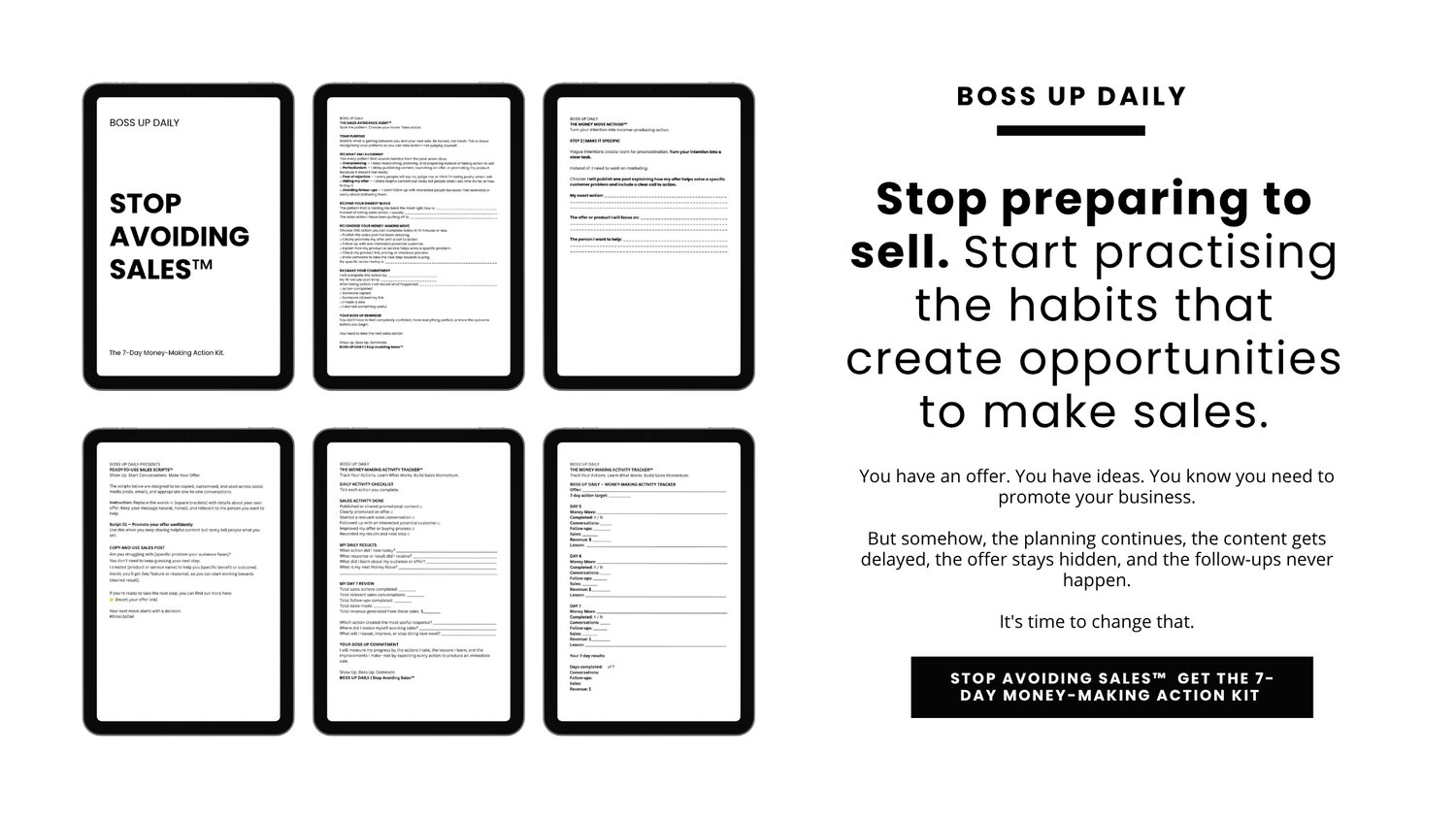
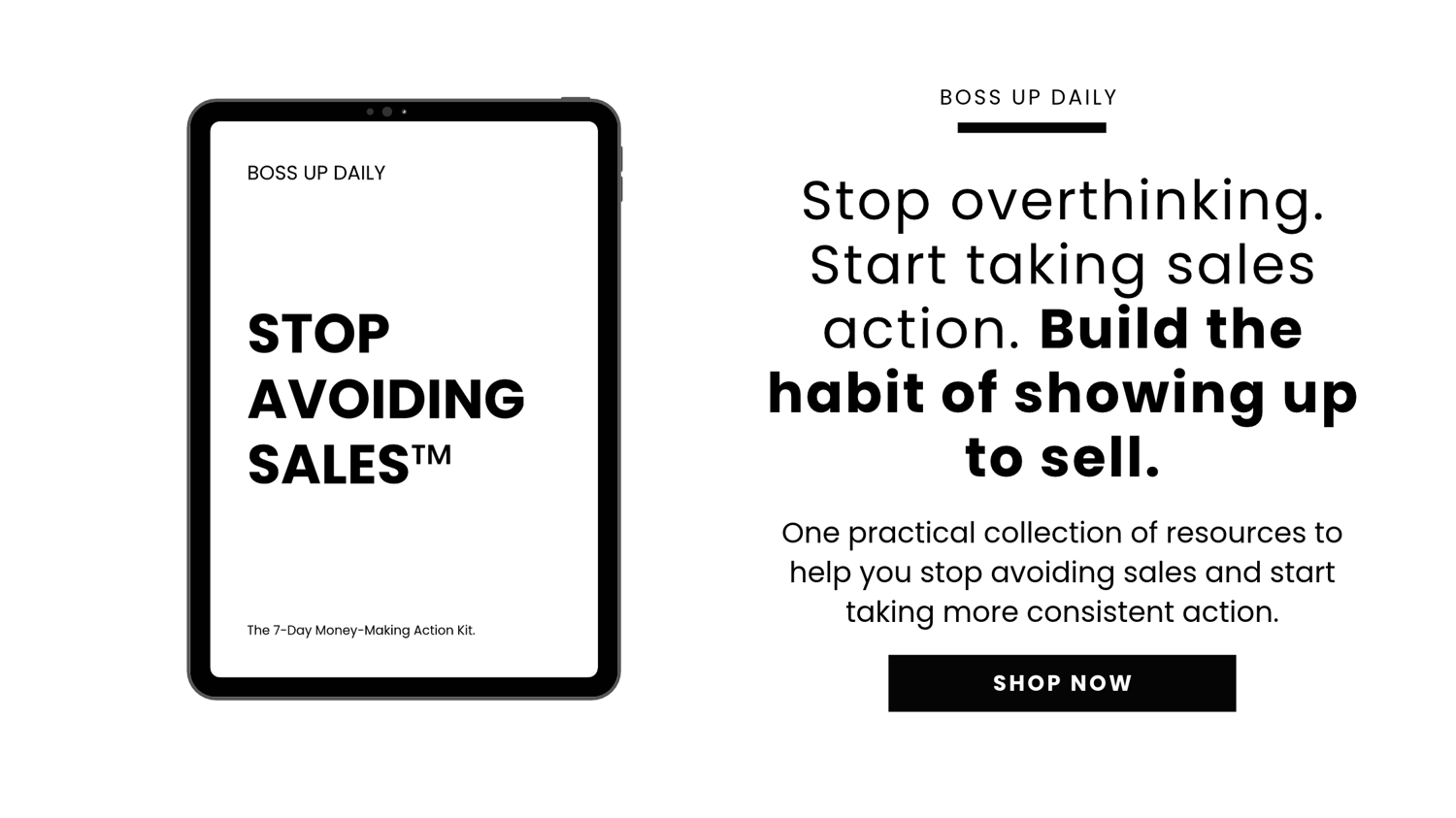
Stop Avoiding Sales™ — The 7-Day Money-Making Action Kit is designed for online business owners who want to stop overthinking their sales activities and start building a more consistent routine.
Inside, you'll find:
- The Sales Avoidance Audit: Identify the habits keeping you from taking action.
- The Money Move Method™: Choose one focused task instead of becoming overwhelmed by your to-do list.
- Ready-to-Use Sales Scripts: Find the words to promote your offer without starting from scratch.
- The 7-Day Sales Action Challenge: Practise taking one meaningful action each day.
- The Money-Making Activity Tracker: Record your actions and review what you learn.
Use the 15-minute action approach to help you move from editing and preparing towards completing practical sales activities.
Suggested price: $19.99 AUD.
You don't need another month of perfecting an offer nobody has seen.
You need to give your offer a chance to reach the people who might want it.
Choose the task. Set the timer. Take action.
Stop preparing to make money. Start taking action to sell.
Show Up. Boss Up. Dominate.
Explore Stop Avoiding Sales™ — The 7-Day Money-Making Action Kit.
Comments ()