
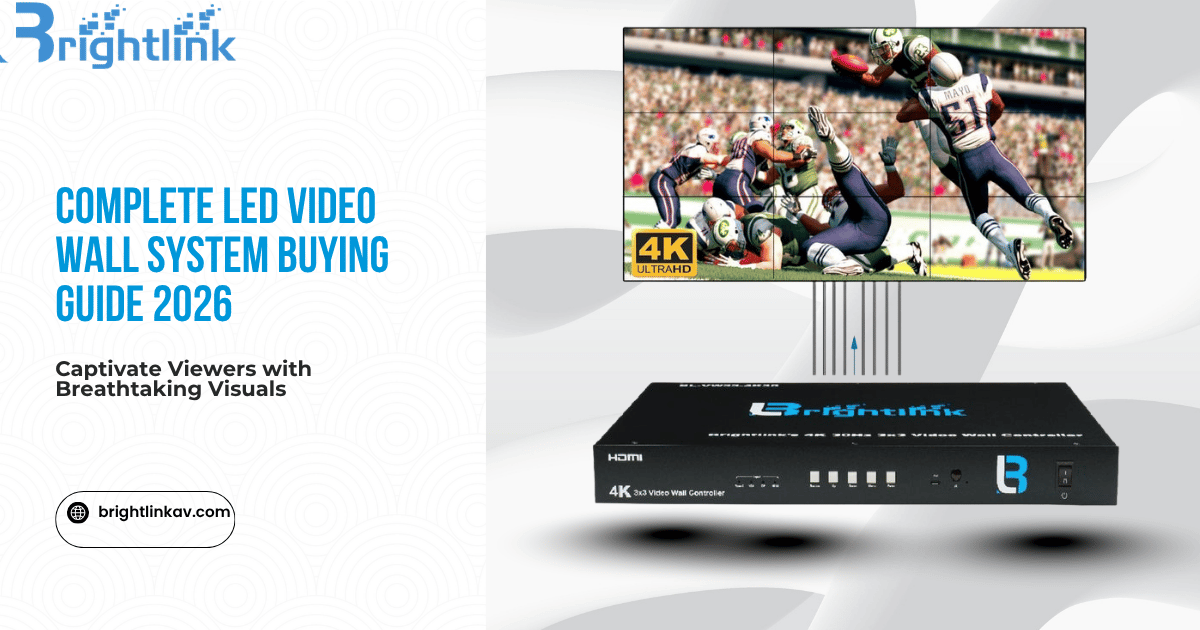
A strong display can change how a space feels in seconds. In retail stores, lobbies, control rooms and event venues, an LED video wall system gives content more presence and makes messages easier to notice. LED video display screens also help businesses present promotions, dashboards, menus and branded visuals in a way that feels polished and memorable.
Buyers usually face the same challenge at the start - too many specs, too many formats and too little clarity on what matters most. That is exactly what this guide covers, from core features and sizing decisions to product types worth considering before you invest.
LED Video Wall System Buying Guide - What Buyers Need to Know First
An LED video wall system brings together multiple display panels or LED cabinets to form one large visual surface. A video wall controller manages how content is scaled, distributed and shown across that surface which allows one large image, multiple content windows or a mix of live feeds and branded media.
That flexibility is what makes the format so useful. A single oversized screen may work in some settings but a wall-based solution gives more freedom around size, shape, layout and long-term expansion.
Key Features to Compare Before Buying an LED Video Wall
The right purchase rarely comes down to screen size alone. Buyers should look at the full picture first, then narrow the list based on daily use and room conditions.
- Screen size, resolution, and viewing distance should match. A larger wall only performs well when text, video, and graphics remain clear from typical viewing positions.
- Bezel width affects visual continuity on LCD walls. Narrow bezels create a cleaner multi-panel appearance.
- Brightness and refresh rate matter in indoor commercial settings where content must stay crisp during long operating hours.
- Color accuracy supports better presentation quality for signage, live content, and branded visuals.
- Controller compatibility and signal distribution shape how easily the system works with current sources and future upgrades.
How to Choose the Right LED Video Display Screen for Your Space
Which features matter most when buying an indoor LED video display screen for commercial applications?
Room size, content type and operating schedule should guide the decision. That framework keeps the process practical and helps avoid paying for features that do not deliver real value in your setting.
Best LED Video Wall Sizes for Conference Rooms, Lobbies, Retail and Command Centers
Conference rooms often benefit from a 2x2 wall or a fine-pitch LED setup that keeps presentations readable without overpowering the space. Lobbies and retail environments usually call for larger display formats that grab attention from a distance. Command centers place more weight on readability, uptime, and layout flexibility than on visual drama alone.
2x2 Vs 3x3 Vs Large-Format LED Installations - Which Setup Fits Your Needs?
A 2x2 wall suits mid-size rooms that need clear impact without taking over the entire space. A 3x3 layout delivers a stronger visual statement and gives more room for messaging, branding, or multi-window content. Fine-pitch LED works best in premium indoor settings where close-up viewing and a cleaner surface matter most.
Mounting, Maintenance Access and Long-Term Scalability Considerations
Display quality is only one part of the equation. Wall structure, service access, cable routing, ventilation, and future expansion all deserve attention before purchase. A system that fits today but blocks repairs or upgrades later can become expensive faster than expected.
Product Focus - Brightlink Video Wall Systems and LED Displays to Consider
1. 165-Inch 3x3 4K Video Wall Package For Immersive Large-Format Display Needs
Businesses that want scale and strong visual impact should look closely at this 165-inch package. It includes nine 55-inch displays, a 3x3 4K video wall controller, and a wall mounting bracket, creating a large-format setup built for digital signage and public-facing spaces.
- Large 165-inch display footprint
- Nine-panel 3x3 configuration
- Ultra-thin 1.75mm bezel per side, 3.5mm total across displays
- Includes controller and mounting bracket
- Strong option for a 55" video wall display layout across a large visual canvas
2. 4K60 AV Over IP Decoder Receiver for Flexible Video Wall Distribution and Control
Projects that need flexible routing and scalable source management can benefit from this unit. The decoder supports HDMI 2.0b, HDCP 2.2, 18Gbps bandwidth, and up to 4K60 4:4:4 signal handling, while also carrying audio, IR, RS-232, CEC, and USB over Ethernet.
- Supports 4K60 at 4:4:4 chroma subsampling
- Uses JPEG2000 technology
- Carries multiple signal types over Ethernet
- Supports PoE for simpler installation
- Works in matrix, point-to-point, and video wall applications up to 9x9
3. 130-Inch 2x2 4K Video Wall Package for Mid-Size Professional Installations
A mid-size commercial space often needs a display that feels substantial without becoming oversized. This 130-inch package is positioned as a 2x2 4K video wall set for professional installations and is listed among Brightlink AV video wall sets for commercial use.
- 130-inch 2x2 wall format
- Narrow-bezel styling for cleaner panel transitions
- Strong fit for conference rooms, retail, and corporate interiors
- Practical option for businesses that want balanced scale
- Suitable as a video wall solution for mid-size installations
4. 163-Inch Fine-Pitch Indoor LED Display for High-Definition Fixed Installations
Fine-pitch LED appeals to buyers who want a cleaner viewing surface for fixed indoor use. The 163-inch model features a 1.875mm pixel pitch, 600cd/m2 brightness, 3840Hz refresh rate, a NovaStar VX600 controller, and front-repairable modules for easier servicing.
- 163-inch diagonal screen
- 1.875mm small pitch LED cabinets
- 3840Hz refresh rate and 600cd/m2 brightness
- Front serviceable modules
- Includes controller and a 3-year warranty
Common Buying Mistakes to Avoid When Selecting an LED Video Display Screen
Most disappointing purchases can be traced back to planning gaps rather than bad hardware. A few early checks can save time, money, and frustration later.
- Choosing based on screen size before checking viewing distance
- Overlooking bezel width in spaces where people stand close to the wall
- Treating the controller as an afterthought
- Ignoring maintenance access during layout planning
- Buying only for current needs instead of future growth
Conclusion - Choose the Best LED Video Wall Displays with Brightlink AV LTD
The best LED video display screen is the one that fits your space, content goals, and budget without creating avoidable installation or maintenance problems later. We offers commercial-grade large-scale LED and LCD video wall solutions plus AV distribution equipment, serving customers worldwide.
Explore LED video wall system options, from LCD walls and fine-pitch LED to signal distribution gear in one place at Brightlink AV LTD.
Browse the range and shop the solution that best fits your space!
FAQs
1. What is the difference between an LED video wall system and a standard LED video display screen?
A standard display is one screen, while an LED video wall system combines multiple panels or cabinets into one larger display area. That setup offers more scale and greater layout flexibility.
2. What resolution should I choose for an indoor LED video wall system?
The right resolution depends on viewing distance and content type. Close-up viewing usually benefits from finer pitch and sharper detail.
3. What is the difference between a 2×2, 3×3, and fine-pitch LED video wall system for indoor use?
A 2x2 fits mid-size rooms, a 3x3 creates stronger visual impact and fine-pitch LED is the premium option for closer viewing and a cleaner display surface.
4. How do I choose the right LED video display screen size, resolution, and bezel width for my business?
Start with room dimensions and average viewing distance then match resolution and bezel width to how close viewers will be and how detailed the content needs to look.
5. What is the best LED video wall system for conference rooms, retail stores, and control rooms in 2026?
The best fit depends on the setting. Conference rooms often need clarity and balance, retail spaces need impact and control rooms need readability, uptime and flexible content management.