

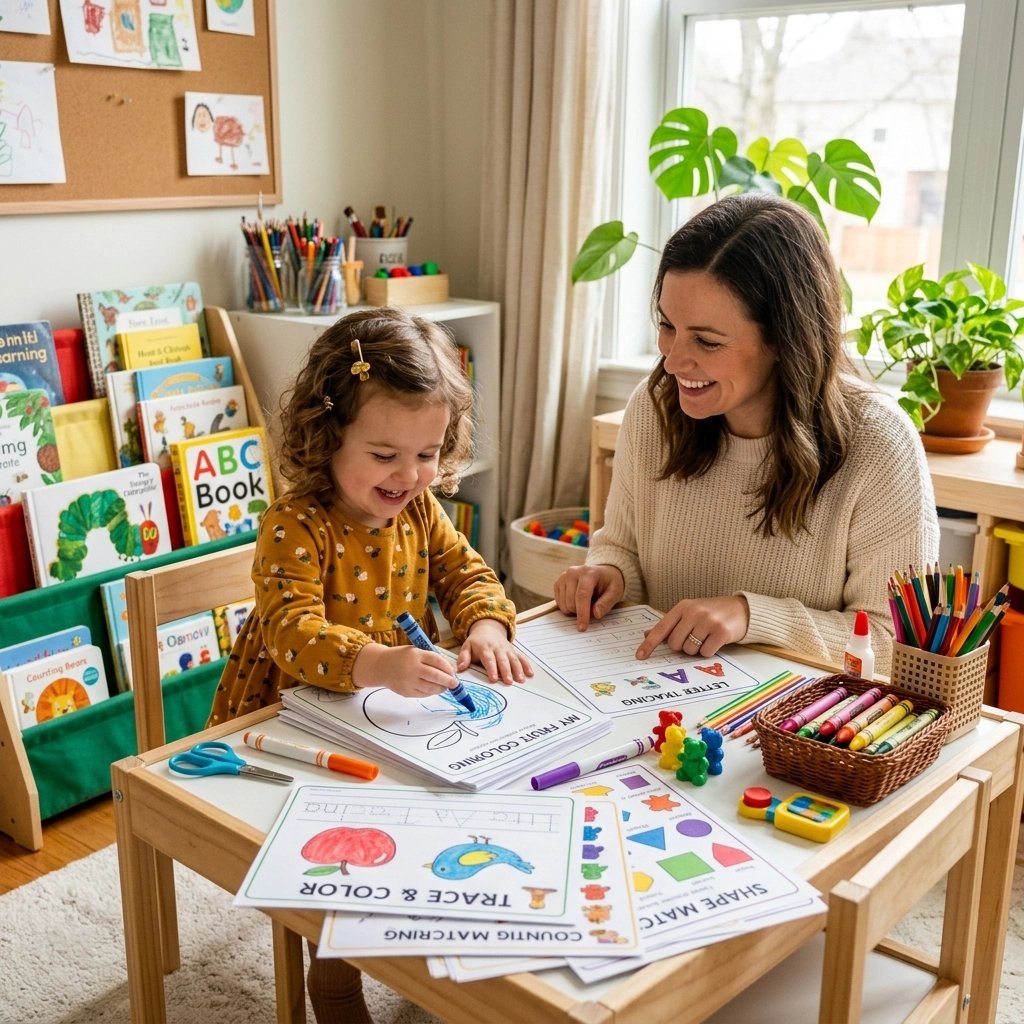

Let’s be real for a second: keeping a toddler occupied is a full-time job on top of your actual full-time job (or your "running the household" full-time job). We’ve all been there, you just need fifteen minutes to finish a cup of coffee while it’s still hot or answer one quick email, and suddenly the living room looks like a toy factory exploded.
That is where preschool activity sheets come in. But here is the secret: you can’t just hand a three-year-old a piece of paper and a crayon and expect magic to happen for an hour. To truly keep them engaged and, more importantly, to help them learn, you need a bit of a game plan.
At CHills & Designs, we’re all about making life simpler for families and teachers. Whether you are a homeschooling pro or a parent just trying to survive a rainy Tuesday, these five steps will help you turn simple printables into a powerhouse of home learning.
Why Use Preschool Activity Sheets?
Before we dive into the "how," let’s talk about the "why." Activity sheets aren't just "busy work." When designed correctly, they help toddlers develop essential skills like:
- Fine Motor Skills: Holding a crayon and staying inside the lines (or even just trying to!) strengthens the tiny muscles in their hands.
- Cognitive Development: Matching, sorting, and identifying patterns helps their brains process logic and math concepts.
- Focus and Patience: Learning to sit down and finish a specific task is a massive milestone for a young child.
Now, let's get into the steps to make this work at your house.
Step 1: Select Age-Appropriate Activities Based on Your Child’s Interests
The quickest way to lose a toddler’s attention is to give them something too hard or, quite frankly, too boring. If your child is obsessed with dinosaurs, a worksheet about flowers might not hit the mark.
A correctly chosen activity topic is the absolute key to success. If you select a worksheet on something your child is already curious about, you get a self-motivated, engaged, and active student. You want them to look at the page and think, "Hey! I know those animals!" rather than feeling overwhelmed by tasks they don’t understand.
Don't feel like you have to follow a strict curriculum. If they are into trucks this week, find tracing sheets with wheels and construction cones. If they love "Frozen," find sheets that focus on the color blue or snowflakes. Meeting them where they are makes home learning feel like playtime.

Step 2: Mix Up Your Learning Categories
While it’s tempting to just print out ten coloring pages and call it a day, variety is what keeps a toddler’s brain firing. Younger children need different types of engagement to stay interested and facilitate real learning.
Try to mix and match from these categories every day:
- Literacy: Letter recognition, phonics sounds, and simple name-tracing.
- Math: Counting objects, identifying shapes, and basic number recognition.
- Fine Motor/Logic: Mazes, "spot the difference" pictures, and "cut and paste" activities.
- Creative: Open-ended coloring or drawing prompts.
By rotating through these types of activities, you prevent burnout. If they get frustrated with letters, switch to a fun counting game. It keeps the "vibe" fresh and fun.
Step 3: Turn Worksheets Into Interactive Games
This is the biggest pro-tip we can offer: Preschool worksheets can be used in more than one way. Don't think of them as just a "paper and pencil" task.
If you have a sheet about counting to five, don't just have them circle the number. Grab five Cheerios, five LEGO bricks, or five toy cars. Have your child place the physical objects on top of the pictures on the paper. This bridges the gap between the abstract (a number on a page) and the concrete (items they can touch).
You can also turn worksheets into a "scavenger hunt." If the sheet has the letter "B" on it, have them run around the room and find something that starts with that letter before they are allowed to color it in. Turning a stationary activity into a movement-based activity is a total game-changer for high-energy toddlers.

Step 4: Create a Structured Daily Routine
Toddlers thrive on routine. They like knowing what comes next because it makes them feel safe and in control. If you try to force an activity sheet on them right when they want to be running outside, you’re going to have a bad time.
Instead, build a "Learning Block" into your daily schedule. Maybe it’s right after breakfast when they have the most energy, or perhaps it’s "Quiet Time" in the afternoon while a younger sibling naps.
The goal is to focus your child toward the activity. Set the stage: clear off the table, put away the distracting toys, and bring out the "special" markers or crayons that only come out during school time. This signaling helps their brain switch into "focus mode." Even 15 to 20 minutes of structured activity can make a huge difference in their development.
Step 5: Optimize for Reuse and Engagement (The Lamination Hack)
Let’s be honest: printing 50 sheets a week can get expensive and uses a lot of paper. Plus, toddlers love repetition. They might want to do the same "Find the Hidden Shapes" page five days in a row.
To make learning fun and sustainable, use lamination. If you have a favorite set of activity sheets, run them through a laminator (or put them in clear plastic sheet protectors). Now, your child can use dry-erase markers to complete the activities, wipe them off, and do them again tomorrow.
You can also add "fastener tape" (Velcro dots) to certain sheets. For example, if you have a matching game where you match a baby animal to its mom, laminate the pieces and use Velcro. Toddlers love the tactile "crackle" sound of pulling Velcro apart, and it turns a flat piece of paper into a 3D toy.

Bonus Tips for Success
- Keep it Short: A toddler’s attention span is roughly 2-3 minutes per year of age. If your three-year-old gives you 9 minutes of solid focus, that is a win! Don't force them to sit for an hour.
- Positive Reinforcement: High-fives, stickers, and "Great job!" go a long way. Show off their work on the fridge!
- Join In: Sometimes, they just want you to sit next to them. You don't have to do the work for them, but your presence makes the activity feel special.
- Follow Their Lead: If they start drawing purple dinosaurs on a math sheet, let them! Creativity is just as important as counting.
Final Thoughts
Home learning doesn't have to be stressful, and it certainly doesn't have to be complicated. By choosing the right preschool activity sheets, keeping things varied, and adding a little bit of "play" to the process, you can keep your toddler busy and help them grow at the same time.
At CHills & Designs, we want to help you create those "lightbulb moments" for your kids without the headache. So, grab some crayons, print out a few sheets, and watch your little one's face light up as they master a new skill!
Happy learning!