

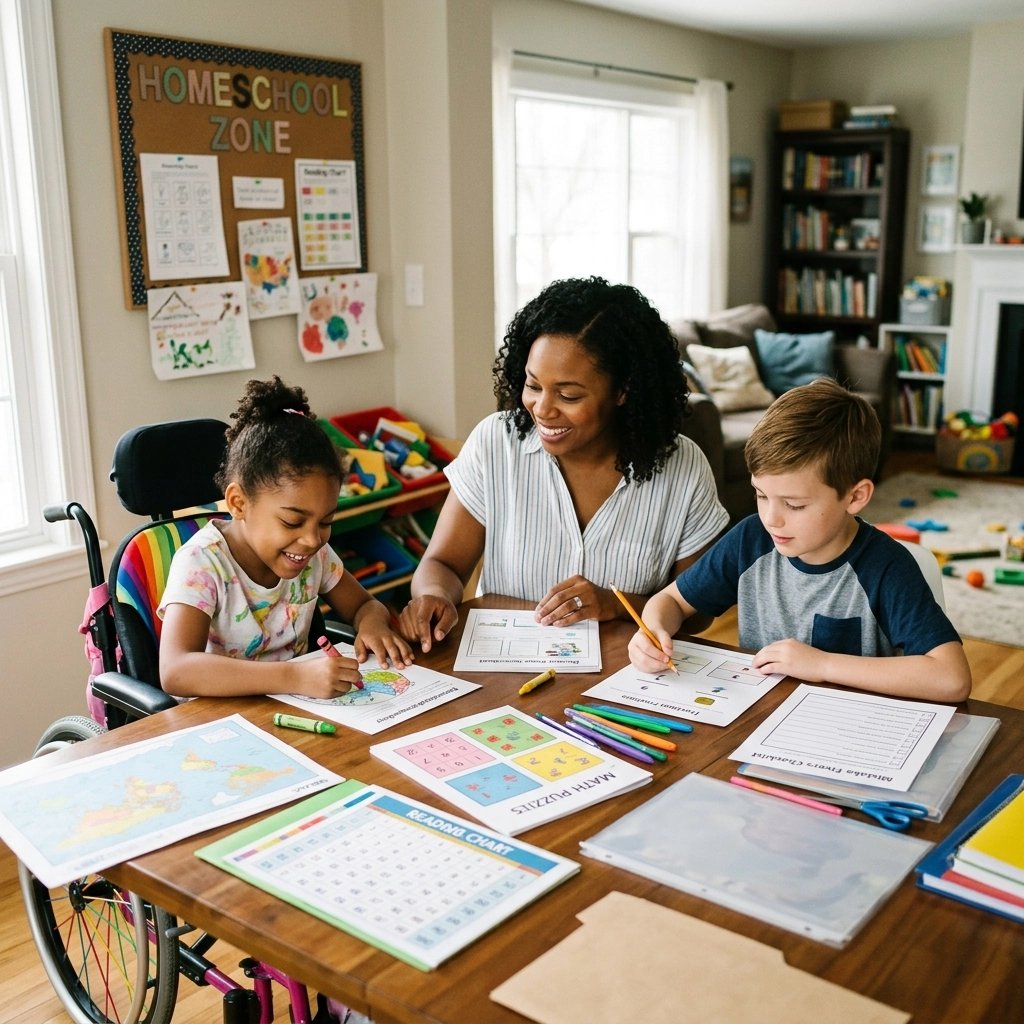

Let’s be real for a second: the world of homeschooling printables is both a blessing and a curse. On one hand, you have access to thousands of incredible educational printables at the click of a button. On the other hand, it’s incredibly easy to end up with a hard drive full of files you never use, a printer that’s constantly running out of ink, and a kid who is bored to tears by another stack of "busy work."
Whether you’re a seasoned homeschool pro or a teacher looking for fresh teacher resources, we’ve all made mistakes when it comes to digital downloads. At CHills & Designs, I love creating things that make your life easier, but I also want to make sure those resources actually work for your family.
Here are the 7 most common mistakes people make with homeschooling printables and, more importantly, how you can fix them today.
1. Using Printables as "Busy Work"
It is so tempting to print out twenty pages of preschool worksheets just to get twenty minutes of peace to drink your coffee while it’s still hot. We’ve all been there! But when printables are used only to keep a child quiet, they lose their educational value. Children quickly realize when a task is just "filler," and they’ll start to resist sitting down at the table altogether.
The Fix:
Shift your mindset. Instead of using printables to "keep them busy," use them to reinforce a concept you’ve already talked about. If you’re learning about the weather, find a weather-themed scavenger hunt or a cloud-matching activity. When the printable connects to a real-world conversation, it becomes a tool for discovery rather than a chore.

Caption: A diverse group of children, including a young boy in a wheelchair, enthusiastically working together on a colorful floor-based learning activity.
2. Forgetting to Match Content to Their Interests
This is probably the biggest mistake I see. Just because a worksheet is "educational" doesn't mean your child will care about it. If your daughter is obsessed with space but you’re handing her worksheets featuring farm animals, you’re fighting an uphill battle.
The Fix:
Tailor your educational printables to what they love! If they love bugs, find an ant-themed math bundle. If they love drawing, find a journal that encourages doodling. When a child sees their favorite things on the page, their brain "turns on" in a different way. At CHills & Designs, I try to create a variety of themes: from bees to bracelets: because I know how much a specific interest can spark a love for learning.
3. The "Print and Toss" Cycle (and why you need to laminate!)
Printing can get expensive. If you are printing a new set of alphabet tracers every single morning and throwing them in the recycling bin by lunch, you are burning through ink and paper faster than you need to.
The Fix:
Invest in a simple home laminator. Seriously, it’s a game-changer. By laminating your preschool worksheets, you turn a one-time activity into a reusable "dry-erase" board. This is perfect for letter tracing, number matching, or even daily calendars. Not only does it save money, but kids actually find dry-erase markers more "fun" than regular pencils!

4. Overloading the Skill Level
Sometimes we get over-ambitious. We see a beautiful set of sight words worksheets and think, "My kid should know these!" But if the level is too high, the child gets frustrated. If it's too low, they get bored. Both lead to a "worksheet meltdown."
The Fix:
Always "scaffold" your printables. Start with something slightly easier than you think they need to build their confidence. Once they feel like a "pro," introduce the next challenge. For example, if you’re working on reading, start with simple word recognition before moving to full sentence construction.

5. Neglecting Fine Motor Skills
A lot of people think homeschooling printables are just about reading and math. But for younger kids, the physical act of using the printable is just as important as the content on the page. If you only focus on the "answers," you're missing a huge opportunity to develop the muscles in their hands.
The Fix:
Look for printables that require cutting, folding, or coloring. These are essential teacher resources for building fine motor skills. Activities like printable bracelets are perfect for this: kids have to color within the lines, cut out the shape, and then figure out how to wrap and wear them. It’s a craft and a lesson all in one.

6. Letting the Paper Take Over (Lack of Organization)
If your dining room table is buried under a mountain of loose papers, you aren't going to want to do "school" today. Disorganization leads to stress for both the parent and the child. If you can't find the "Day 2" worksheet, the momentum of the lesson is lost.
The Fix:
Create a "Learning Binder." Use sheet protectors or a three-hole punch to keep your educational printables organized by subject or by day of the week. This makes it easy for your child to grab their binder and know exactly what they’re working on. Plus, it makes it much easier to keep a portfolio of their progress for the end of the year!
7. Skipping the "Fun" Extras
Sometimes we get so focused on the core subjects: math, reading, writing: that we forget that homeschooling is supposed to be fun! If every printable is a test or a drill, the joy of learning starts to fade.
The Fix:
Incorporate "Boredom Busters" and memory keepers. Use printables that aren't strictly "academic" but are still educational. A spring-themed scavenger hunt or a memory keeper activity set helps kids practice observation and reflection without it feeling like a formal lesson. These are the pages they’ll actually want to look back on in five years.

Caption: A happy family sitting at a sunny kitchen table; a young girl with Down syndrome is proudly showing off her completed colorful memory keeper page to her father.
Wrapping It Up
Printables are a tool, not a master. You don't have to do every page in a bundle, and you definitely don't have to do them the "right" way. If your child wants to color the math worksheet instead of solving the problems today, let them! The goal is to keep them engaged and curious.
By avoiding these seven mistakes: especially by matching content to their interests and laminating for reuse: you'll find that your homeschooling day goes a lot smoother.
If you're looking for some fresh, simple, and fun resources to get started, feel free to check out the shop! I've designed everything with busy parents and curious kids in mind. Happy learning!