
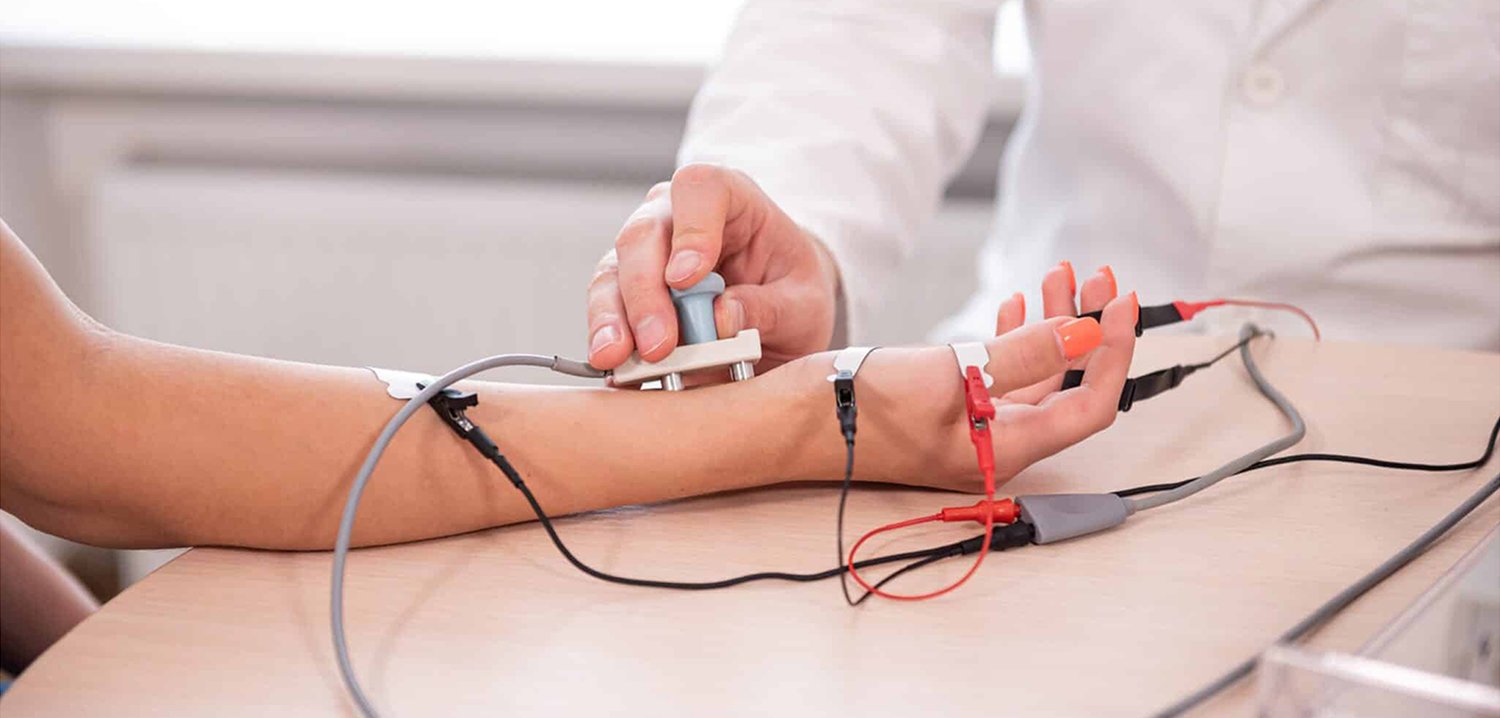
When you have been dealing with arm tingling, hand weakness, or leg pain that just will not quit, your doctor may bring up two tests you have probably never heard of before. Electromyography and nerve conduction study in Orange County are the two most precise diagnostic tools available for evaluating nerve and muscle health. Together, they tell your physician far more than an MRI or X-ray can about what is actually happening inside your peripheral nervous system.
Orange County has a large and diverse working population, and nerve-related conditions are common across its industries. From healthcare workers dealing with repetitive strain to logistics employees managing physical load injuries, the need for accurate electrodiagnostic testing is real and growing. The challenge is finding a center that does both tests well, with a physician directly involved at every step.
What Actually Happens During an Electromyography Test?
Electromyography, or EMG, evaluates the electrical activity that muscles produce. A thin, sterile electrode is inserted into a muscle and records activity both at rest and during contraction. Healthy muscles are electrically quiet at rest. When nerve damage is present, muscles often produce spontaneous discharges that indicate denervation. In cases of primary muscle disease, the pattern looks different again, with smaller, shorter electrical units during contraction.
This distinction matters because nerve disease and muscle disease are treated completely differently. A physician who reads the EMG findings without being present during the test may miss subtle real-time signals that point the diagnosis in a different direction. At California Sports and Rehab, Dr. Tina Hakimian and Dr. Kamran Hakimian are directly involved in each study from start to finish, which is how it should be done.
How Does the Nerve Conduction Study Add to the Picture?
The nerve conduction study in Orange County portion of the test evaluates how fast and how strongly electrical impulses travel along specific nerve pathways. Surface electrodes are placed on the skin, a mild electrical stimulus is applied, and the equipment measures the nerve's response in terms of velocity and amplitude.
A healthy nerve conducts quickly and with a strong signal. A compressed or demyelinated nerve slows down. A nerve with axonal damage shows reduced amplitude. These two measurements, speed and signal strength, together paint a picture of whether the nerve is mildly irritated, moderately compressed, or seriously injured. That distinction directly affects whether a patient should pursue conservative care, injections, or surgical referral.
According to the American Association of Neuromuscular and Electrodiagnostic Medicine, EMG and nerve conduction studies are the standard of care for diagnosing peripheral nerve disorders. No imaging modality replicates what these tests reveal.
Which Orange County Patients Benefit Most From This Testing?
Here is a look at the conditions most commonly identified through electrodiagnostic studies in the Orange County clinical population:
- Carpal tunnel syndrome in workers with sustained wrist flexion or vibration exposure
- Ulnar neuropathy at the elbow, common in desk workers and assembly line employees
- Peroneal nerve palsy presenting as foot drop after prolonged squatting or leg crossing
- Lumbar radiculopathy causing leg weakness and radiating pain from disc herniation
- Peripheral neuropathy from diabetes, which affects over 50 percent of long-term diabetic patients according to the National Institute of Diabetes and Digestive and Kidney Diseases
- Cervical radiculopathy with arm pain, numbness, and grip weakness
Each of these conditions has a different nerve signature in the electrodiagnostic data, and identifying that signature changes the treatment plan significantly.
Why Does Physician-Led Testing Produce Better Outcomes?
Not all electrodiagnostic centers operate the same way. In many facilities, a technician runs the equipment and a physician reviews the printed results later, sometimes remotely. This workflow reduces diagnostic accuracy, particularly in complex or atypical presentations where the testing protocol needs real-time adjustment.
When a patient's symptoms suggest one condition but early findings point in another direction, a skilled physician can pivot mid-study, add nerve segments, or adjust needle placement to capture a more complete clinical picture. That responsiveness is not possible in a technician-run model.
California Sports and Rehab has served over 8,000 patients across greater Los Angeles and Orange County over more than 20 years, with physician-led diagnostic evaluation at the core of every appointment. The clinic accepts most major insurance plans, workers' compensation cases, and personal injury referrals.
Getting the Right Diagnosis Changes Everything
Nerve symptoms that go uncharacterized tend to be undertreated or treated for the wrong condition entirely. An accurate electrodiagnostic study gives your physician the data to act confidently rather than guess. If you are in Orange County and dealing with unexplained nerve or muscle symptoms, do not wait for them to resolve on their own.
Visit California Sports and Rehab to learn more about the diagnostic services available, or check the locations page for access details. You can also reach the team directly through the contact page or by calling 310-652-6060. The clinic is located at 12301 Wilshire Blvd Suite 207, Los Angeles, CA 90025.