
Florida camping isn’t difficult. It’s specific.
Humidity, storm cycles, insects, and heat patterns vary dramatically by region. Understanding those differences makes planning easier and the trip more enjoyable.
Here’s a breakdown by region.
North Florida: Springs & Forest
North Florida offers freshwater springs, shaded campsites, and more traditional forest terrain.
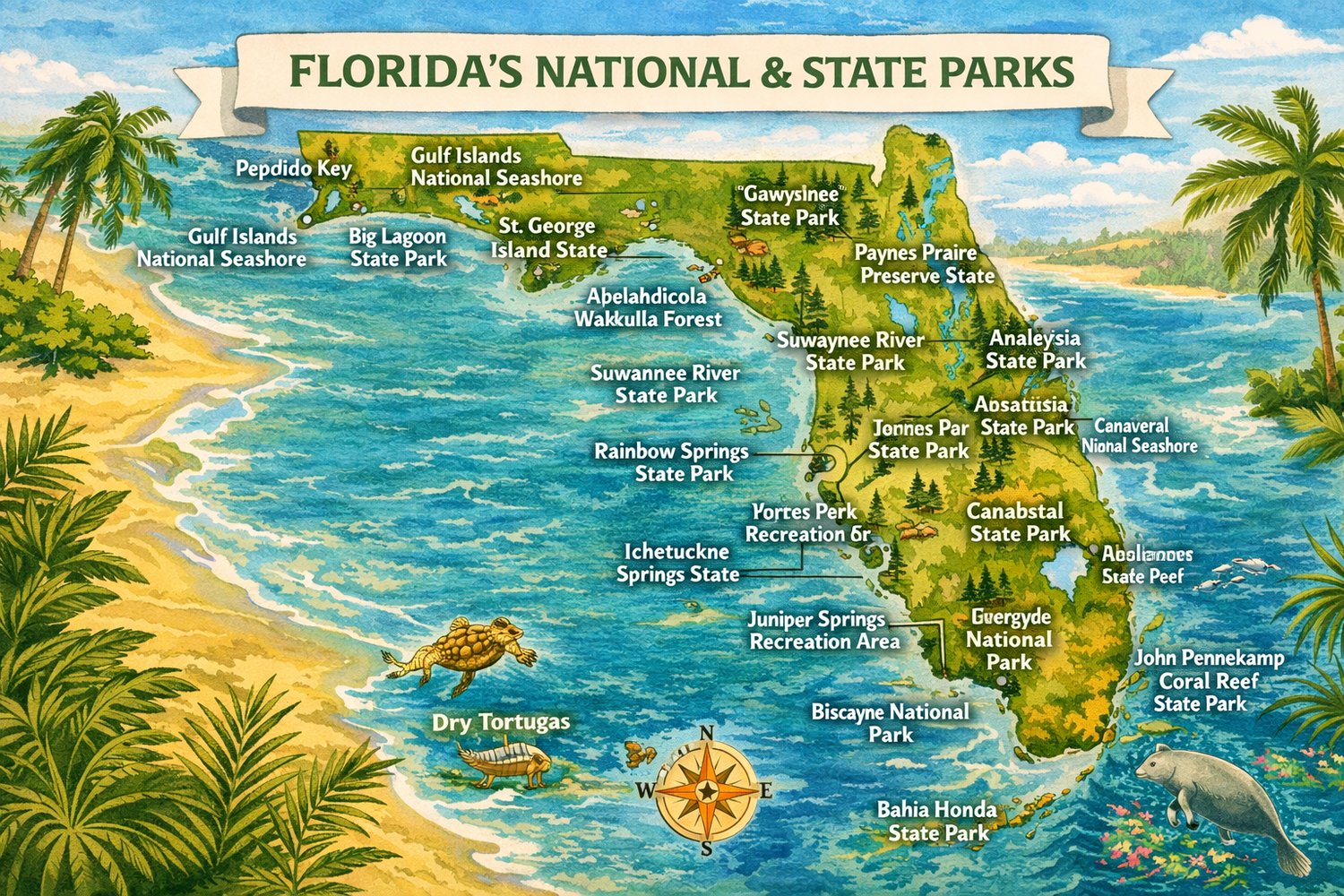
You can reserve sites at:
- Ocala National Forest - Santos Trailhead & Campground
- Ichetucknee Springs State Park
- Stephen Foster Folk Culture Center State Park
Best season: Fall through early spring.
Shade and ventilation matter here, especially as spring transitions into summer.
Central Florida: Accessible & Balanced
Central Florida offers easy access and reliable infrastructure.
Explore:
Summer requires planning:
- Prioritize hydration
- Choose shaded sites
- Bring breathable shelter options
South Florida: Subtropical & Seasonal
South Florida feels different. Coastal exposure, mangroves, and open landscapes define the region.
Reservations:
Winter is peak season.
Summer camping requires:
- Shelter that prioritizes airflow — explore adaptable options in Tents & Storage
- Strategic campsite placement for natural shade
- Clear, dependable lighting once the sun goes down — see Fire & Lighting essentials
Adjust the Setup - Not the Trip
Florida rewards preparation.
Think:
- Shade first
- Ventilation second
- Hydration always
- Controlled fire areas
- Clear evening visibility
For animal travel, Florida’s heat also makes airflow and routine especially important - explore Gear for Their Pack if you’re bringing companions along.
Florida isn’t extreme. It’s predictable - if you understand it.
Plan accordingly, and it becomes one of the most accessible states to camp in year-round.
From The Ember Logbook
Camping Bear Equipment
Gear that earns its pack space.