
Yellowstone isn’t difficult to camp in.
But it’s easy to underestimate.
The scale is larger than most people expect. Distances take longer. Conditions shift quickly. And the environment demands a little more awareness than a typical campground.
If you plan it correctly, it’s one of the most rewarding places to camp in the United States.
Understand the Layout First
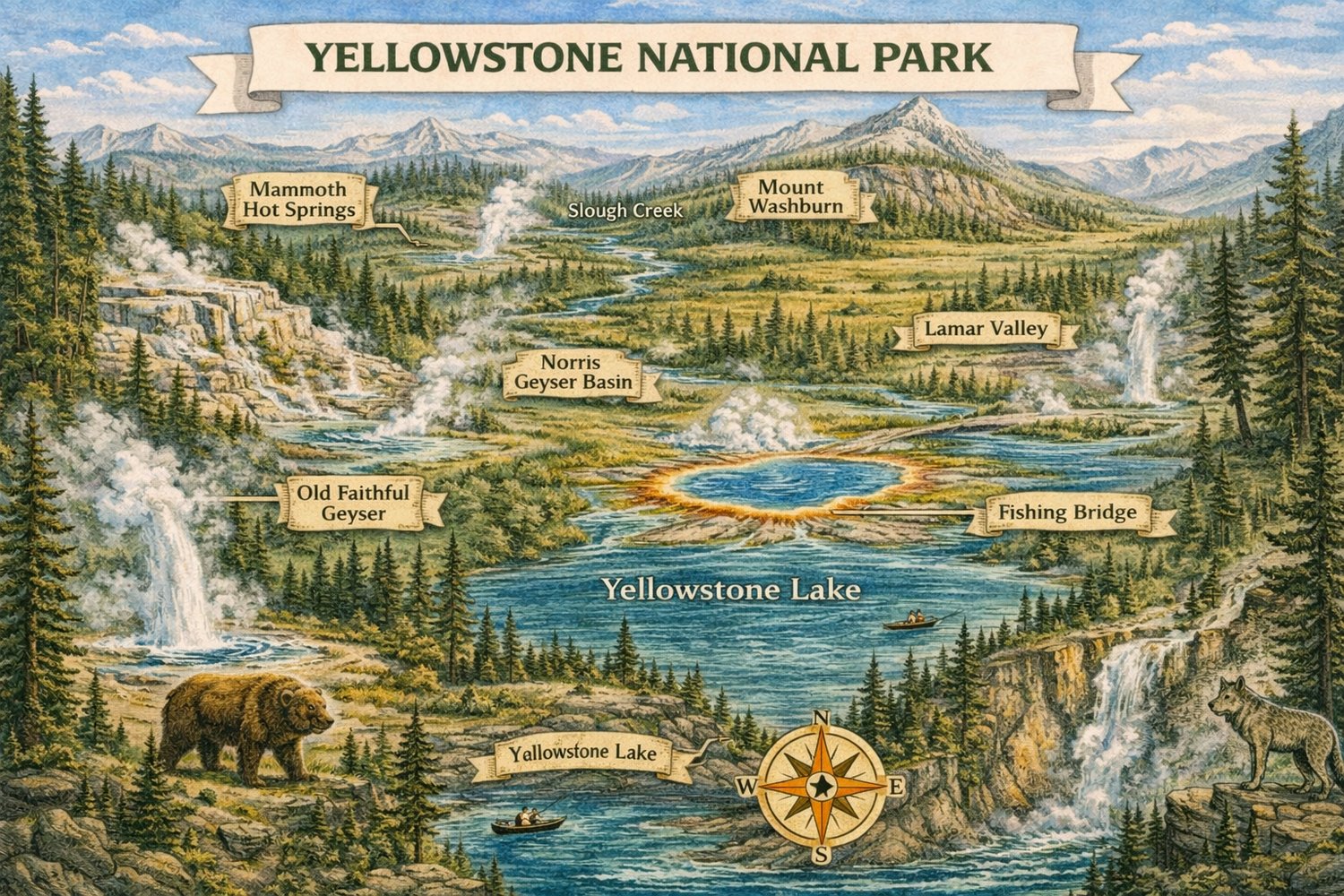
Yellowstone isn’t a single destination.
It’s a series of regions connected by long drives.
- Madison (central, active, popular)
- Canyon (elevation, cooler, more exposed)
- Grant Village (near water, more developed)
- Mammoth (open terrain, wildlife activity)
Before booking, review availability through Yellowstone National Park camping reservations.
Choosing the right region matters more than choosing the “best” campsite.
Timing Changes Everything
Season determines your entire experience.
Late Spring (May–June)
- Cooler temperatures
- Active wildlife
- Some roads still closed
Summer (July–August)
- Full access
- High traffic
- Warmer days, cool nights
Early Fall (September)
- Fewer crowds
- Crisp temperatures
- More predictable conditions
Even in summer, nights drop quickly. A dependable setup from Sleep & Comfort becomes more important than expected.
Build for Distance, Not Convenience
Nothing in Yellowstone is “close.”
Simple tasks take time:
- Getting to trailheads
- Finding food
- Moving between sites
Your setup should reduce effort, not add to it.
Reliable structure from Tents & Storage keeps your base consistent so you don’t have to adjust daily.
Expect Changing Conditions
Yellowstone can shift quickly:
- Afternoon storms
- Wind exposure
- Temperature drops after sunset
This is where defined lighting and controlled evening setups matter. Explore practical options inside Fire & Lighting before heading out.
When the environment changes, your setup should hold steady.
Wildlife Awareness Isn’t Optional
This isn’t a typical campground environment.
Food storage rules are strict - and necessary.
- Keep all food secured
- Follow park regulations
- Maintain clean camp practices
Your layout matters here. Organization isn’t just convenience - it’s safety.
Keep the System Simple
The biggest mistake people make in Yellowstone is overcomplicating their setup.
You don’t need more gear.
You need:
- Shelter that holds
- Sleep that works
- Lighting that supports movement
- Cooking that stays simple
If your system is clean, the rest of the experience opens up.
Yellowstone Rewards Prepared Setups
Yellowstone isn’t about comfort in the traditional sense.
It’s about function.
When your setup works, everything else becomes easier:
- Mornings feel smoother
- Evenings feel longer
- Movement feels intentional
And that’s what makes the trip worth it.
From The Ember Logbook
Camping Bear Equipment
Gear that earns its pack space.