

A blank means you didn’t catch any carp. It happens to experienced anglers as well as beginners, and one quiet trip doesn’t prove your tackle or bait is wrong. The useful question is what you can learn before the next visit. Work through these checks without changing everything at once.
Were you fishing where carp were likely to be?
Think back to what you actually saw. Did carp show near your spot, elsewhere on the lake, or not at all? A comfortable swim and a neat cast are a good start, but neither tells you fish are in front of you.
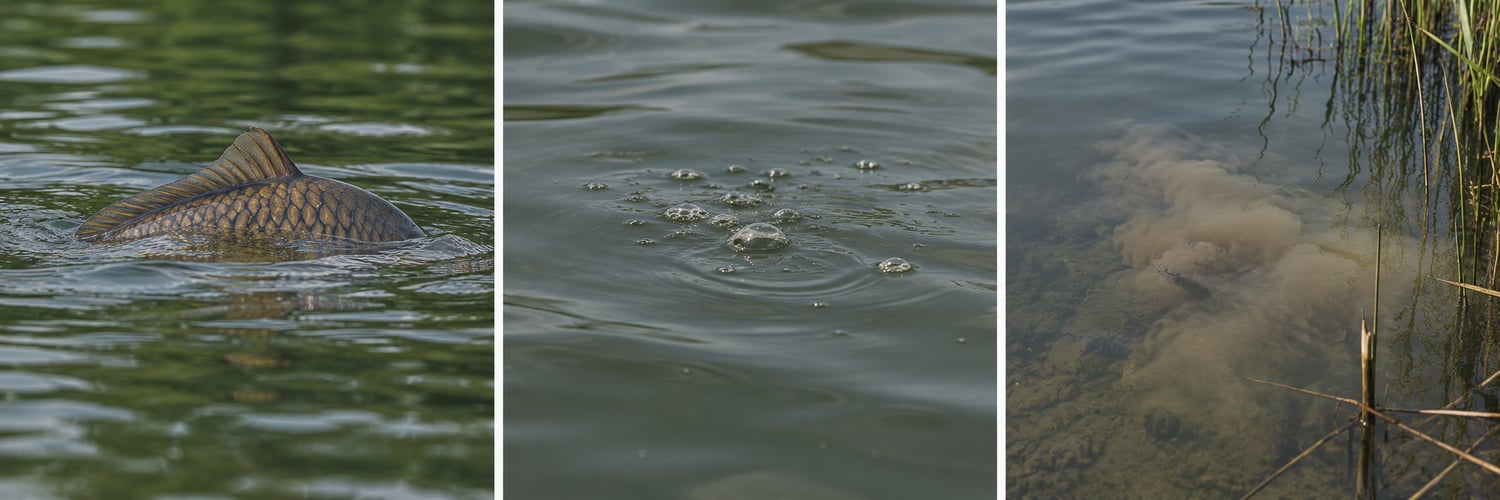
On your next visit, allow time to walk and watch before setting up. Look for showing fish, movement around features and repeated signs of feeding. Bubbles or coloured water can have other causes, so treat them as clues rather than proof. Ask the bailiff where fish have been active and which areas you can fish safely.
Did your rig come back clean?
Check the rig after retrieving it. A hook tangled around the hooklink, a bait buried in debris or a damaged point can leave you waiting without a useful presentation. Note weed, leaves and silt, but don’t assume everything on the hook was there throughout the session; some can be picked up during the retrieve.
Match your rig to the hookbait and lake bed. If you are unsure about the complete setup, take it to your tackle shop or ask the bailiff. Buying a more complicated rig is not the automatic answer to a quiet day.
Could you recognise a take?
Check that line runs through the alarm correctly and that the bobbin is clipped to the line, not the rod. Make sure the rod is secure, the indication system responds and the reel is set appropriately for the situation. Stay close enough to deal with a take promptly.
A carp moving towards you may produce slack line—a drop-back—rather than a screaming run. Equally, wind and small fish can cause isolated indications. Learn what your own setup looks and sounds like, without ignoring sustained movement or striking wildly at every beep.
Did you add bait because the fish needed it?
It is tempting to keep topping up when nothing happens. That can make the situation harder to judge. Think about how much bait you introduced, how accurately you placed it and whether you had any evidence of feeding.
Next time, start with a modest measured amount and keep some back. In cold water especially, more feed is not necessarily more attractive. Concentrate on location and presentation before deciding the answer must be a different flavour or a larger bucket.
Choose one useful change for next time
Write a few notes: venue, swim, conditions, signs of fish, bait quantity, rig and any indications. Record what went well too. Perhaps your casts were controlled, your equipment was ready and you now understand the reel better. That is a useful first session.
Pick one reasoned change—a better-observed swim, a cleaner presentation or more accurate baiting—and keep enough of the setup consistent to learn from it. There are no guaranteed catches, but a clear process is more helpful than starting from scratch every week.
The £9.99 CarpAnswers beginner’s guide brings the essentials together with illustrations, checklists and a fillable fishing log. Try the free sample before deciding whether it is right for you.