

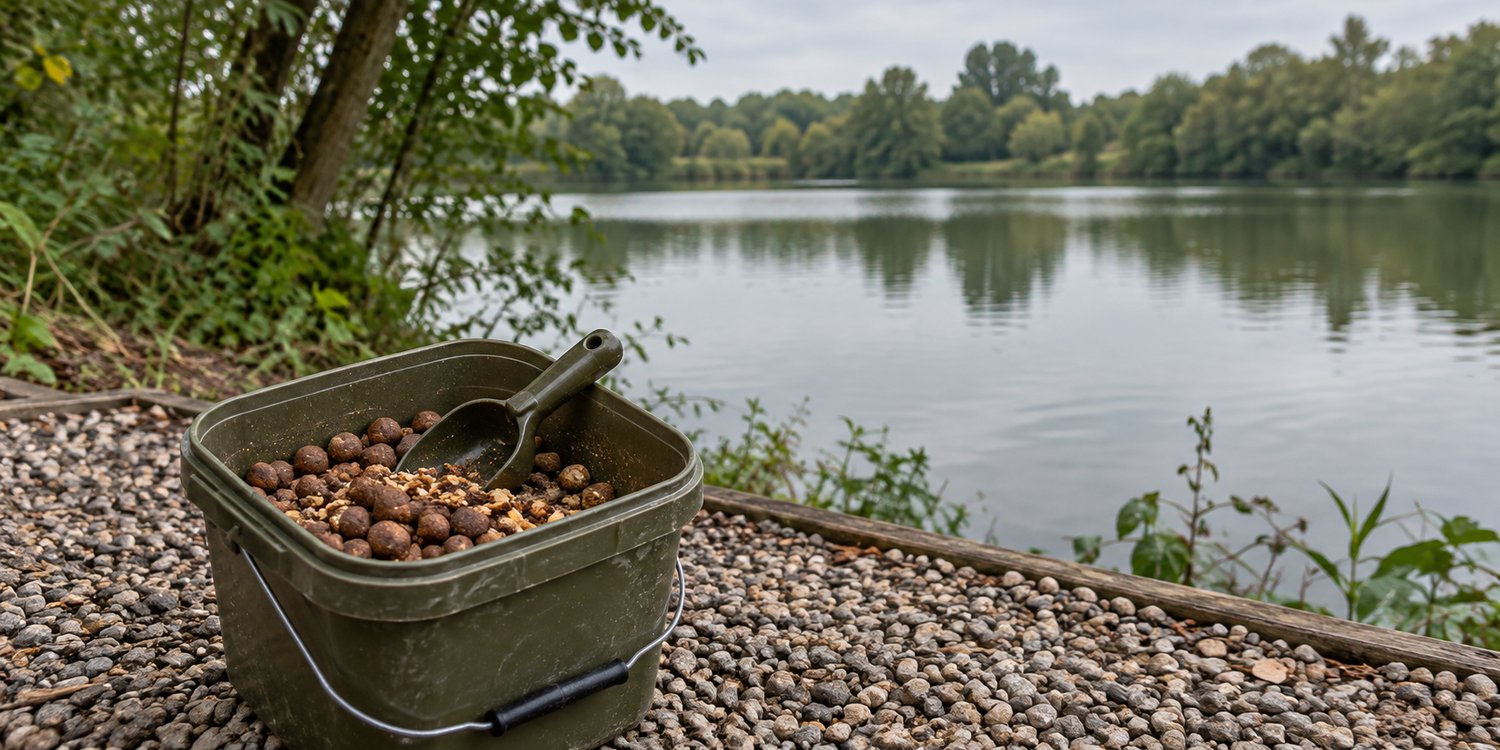
Prebaiting means putting bait into a spot on visits before you intend to fish it. The aim is to encourage carp to return to that area for food. It can be useful when you can visit a lake regularly, but it is not a promise that fish will be waiting when you bring the rods.
The useful part is the combination of feeding and watching. If you keep adding bait without checking what happens, you can spend time and money on a spot that carp are not using.
Check permission before starting a prebaiting routine
Ask the fishery whether prebaiting is allowed, when you may visit and which baits and quantities are permitted. Check any restrictions on bait preparation and storage. Follow the venue’s rules throughout the plan.
Prebaiting does not reserve a swim, which is the position an angler fishes from. If someone is fishing there when you return, leave their water alone. Do not add bait across their lines or expect them to move because you have been feeding the area.
Choose a spot where you can present a rig and land a carp
A spot is the particular patch of water or lakebed you intend to fish. Choose one you can reach accurately, with a suitable route for your line and room to land a fish safely. A snag is an obstruction, such as a submerged branch, where the line or fish could become caught.
Do not rely on feeding to clear an unsafe weedbed or make a snaggy area fishable. Watch for carp using an accessible area, then check whether you can fish it properly. Feeding a place you cannot safely fish gives you a problem later.
Choose prebaiting visits you can fit in
Before putting bait in, decide when you can return to watch the spot. Two or three realistic visits tell you more than an ambitious routine you cannot maintain. There is no fixed number of days between visits that suits every lake.
For example, you might watch an accessible margin before dusk, introduce a small measured amount with permission, then return three evenings later at a similar time. A margin is the water close to the bank. Those timings describe a possible routine, rather than a schedule every angler should copy.
Watch what happens before adding the next amount
Where possible, watch the spot without fishing it so your casting and lines do not disturb the carp. Look for fish returning, pausing and feeding. Keep a short note of the time, place, bait quantity and what you saw.
Missing bait or a cleaner patch alone does not prove carp ate the food. Birds, crayfish and other fish may remove it. If the bait keeps disappearing without useful signs of carp, consider a tougher permitted bait, a different visiting time or another spot. Adding more does not tell you what ate the first amount.
There is no useful universal prebaiting quantity. The right starting amount depends on the venue, conditions, fish activity and other feeding. Use a measured amount within the fishery’s limits, keep some back and review the result before increasing it. Use properly prepared bait and follow its storage instructions.
Change the plan when the lake gives you a reason
Suppose another angler occupies the swim on your second visit. Skip the feed and observe from another accessible position. You do not need to make up the missed portion later. If carp are consistently active elsewhere, investigate that area rather than feeding the original spot out of habit.
When you eventually fish the prebaited spot, account for the food you have already introduced. Do not automatically repeat the full prebaiting amount. Watch the carp and assess your presentation before deciding whether more food is needed. If fish appear distressed, stop fishing and tell the bailiff.
Use your notes to plan the next visit
A useful note might read: ‘Tuesday, 18:00, near-bank clear patch; two carp passed, one paused; small measured feed added; return Friday before dusk to watch.’ On Friday, record what actually happened and whether you fed again.
Even if you catch, the prebait may be only part of the result. You may also have arrived when carp were present or improved your presentation. Compare a few similar visits before deciding the routine is working or increasing the feed.
Read more about feeding and planning carp sessions
The CarpAnswers Guide to Catching More Carp explains prebaiting alongside fish location, casting, rig checks, bait choices and decisions during a session. The 89-page illustrated ebook includes a worked three-visit prebaiting example and fillable pages for planning and reviewing your fishing.