

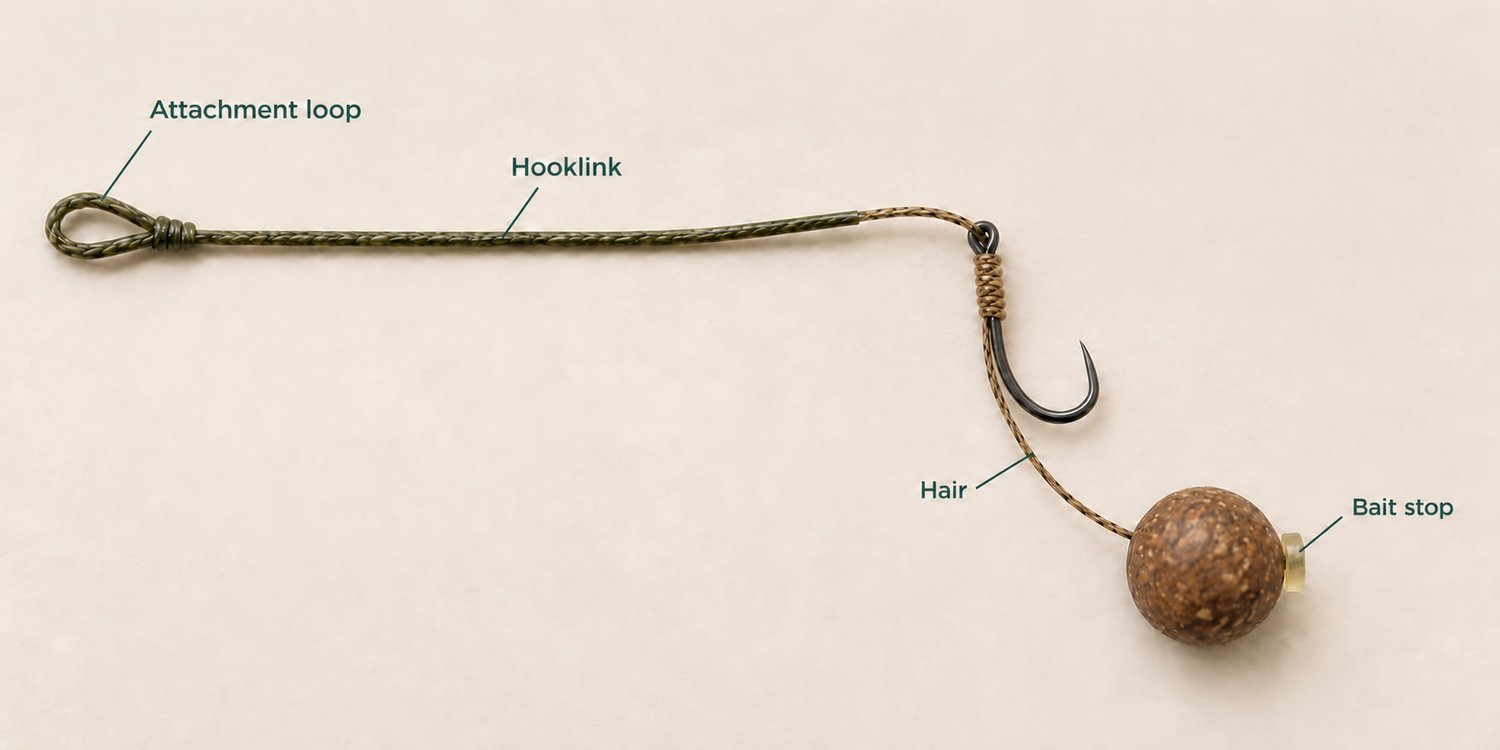
Ready-tied carp rigs are a useful way to get started. You can concentrate on learning to fish while building the confidence to tie your own. But ready-tied doesn’t mean ready for every lake, bait or lead system. These five checks help you choose and use one sensibly.
1. Does the rig suit the lake?
Read the fishery’s hook and rig rules first. Some venues require barbless hooks or restrict particular materials and setups. Check the rig packet for its intended use, hook size, hooklink material and breaking strain. The hooklink is the length of material between the hook and the rig’s attachment point.
A basic bottom-bait hair rig can be a sensible starting point on a suitable clear area. That doesn’t make it a universal answer for deep weed, snags or every kind of lake bed. Ask the bailiff about the bottom and get help selecting a suitable presentation if you’re unsure.
2. Is the hook point sound?
Look closely at the point and bend before use and after retrieving the rig. A point damaged by gravel or a snag can spoil an otherwise sensible setup. Replace a suspect hook rather than hoping it will do.
Check the hooklink for wear, kinks or damaged coating and inspect the knots. Keep fingers clear of the point when checking the rig under tension. Use a proper rig-checking tool if you have one, following its instructions.
3. Does the actual bait fit?
Fit the bait you intend to cast before judging the hair length. The hair is the short section holding the bait beside the hook. The bait needs to be secure without blocking the hook point or crowding the bend. A larger boilie can change that relationship.
Bottom baits, wafters and pop-ups behave differently. A pop-up is buoyant; a wafter is intended to sink slowly when balanced with the hook. Don’t put a buoyant bait on any convenient rig and assume it will sit correctly. Use a rig designed for that bait and check its behaviour in water.
4. Does it connect correctly to the lead system?
Make sure the rig’s loop or swivel fits the intended attachment, is fully secured and is protected as the system requires. Match the rig, lead arrangement and mainline as a complete setup. A collection of individually good components can still be incompatible.
Follow the lead-system manufacturer’s instructions and venue rules. Understand what should release and how to test it before casting. If you cannot explain how your setup works, take it to a tackle shop or ask the bailiff before using it.
5. Can it reach the lake bed without tangling?
Lay the rig out and check that nothing is twisted or caught. Where practical, inspect the complete baited presentation in clear shallow water without snagging the hook, then check again after retrieving it. A rig test beside the bank cannot tell you whether it landed cleanly on a distant spot, but it can reveal an obvious problem.
Keep your early casts controlled and fish an area you can manage. Ready-tied rigs are a starting point, not a shortcut around understanding the setup. The CarpAnswers beginner’s guide explains the parts, connections and checks with illustrations, alongside the rest of your first session.