

Your first carp fishing trip needn’t be complicated. A manageable venue, a simple setup and a little preparation will do more for your confidence than a boot full of tackle. Here’s what to sort before you leave home.
Choose a venue that suits a beginner
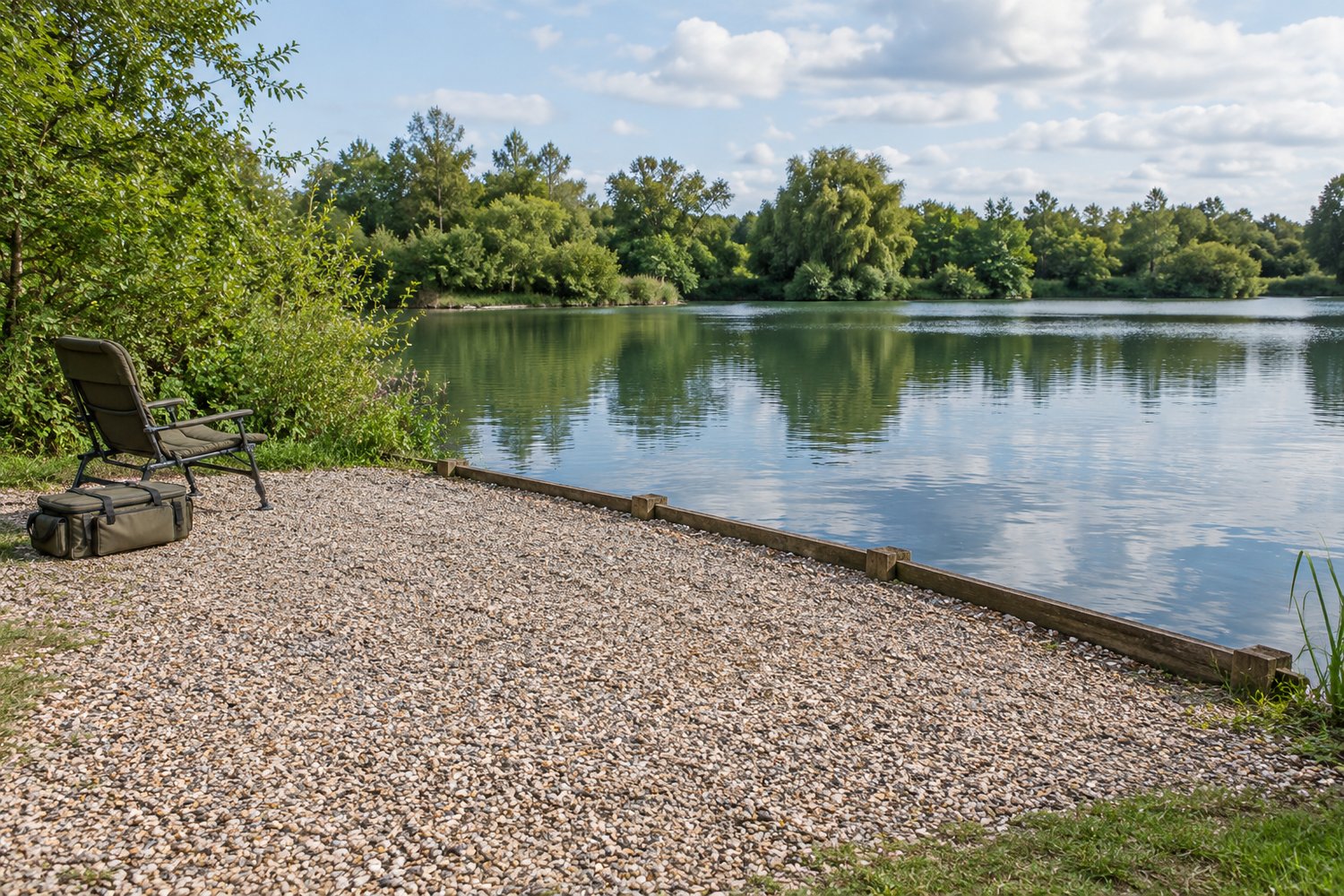
A large, difficult lake might look impressive, but it isn’t necessarily the best place to learn. Look for a well-run fishery with accessible swims and a realistic chance of catching. A swim is the place on the bank from which you fish.
Speak to the bailiff before booking. Ask which water suits a first visit, what tackle and bait are permitted, and whether a suitable swim is available. Check tickets, opening times, parking and any licence you need. The bailiff knows the venue; their advice is far more useful than guessing from a photograph.
Check the rules before buying tackle
Venues can have different rules for hook patterns, mainline, leads, bait and fish-care equipment. Find out what applies before spending money. Your local tackle shop is a good place to get help matching a straightforward setup to the water you intend to fish.
You don’t need high-end equipment. You do need tackle that works together and a net and padded mat suitable for the carp you may catch. Ready-tied rigs are a perfectly reasonable starting point, provided they suit your bait and the venue.
Pack for the whole day
Take clothing for the forecast, waterproofs, food, drinking water and something comfortable to sit on. Keep scissors, baiting tools and unhooking equipment where you can find them. A small checklist is much easier than discovering a missing net when a fish is on.
Allow enough daylight to set up without rushing. Start with one rod if the rules allow: it gives you less to manage while you learn. Put your net together and prepare your fish-care area before the first cast.
Have a simple plan, not a catch target
Walk round before choosing a swim. Look for carp showing at the surface, bubbles or other signs of activity, without assuming every ripple is a carp. Ask the bailiff what has been happening recently.
Choose a comfortable distance you can cast accurately, begin with a modest amount of bait and check your presentation. Stay close to your rod. A blank means you didn’t catch any carp; it doesn’t mean the day was wasted. Learning to cast, recognise indications and pack away confidently is progress too.
See the complete first-trip guide
The CarpAnswers Ultimate Beginner’s Guide to Carp Fishing brings the whole process together, from tackle and casting to landing and returning a carp. The complete illustrated PDF is £9.99. You can look through eight sample pages free before deciding.