

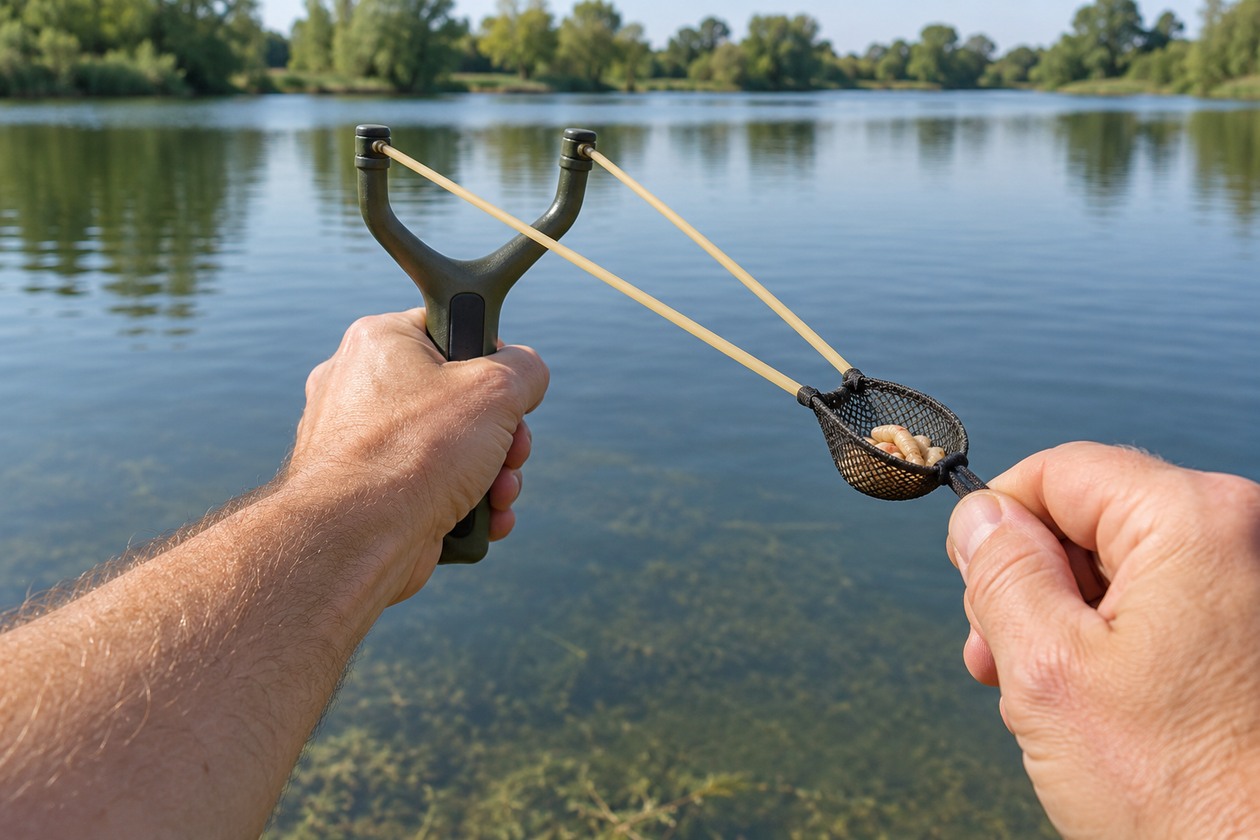
It is tempting to put in a generous helping of bait and hope the fish notice. On a first coarse-fishing trip, though, a little is usually a more useful starting point. You can add more as the session develops. You can’t easily take it back out.
Loose feed is the bait you put into the water around your hookbait. Your swim is the area you are fishing. The aim is to encourage fish to feed where you can present the hookbait, not somewhere just beyond your best cast.
Pick a spot you can reach comfortably
Start close enough to cast and feed accurately. Use a clear far-bank landmark to help keep your direction. A neat little feeding area is easier to fish than bait scattered across half the lake.
At short range, feeding by hand may be all you need. In wind, check where the bait actually lands rather than assuming it followed the float.
Begin with a small pinch
For small-fish maggot fishing, try a few loose maggots rather than a handful, then fish over them and watch what happens. This is a starting point, not a fixed portion for every lake. Fish size, numbers, water temperature and the bait you are using all make a difference.
When you are getting steady bites, small regular top-ups can help. If the swim is quiet, don’t automatically feed more. Check your depth, hookbait and accuracy first. In cold water or when bites are scarce, reduce the amount and give the fish time.
A small catapult can help
A light fishing catapult makes loose-feeding easier when the spot is beyond a comfortable hand throw. Use small loads, a modest pull and the same aim each time. Follow its instructions, inspect the elastic and pouch, protect your eyes and keep the line of fire clear of people. Check that catapults are allowed at your venue.
Practise gently at an empty spot before trying to feed around a fishing float. There is no need to start at maximum range.
Let the bites guide the next handful
Notice what happens after each feed. Do bites arrive quickly, become patchy or stop altogether? Make a small adjustment and see whether it helps. A short note about what you fed is more useful next time than guessing from memory.
The illustrated feeding lessons in The Ultimate Beginner’s Guide to Coarse Fishing take this further, alongside setup, casting and fish care. Read eight pages free before choosing the full book.