

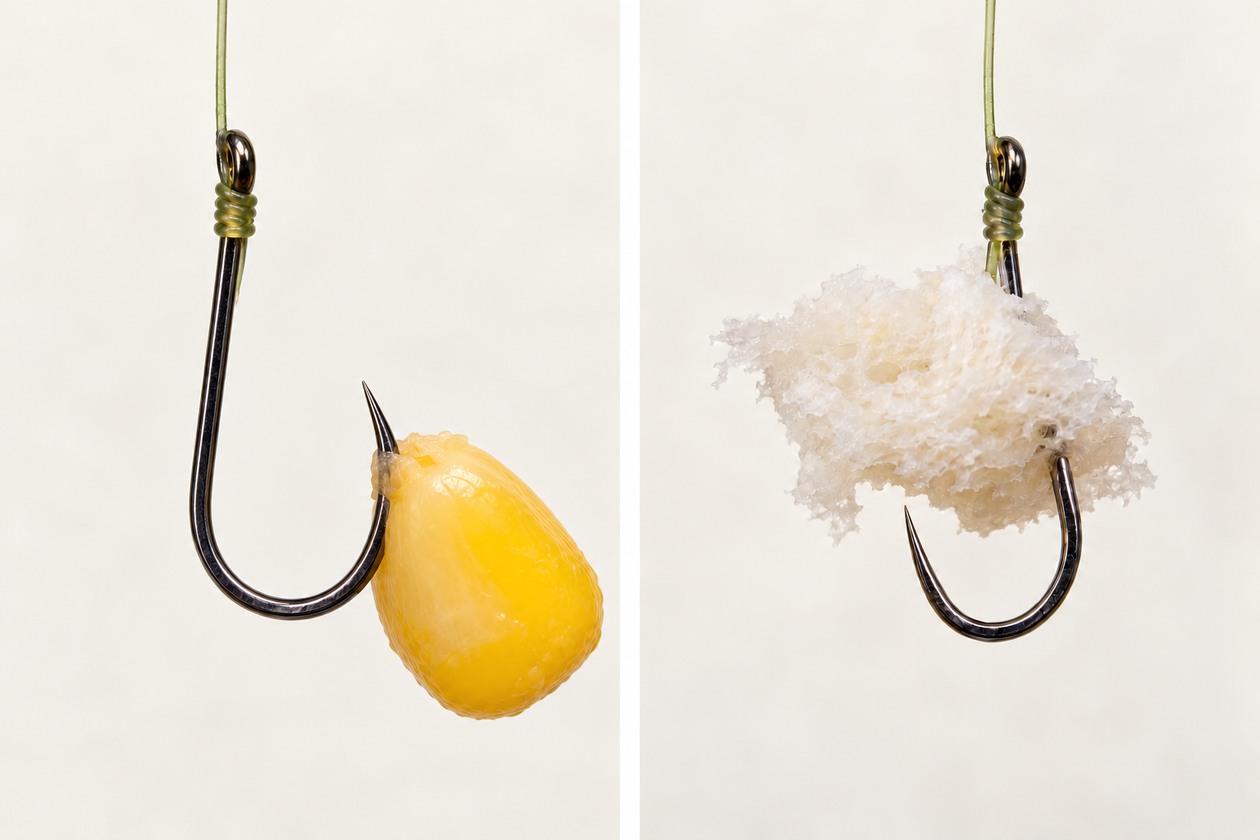
You don’t need a shelf full of bait to get started. A small tub of maggots, a little prepared sweetcorn or some fresh bread can give you plenty to learn with. The best first choice is the one that suits the fish, the venue rules and the tackle you are using.
Ask the bailiff what is working for small fish. You can always experiment later; there is no prize for bringing the most tubs.
Maggots: a useful starting point
Maggots are a familiar choice for mixed coarse fish. Start with a fresh bait on a suitable small barbless hook. Gently nick a small fold of skin at the wider, blunt end and bring the point out again. Avoid pushing the hook through the middle and bursting the bait.
One neatly mounted maggot is often a better starting point than several squeezed onto a tiny hook. Keep the point clear and replace a damaged or emptied bait after a bite.
Sweetcorn: keep the hook point clear
Use soft, prepared sweetcorn. Nick the hook through a small section of skin, with its point showing freely. The grain should not fill the gap between the point and shank. If it does, choose a smaller piece or a hook that suits both the bait and the fish.
A grain of corn is heavier than a maggot, so check how your float sits after switching.
Bread: soft, not a hard little ball
Pinch a small piece of fresh bread around the hook shank, leaving soft edges and an exposed point. A bread punch is another option: it cuts a small disc from a slice. Keep spare bread covered and cast gently, because a delicate bread bait can come off.
Make one change at a time
If bites stop, check the bait and hook first. Then try a small change while keeping the same spot and depth. Switching the bait, depth and feeding all at once makes it harder to learn what helped.
Use only baits permitted by the fishery and keep them fresh. Take unused bait and litter home rather than tipping the leftovers into the lake.
More pictures, less guesswork
With pictures beside each lesson, The Ultimate Beginner’s Guide to Coarse Fishing includes illustrated bait-mounting lessons, feeding advice and options to try as you gain confidence. Try the free sample to see the friendly style and practical detail.
Further reading: Canal & River Trust’s bait and hook guidance.