

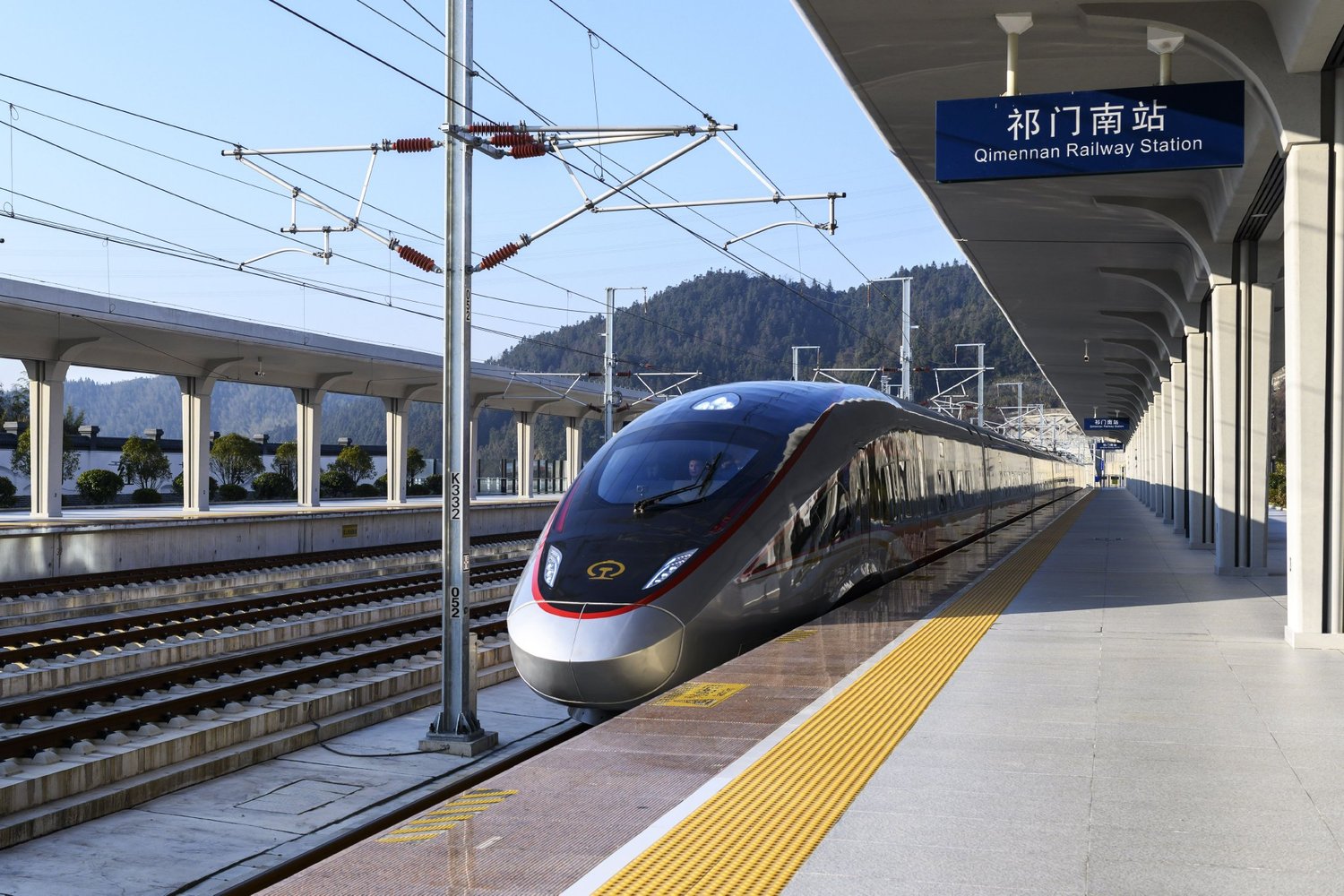
China’s high-speed rail (HSR) system is one of the fastest, most efficient, and cost-effective ways to travel across the country. With speeds reaching up to 350 km/h (217 mph) and a vast network covering over 40,000 km (24,850 miles), it offers a seamless travel experience for tourists exploring China.
Whether you’re visiting the Great Wall in Beijing, the Terracotta Warriors in Xi’an, or the bustling Bund in Shanghai, HSR is often the best way to get around. This guide will walk you through everything you need to know—from booking tickets to arriving at your destination—so you can navigate China’s high-speed rail system like a pro.
1. Understanding China’s High-Speed Rail System
Why Choose High-Speed Rail?
Compared to domestic flights, HSR is:
✅ Faster for medium distances – No long airport check-ins or security delays.
✅ More comfortable – Spacious seats, smooth rides, and minimal turbulence.
✅ Affordable – Often cheaper than flights, especially for second-class tickets.
✅ Eco-friendly – Less carbon footprint compared to air travel.
Types of High-Speed Trains
China operates different types of high-speed trains:
🚄 G-Trains (高速) – The fastest, reaching speeds up to 350 km/h. Ideal for long-distance travel.
🚄 D-Trains (动车) – Slightly slower (250 km/h), often running overnight or on regional routes.
🚄 C-Trains (城际) – Short-distance intercity trains connecting nearby cities (e.g., Beijing-Tianjin).
Each train type offers different speed and comfort levels, so check your itinerary when booking.
2. Booking Your Ticket
Where to Book Tickets?
Buying train tickets in China is simple but requires advance planning. Tickets are released 15 days before departure (sometimes 30 days during peak seasons).
🛒 Best Ways to Book:
- Official 12306 Website/App (🇨🇳 Chinese-only)
- Ctrip (Trip.com) – Recommended for English speakers
- Hotel & Travel Agencies – Slightly pricier but convenient
💡 Tip: Always book early! Popular routes (e.g., Beijing-Xi’an, Shanghai-Guilin) sell out fast, especially during holidays like Chinese New Year and Golden Week (Oct 1-7).
Ticket Types & Prices
🎫 Second Class – Budget-friendly and comfortable (similar to economy class on planes).
🎫 First Class – More spacious seating and a quieter environment.
🎫 Business Class – Lie-flat seats, VIP treatment, and ultra-luxurious experience.
🔹 Example Ticket Prices: (as of 2025, subject to change)
- Beijing → Xi’an (G-train, 4.5 hours)
- 🚆 Second Class: ¥515 ($72)
- 🚆 First Class: ¥824 ($115)
- 🚆 Business Class: ¥1,627 ($227)
- Shanghai → Hangzhou (G-train, 1 hour)
- 🚆 Second Class: ¥73 ($10)
- 🚆 First Class: ¥117 ($16)
- 🚆 Business Class: ¥226 ($32)
3. Arriving at the Train Station
What to Expect at Chinese Train Stations?
🚉 Chinese train stations are huge, more like airports than regular railway terminals.
Step-by-Step Process:
✅ Arrive at least 40 minutes early – Security checks can be time-consuming.
✅ Security Check – Your passport and ticket are required for entry.
✅ Electronic Boards – Check your train number and platform.
✅ Waiting Area – Similar to an airport departure lounge.
✅ Boarding Gates Open 15-20 Minutes Before Departure – Get in line early!
💡 Tip: Some stations (like Beijing South and Shanghai Hongqiao) are far from the city center, so factor in at least an hour of travel time from your hotel.
4. Boarding & Riding the Train
How to Board the Train Smoothly
1️⃣ Find Your Carriage – Match your ticket number with the LED signs on the platform.
2️⃣ Luggage Storage – Overhead racks for small bags; large suitcases go in designated compartments.
3️⃣ Seating Arrangements – Most second-class seats are arranged 2-3 per row, while first-class has 2-2 rows for more comfort.
💡 Tip: Second-class cabins can be noisy. Bring earplugs if you want a peaceful ride.
Onboard Experience
🛒 Food & Drinks – Trolleys sell snacks, but it's best to bring your own food.
🔥 Hot Water Dispensers – Perfect for tea or instant noodles (a train travel classic!).
📶 Wi-Fi & Power Outlets – Some trains offer Wi-Fi, but a VPN is needed for foreign websites. Outlets are available under the seats.
5. Arriving at Your Destination
🚉 Trains are punctual – Have your bags ready before arriving.
🚖 Exiting the Station – Follow the 出口 (Exit) signs.
🚗 Need a Ride? Use Didi (China’s Uber) or take the metro to your next stop.
💡 Tip: In major cities, train stations are linked to subway lines. Look for the 地铁 (Metro) signs to avoid overpaying for taxis.
6. Best High-Speed Rail Routes for Travelers
Here are some must-try high-speed rail journeys that offer incredible views and cultural experiences:
🌍 Beijing → Xi’an (4.5 hours) – Visit the Terracotta Warriors and ancient city walls.
🌍 Shanghai → Hangzhou (1 hour) – Explore the stunning West Lake and tea plantations.
🌍 Guangzhou → Shenzhen (30 min) – A quick hop between two mega cities.
🌍 Chengdu → Chongqing (1.5 hours) – Spicy hotpot capital of China, plus panda sanctuaries!
🌍 Kunming → Dali → Lijiang (2-3 hours each) – Breathtaking Yunnan province landscapes.
💡 Tip: High-speed trains are great for multi-city China trips—you can cover Beijing, Xi’an, Chengdu, and Shanghai efficiently without flying!
Final Thoughts: Why You Should Try China’s High-Speed Rail
✅ Fast – Travel from Beijing to Shanghai in just 4.5 hours (vs. a 2-hour flight + airport hassles).
✅ Affordable – Comfortable second-class tickets often cost less than flights.
✅ Eco-Friendly – Reduces carbon emissions compared to flying.
✅ Scenic – See China’s countryside, mountains, and rivers from your window.
🚄 So next time you visit China, skip the stress of domestic flights and ride the rails instead! Whether you're a solo traveler, a couple, or a family, China’s high-speed trains offer a smooth, efficient, and fun way to explore the country.
🔹 Ready to book? Plan your trip today and enjoy the adventure
Did you find this guide helpful? Let us know in the comments! 🚆✨
Comments ()