


If you talk to five different language internet gurus, you’ll get five different pieces of intense advice. One will tell you to grind Anki flashcards for two hours a day. Another will say you need to study thick grammar textbooks until your eyes water.
With all this emphasis on "the grind," it’s easy to feel skeptical about a gentler approach. You might find yourself asking: Can I actually learn a language as complex as Japanese just by reading simple stories?
The short answer is yes, absolutely. In fact, cognitive science shows that reading level-appropriate stories is one of the most efficient ways to build real, lasting fluency.
Here is why story-based learning isn't just a fun alternative—it's actually a superpower for your brain.
The Science: Comprehensible Input
Linguists and educational researchers have known for decades that humans don't acquire languages by memorizing rigid rules and formulas. Instead, we acquire language through a concept called comprehensible input.
Comprehensible input is language material that you can naturally understand, even if you don't know every single word yet.
When you read a story where you understand roughly 90% to 95% of the text, your brain does something incredible: it automatically uses the surrounding context, pictures, and flow of the narrative to guess the meaning of the remaining 5% to 10%.
You don't need a dictionary to tell you what a new word means because the story itself makes it obvious. Because your brain had to do a tiny bit of satisfying puzzle-solving to figure it out, that new word sticks in your memory far better than a word on a detached flashcard ever could.
Why Stories Outperform Flashcards and Textbooks
When you memorize a list of words from a textbook, they exist in a vacuum. Your brain struggles to remember them because they don't have any emotional weight or real-world connections.
Stories completely flip this dynamic by providing three crucial ingredients:
- Emotional Anchors: You care about the characters. Whether it's a cozy slice-of-life scene or a cute comic about a capybara, your brain pays closer attention when a narrative is engaging. Emotion creates memory.
- Grammar in Action: A textbook can give you a definition of a particle. A story shows you that particle navigating a sentence over and over again. You absorb the grammar passively, developing an intuitive "gut feeling" for what sounds right.
- High-Frequency Repetition: Because simple stories naturally reuse common daily vocabulary (like eating, walking, talking, and locations), you get exposed to essential words repeatedly without feeling like you're doing boring repetition drills.
The Big Catch: It Has to Match Your Level
While reading stories is highly effective, there is one major trap that beginners fall into: trying to read native material too early.
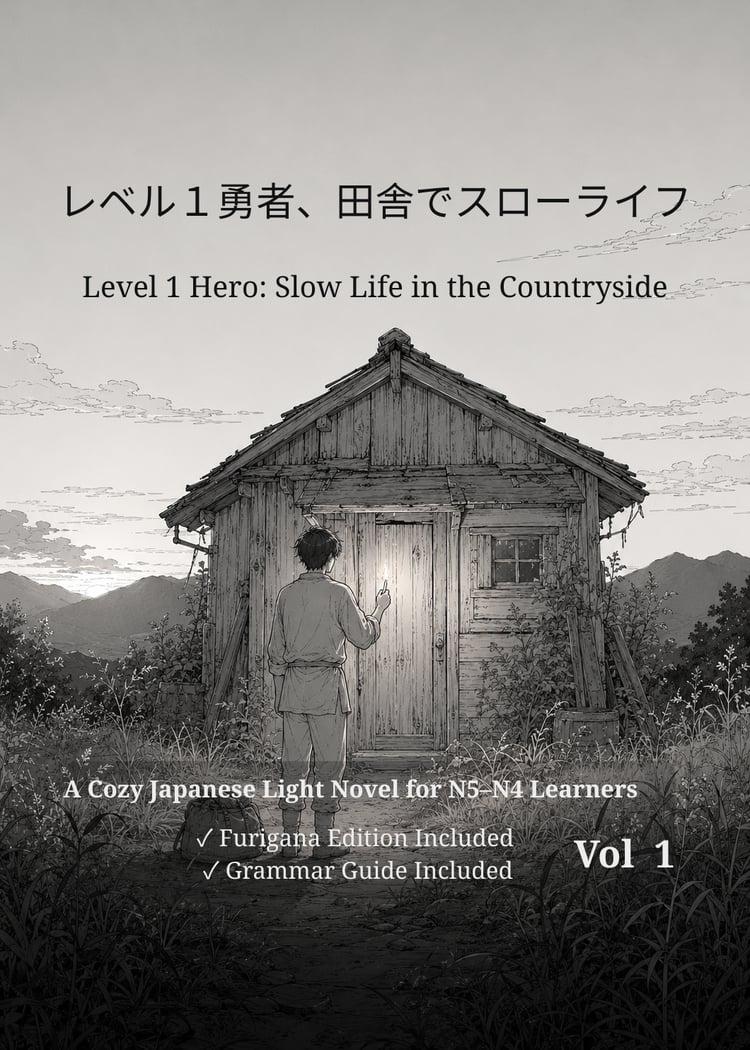
If you pick up a standard Japanese light novel or a popular shonen manga right after learning hiragana, comprehension breaks down completely. Instead of acquiring the language naturally, you spend all your energy flipping through a dictionary.
To actually learn through stories, you need texts designed specifically for early learners—materials that use simple grammar, limited N5 vocabulary, and helpful visual guides.
Test It Yourself for Free
You don't have to take my word for it. The best way to see how story-based learning works is to try it right now without spending a single cent.
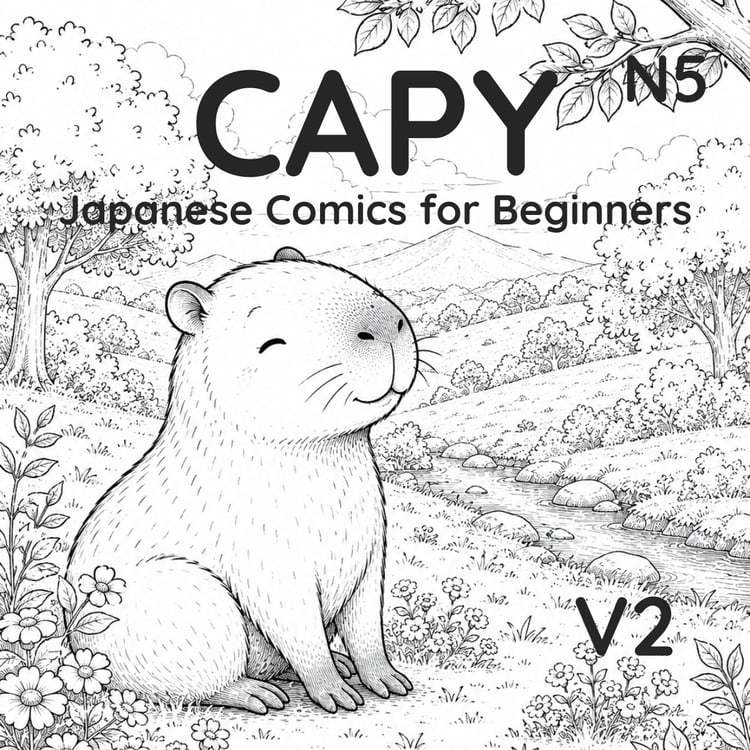
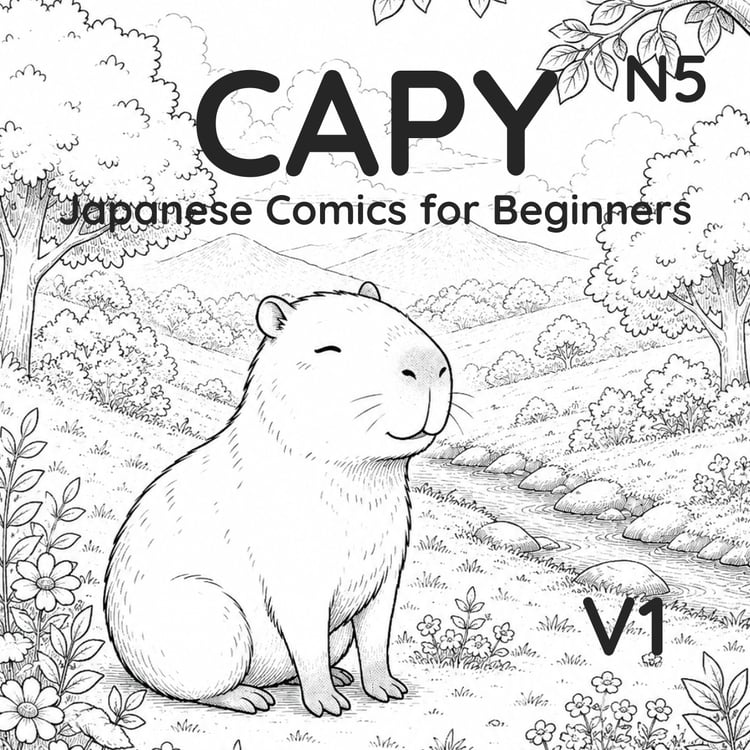
We’ve put together a Free Story Sample of Capy Comics so you can test this exact method yourself. The sample features an adorable, beginner-friendly comic strip with full furigana support and simple language. Look at the drawings, follow the short text panels, and watch how quickly you can understand a real Japanese story without feeling overwhelmed by textbook charts.
Build Your Cozy Reading Routine
Once you've tasted how satisfying it is to read real Japanese script through stories, you can easily expand your routine with these level-appropriate resources from our shop:
- Capy Comics: The full collection of ten original, cozy graded reader comics designed specifically for N5 beginners. It offers the perfect visual bridge to help you practice real Japanese immersion completely stress-free.
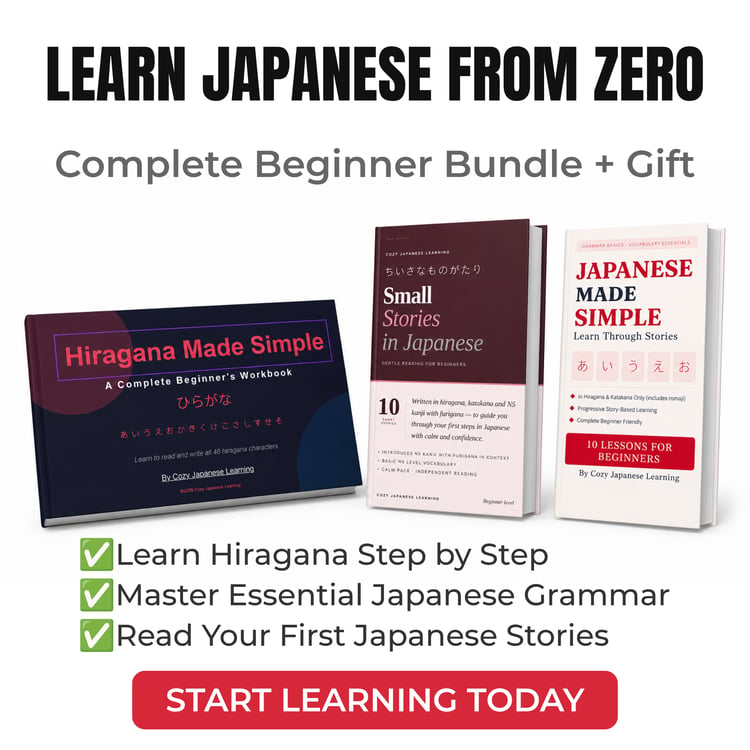
- Small Stories in Japanese: A collection of ten bite-sized, level-controlled text stories that help you smoothly transition from comic panels into reading longer paragraphs with ease and confidence.
- Japanese Made Simple: Learn Japanese Through Stories: Our flagship story-based course. It introduces essential Japanese grammar points one single concept at a time, immediately reinforcing each one through short, inviting kana narratives.
Learning Japanese doesn't have to feel like an endless chore of flashcards and exercises. Grab your free sample, sit back with a warm drink, and let stories guide you toward true reading fluency.
Browse the Cozy Japanese Learning Shop for Beginner Graded Readers & Comics
Unlock the Entire Cozy Learning Ecosystem
Learning a language is a continuous journey, and having the right level-appropriate resources ready when you need them makes a massive difference.
If you want to build a sustainable, self-paced routine without buying expensive textbooks one by one, consider joining our community:
- Explore the Cozy Japanese Learning Membership: Hosted on Ko-fi, our membership tier gives you unlimited, instant access to our entire catalog of digital books, visual workbooks, and every single volume of our beginner-friendly Capy Comics. You also unlock all future releases automatically.
Joining the membership means you never have to wonder what resource to buy next as you move from absolute zero up through the beginner levels. Plus, your support directly helps keep this blog running and allows us to keep creating gentle, story-based materials for self-taught learners just like you.
Comments ()