

Japanese Immersion for Beginners: Why It Works and How to Start
You've probably heard that Japanese immersion for beginners is one of the best ways to learn the language. Watch anime. Read manga. Surround yourself with Japanese.
It sounds great in theory. In practice, if you're a beginner, it often goes like this: you open something in Japanese, understand almost nothing, feel overwhelmed, and close it. That's not immersion. That's just confusion.
Real Japanese immersion isn't about forcing yourself through content made for native speakers. It's about finding reading and listening material at the right level and staying with it long enough for your brain to begin recognizing patterns naturally.
Why Japanese Immersion Works
When you read in a second language, something different happens compared to memorizing grammar rules or drilling flashcards. Instead of consciously applying rules, your brain begins recognizing patterns in context. You see the same word in different situations, and its meaning starts to stick—not because you memorized a definition, but because you've encountered it repeatedly.
This process is often called comprehensible input: language that's just slightly above your current level but still understandable enough that you can follow along. If the material is too easy, you don't learn much. If it's too difficult, comprehension breaks down, and learning slows.
Reading also builds something flashcards can't easily provide: visual fluency. Your eyes begin recognizing common words and kanji combinations as meaningful units instead of individual characters. As your reading speed improves, your brain can focus more on understanding than decoding.
Why Japanese Immersion Is Difficult for Beginners
The research supporting immersion and input-based learning is strong. The challenge is that very little authentic Japanese content is suitable for complete beginners.
Manga, even relatively simple manga, usually assumes knowledge of kanji, vocabulary, and Japanese culture. Native books and articles expect years of language exposure.
Beginner textbooks often have the opposite problem. They introduce grammar through isolated, artificial example sentences that don't resemble real Japanese very closely.
The ideal middle ground is beginner Japanese reading designed specifically for learners. That's exactly why Japanese graded readers exist. They use natural Japanese while carefully controlling grammar, vocabulary, and sentence complexity so learners can actually enjoy reading.
What Makes a Good Japanese Graded Reader?
Several features make Japanese reading practice much more effective for beginners.
Furigana
Kanji without furigana quickly interrupts reading. Furigana lets beginners continue reading without constantly stopping to look up pronunciations. As your vocabulary grows, it gradually becomes a safety net that you rely on less.
Controlled Vocabulary
A good Japanese graded reader introduces new words gradually and repeats them naturally throughout multiple stories. Seeing a word several times in context is far more effective than memorizing it once from a vocabulary list.
Natural Japanese
Grammar is easier to absorb when it's used naturally inside stories rather than presented only as rules to memorize. Even short stories provide meaningful context that helps new patterns stick.
Short Stories
For beginner Japanese reading, shorter is better. Finishing a complete story builds confidence and encourages consistent reading habits.
How to Start Japanese Immersion
If you already know hiragana, katakana, and some basic grammar, you're ready to begin Japanese immersion. You don't need to wait until you've finished an entire textbook.
Small Stories in Japanese is designed for learners at exactly this stage. It contains ten graded reading lessons and two review stories. All kanji include furigana, vocabulary stays within a beginner range, and each story can be finished in a single sitting.
It isn't a complete JLPT N5 course. Instead, its goal is to help you become comfortable reading real Japanese from the beginning.
If you've finished a grammar resource like Japanese Made Simple, it's an excellent next step for developing reading fluency.
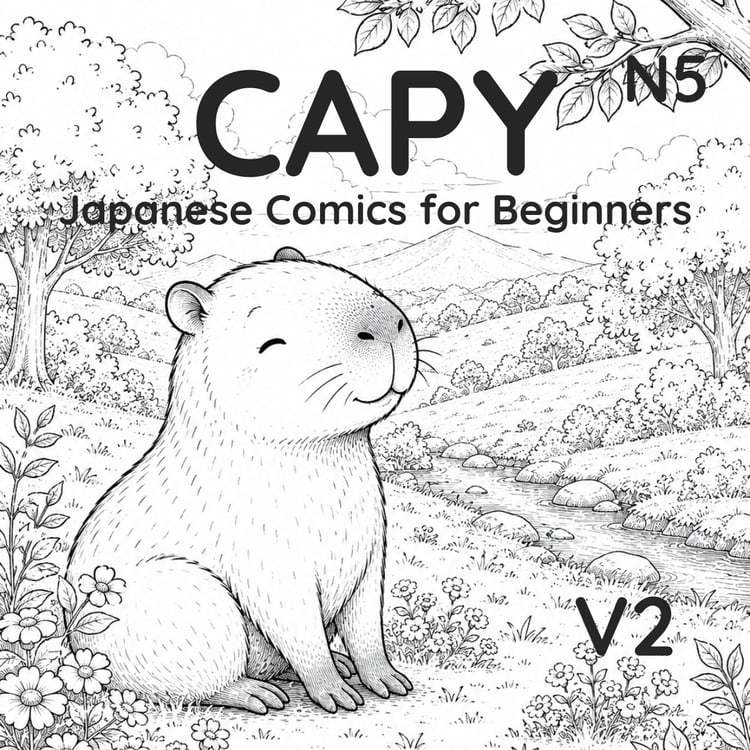
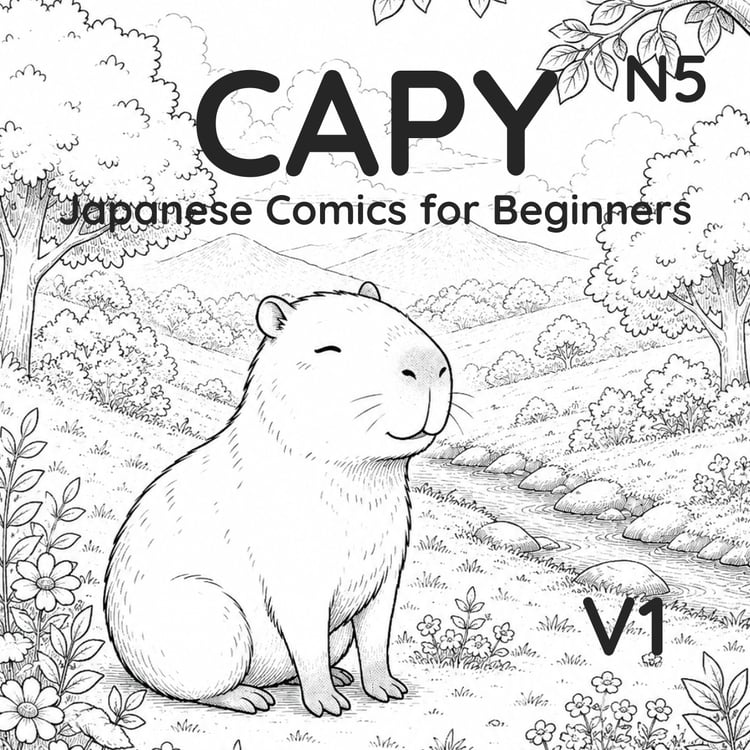
If you prefer comics, Capy Comic Vol. 1 offers another approachable way to practice. It's a collection of ten original Japanese graded reader comics designed for N5 learners. Every comic uses natural, beginner-friendly Japanese, includes furigana for all kanji, and keeps grammar and vocabulary within an accessible range.
Build the Habit, Not Perfection
One reading session won't transform your Japanese.
Ten will begin to make a difference.
The goal of Japanese immersion for beginners isn't understanding every sentence perfectly. It's building the habit of reading Japanese consistently, becoming comfortable with the writing system, and encountering common vocabulary and grammar often enough that they start to feel familiar.
Start with material that's enjoyable, understandable, and just challenging enough to help you grow.
Unlock the Entire Cozy Learning Ecosystem
Learning a language is a continuous journey, and having the right level-appropriate resources ready when you need them makes a massive difference.
If you want to build a sustainable, self-paced routine without buying expensive textbooks one by one, consider joining our community:
- Explore the Cozy Japanese Learning Membership: Hosted on Ko-fi, our membership tier gives you unlimited, instant access to our entire catalog of digital books, visual workbooks, and every single volume of our beginner-friendly Capy Comics. You also unlock all future releases automatically.
Joining the membership means you never have to wonder what resource to buy next as you move from absolute zero up through the beginner levels. Plus, your support directly helps keep this blog running and allows us to keep creating gentle, story-based materials for self-taught learners just like you.
Grab a warm drink, take it one character at a time, and enjoy the beautiful process of discovering Japanese!
Visit the Cozy Japanese Learning Shop to Browse All Beginner Resources


Comments ()