

Struggling with Japanese textbooks like Genki? Discover why the "firehose" approach causes burnout and learn how a gentler, story-based method can help you read real Japanese faster.
If you’ve ever opened a popular Japanese textbook like Genki or Minna no Nihongo only to close it a few minutes later feeling completely defeated, you are not alone.
Many people start their Japanese journey with a lot of excitement. They learn hiragana and katakana, feel great about their progress, and then hit a massive brick wall the moment they try to learn actual grammar.
Suddenly, you're looking at dense charts, technical linguistic terms, and dozens of unrelated vocabulary words to memorize all at once.
It feels less like discovering a beautiful language and more like studying for a rigid school exam.
If traditional textbooks make you feel overwhelmed, the problem isn't your brain or your ability to learn. The problem is the method.
The Problem with the "Firehose" Approach
Most language textbooks are designed for a classroom setting. They assume you have a teacher to explain the nuances, classmates to practice with, and hours of dedicated homework time every week.
Because of this, they tend to throw a massive amount of information at you simultaneously:
- Several complex grammar points in a single chapter
- Long lists of vocabulary words that don't connect to each other
- Exercises that require you to produce perfect sentences before you've even gotten used to reading them
When you are self-studying, this "firehose" approach quickly leads to cognitive overload. Your brain spends so much energy trying to decode the explanations and memorize the lists that it doesn't have room to actually process how the language works.
A Gentler Path: One Concept, One Story
Learning a language doesn't have to feel stressful. A much more natural, gentler way to learn is to introduce just one new piece of the puzzle at a time, and then immediately see how that piece fits into a real sentence.
Instead of studying three different grammar rules and fifty words today, what if you only focused on how a single particle works? And what if, instead of doing a fill-in-the-blank exercise, you read a short, cozy story that used that exact particle?
When you learn through context, a few wonderful things happen:
You don't have to memorize lists. You naturally learn words because they appear repeatedly in the story. Grammar becomes intuitive. Instead of memorizing a rigid rule, your brain starts to recognize the pattern naturally, just like you did with your native language. It reduces anxiety. When a text is designed to be just slightly challenging but entirely manageable, your brain stays relaxed and receptive to learning.
Focus on Input Before Output
Traditional methods often push beginners to write or speak perfect sentences right away. But forcing output too early can cause a lot of frustration.
Think about how children learn. They listen and absorb the language for a very long time before they ever try to say a full sentence.
By focusing on reading simple, low-stress stories, you are giving your brain the high-quality visual input it needs. You are building a solid foundation of familiarity. Once the patterns look and feel normal to you, understanding them happens automatically.
Start Where You Feel Comfortable
If you are tired of feeling like you're falling behind with traditional textbooks, you don't have to keep forcing yourself through them. Language learning should fit into your life comfortably, whether you have fifteen minutes a day or an hour.
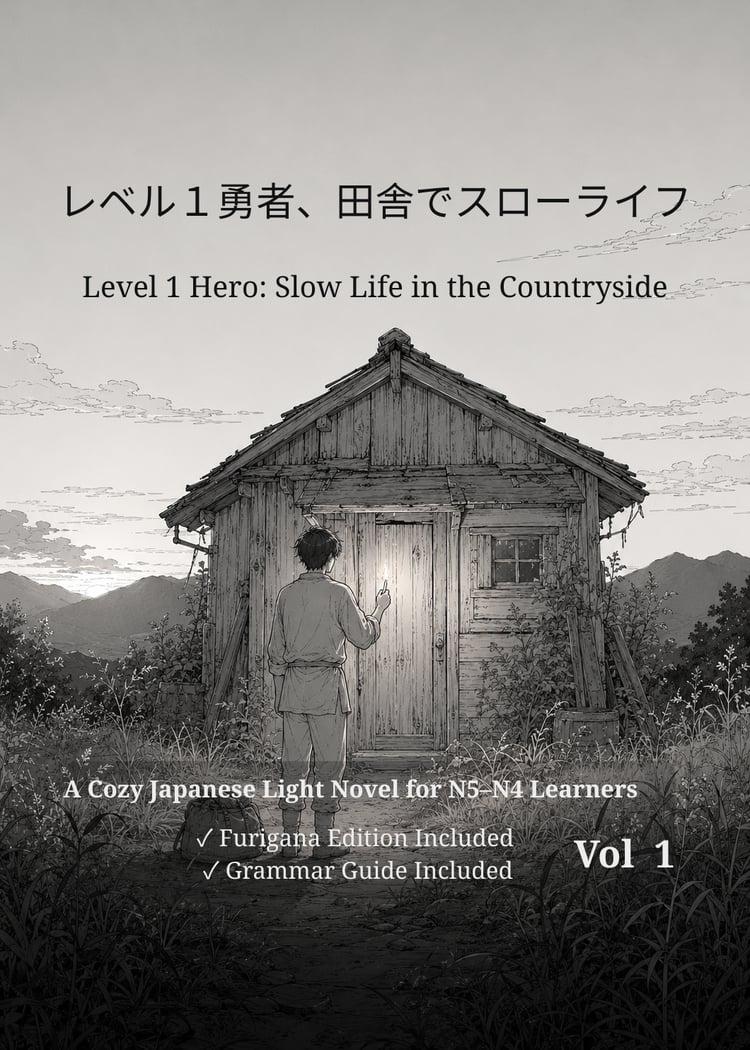
If you're ready for a gentler, story-based approach that guides you one step at a time without the textbook bloat, here are a few resources designed to help you build real reading confidence:
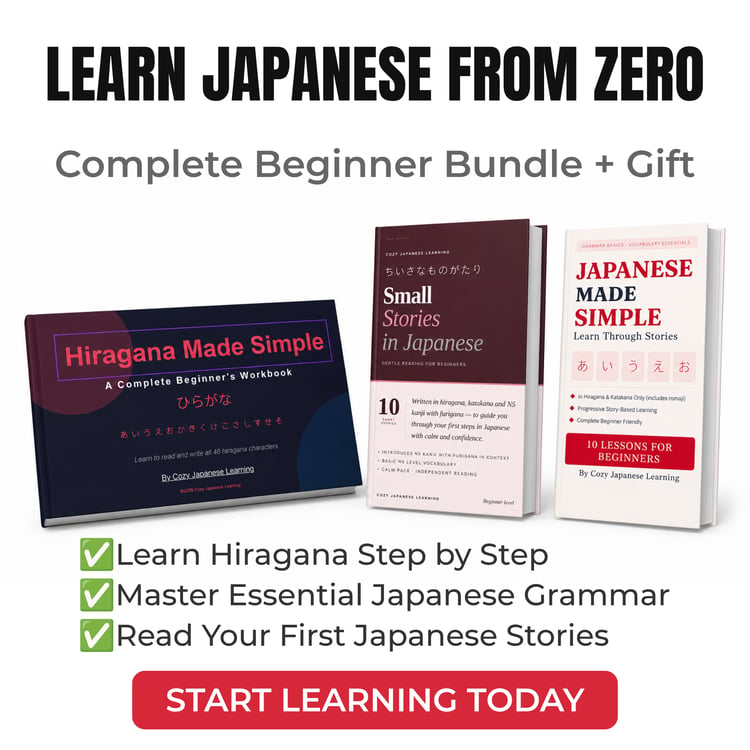
- Japanese Made Simple: Learn Japanese Through Stories: A beginner course that breaks down essential grammar into single, easy-to-digest concepts taught through short kana stories.
- Small Stories in Japanese: A collection of graded reading texts perfect for practicing your visual fluency without getting bogged down by complicated rules.
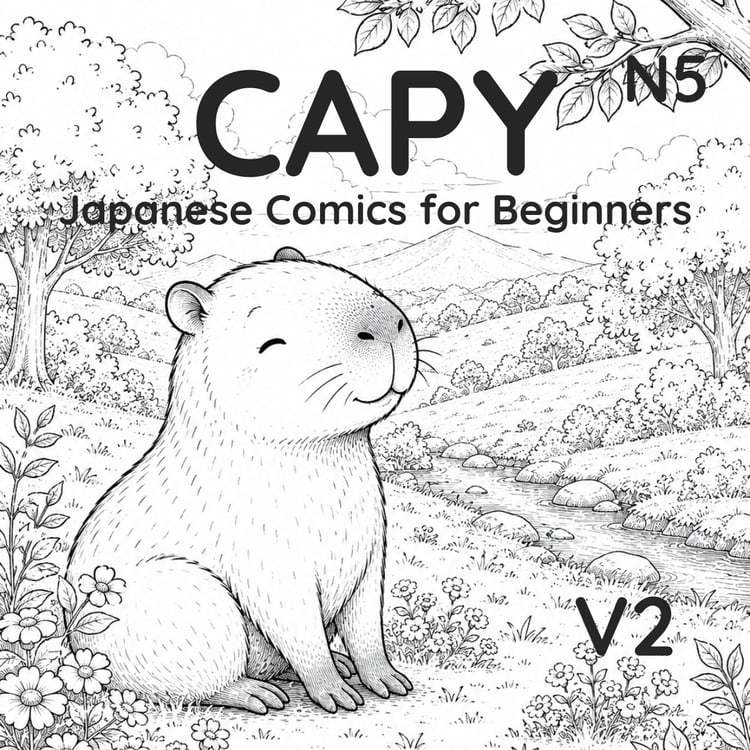
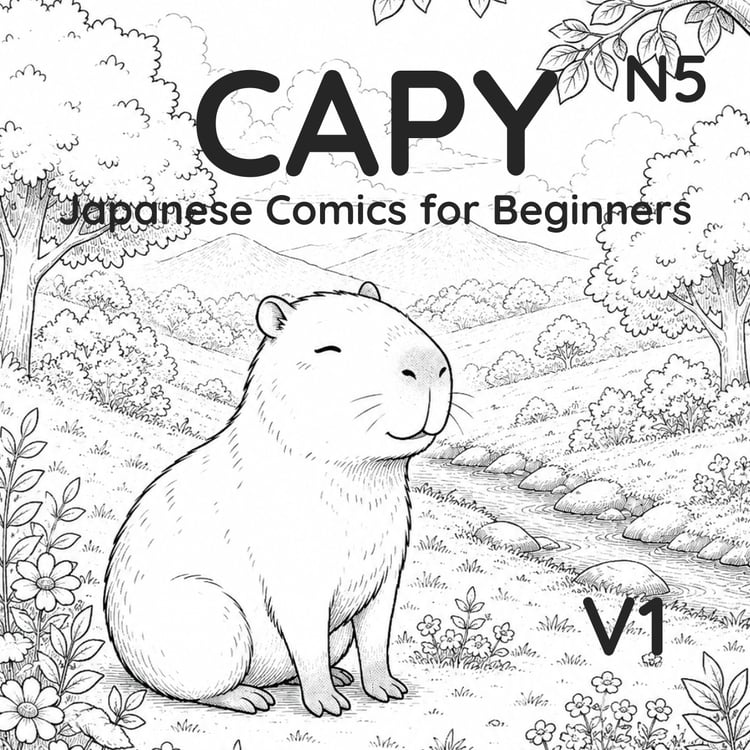
- Capy Comics: Simple, natural Japanese stories in a comic format, complete with furigana to keep your reading practice smooth and enjoyable.
Learning Japanese is a journey, not a race. Give yourself permission to slow down, drop the heavy textbooks, and learn through reading instead.
Frequently Asked Questions
- Can I learn Japanese without a textbook? Yes. While textbooks provide structure, you can achieve fluency faster by consuming content designed for your level, such as graded readers.
- What is the best way to learn Japanese for beginners? The most effective method is "comprehensible input", reading and listening to material that is just slightly above your current level, rather than memorizing isolated grammar rules.
Unlock the Entire Cozy Learning Ecosystem
Learning a language is a continuous journey, and having the right level-appropriate resources ready when you need them makes a massive difference.
If you want to build a sustainable, self-paced routine without buying expensive textbooks one by one, consider joining our community:
- Explore the Cozy Japanese Learning Membership: Hosted on Ko-fi, our membership tier gives you unlimited, instant access to our entire catalog of digital books, visual workbooks, and every single volume of our beginner-friendly Capy Comics. You also unlock all future releases automatically.
Joining the membership means you never have to wonder what resource to buy next as you move from absolute zero up through the beginner levels. Plus, your support directly helps keep this blog running and allows us to keep creating gentle, story-based materials for self-taught learners just like you.
Grab a warm drink, take it one character at a time, and enjoy the beautiful process of discovering Japanese!
Visit the Cozy Japanese Learning Shop to Browse All Beginner Resources
Comments ()