

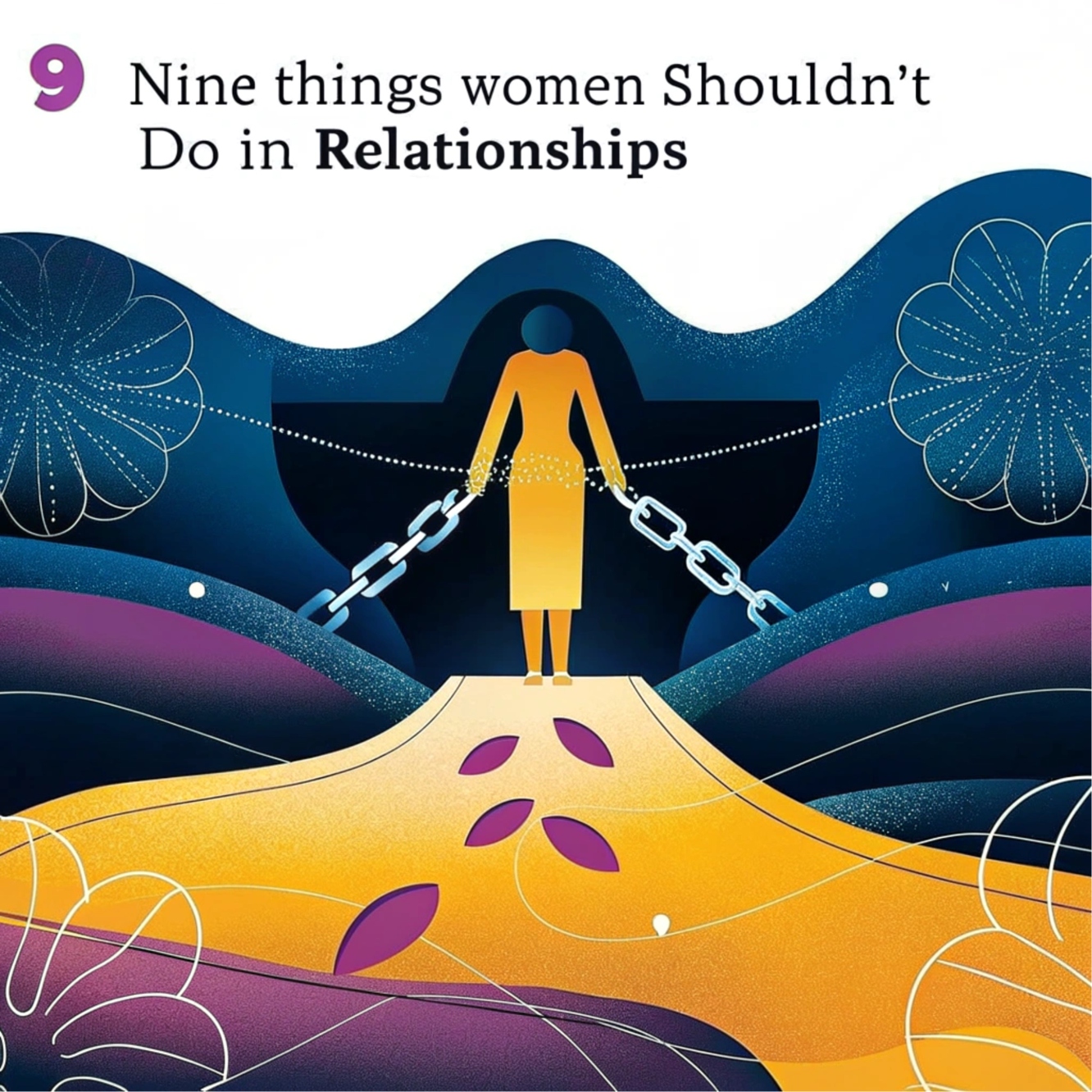

In any romantic partnership, maintaining self-worth, emotional health, and balance is crucial for a fulfilling relationship. This article delves into key actions women should avoid to foster healthier relationships, emphasizing the importance of self-respect, boundaries, and effective communication.
Losing Your Sense of Self
One of the most dangerous paths in a relationship is losing your sense of self through constant compromises and sacrificing individuality. Small compromises can compound over time, leading to a loss of identity and resentment. It begins with changing a preference, setting aside a personal goal, or silencing an opinion for the sake of harmony. This gradual erosion can result in feeling unsure of who you are outside the relationship. Maintaining your sense of self is not selfishness but about honoring who you were before the relationship, including your dreams, aspirations, values, and interests. These qualities are what attract partners initially and are essential for a thriving relationship. Losing yourself can lead to dependency, diminished self-worth, and difficulty leaving toxic situations.
Subscribe to our podcast and gain valuable insights to build healthier, more fulfilling partnerships! 🎙️✨

Disrespecting a Partner's Boundaries
Disregarding a partner's boundaries is damaging to both the individual and the relationship, eroding trust and respect. Boundaries are not walls meant to divide but lines that protect individuality, foster mutual respect, and create a safe space. Ignoring a partner's boundaries might include disregarding their need for personal time, dismissing their feelings, or undermining their independence. This can lead to emotional shutdown and a power imbalance. When boundaries are consistently disrespected, it can create a dynamic where one partner feels entitled to control or dominate the other. Respecting a partner's boundaries is a sign of emotional intelligence and promotes a relationship grounded in mutual understanding where both individuals feel seen, heard, and valued.
Enabling Destructive Behavior
Enabling harmful actions perpetuates negative patterns and erodes the integrity of both the individual and the relationship. Destructive behavior can take many forms: substance abuse, emotional outbursts, financial irresponsibility, or toxic habits that harm the individual, their partner, or the relationship as a whole. Enabling includes passive acceptance, justification, or active participation in harmful actions. True support is holding someone accountable and encouraging growth, not indulging their harmful behavior. Enabling can lead to resentment, an imbalanced relationship, and a lack of accountability for destructive behavior.
Compromising Core Values
Sacrificing deeply held beliefs erodes one's sense of self and creates an unsustainable dynamic within the relationship. Core values are the bedrock of who we are, encompassing beliefs about faith, family, career, ethics, or personal goals. Compromising core values leads to inner conflict, dissatisfaction, and a loss of purpose. This creates an imbalance where one partner's values are prioritized over the other’s. Maintaining core values is not about inflexibility but about understanding what’s truly non-negotiable and fostering an environment where differences are acknowledged and respected.
Allowing Manipulation
Allowing manipulation erodes trust, respect, and autonomy, leading to feelings of powerlessness. Manipulation involves tactics such as control, guilt, deceit, and coercion designed to influence thoughts, decisions, and actions. Forms of manipulation include gaslighting (distorting reality), emotional manipulation (using guilt or fear), and financial manipulation. Manipulation leads to decreased self-esteem, chronic anxiety, and a feeling of helplessness. Breaking free requires a deep commitment to self-awareness and self-respect, as well as setting firm boundaries and seeking support from others.
Subscribe to our podcast and gain valuable insights to build healthier, more fulfilling partnerships! 🎙️✨
Disregarding Communication
Poor communication is a significant misstep that leads to misunderstandings and a breakdown of the relationship. Communication involves active listening, empathy, and openly and honestly expressing one's thoughts, feelings, and needs. Disregarding communication includes avoiding difficult conversations, passive listening, and being distracted by technology. This leads to unresolved issues, isolation, and emotional disconnection, preventing couples from growing together and adapting as circumstances change.

Expecting Your Partner to Read Your Mind
Expecting a partner to intuitively know your needs is unrealistic and unfair. Relationships require clear communication, not telepathy, to understand each other's thoughts, desires, and needs. This expectation leads to frustration, unmet expectations, and misinterpretations. It is your responsibility to articulate your needs and emotions to avoid passive-aggressive behavior and miscommunication. Often, this expectation stems from fears and insecurity.
Relying on a Partner for Validation
Basing self-worth on external validation from a partner creates dependency and leaves you vulnerable to manipulation. Seeking external validation gives the partner authority over your emotional state, while the power of self-validation is paramount. Dependency leads to an imbalanced dynamic where one partner becomes an emotional caretaker, limiting personal growth. The power of self-validation allows you to embrace your strengths and acknowledge your worth without relying on others. When both partners embrace self-validation, it leads to a partnership built on mutual validation and self-respect.
Subscribe to our podcast and gain valuable insights to build healthier, more fulfilling partnerships! 🎙️✨
Sacrificing Personal Goals
Putting personal ambitions on hold for a relationship leads to a loss of self and an imbalanced partnership. Sacrificing goals can be a slippery slope where you continually deprioritize your own needs in favor of the relationship, starting with small compromises that accumulate over time. This leads to resentment, a diminished sense of self-worth, and dependency. A healthy relationship should be a space where both partners support each other's individual growth.
Final Thoughts
Maintaining a strong sense of self, setting boundaries, and engaging in healthy communication are essential for a fulfilling relationship. Avoid compromising your individuality or values in pursuit of a romantic partnership. Self-respect and mutual respect are essential components of a healthy and fulfilling relationship. Relationships should elevate and not diminish one’s sense of self. Stand firm in your worth, demand respect, and pursue a dynamic of equality to pave the way for a partnership that is not only fulfilling but also enduring.
By adhering to these principles, you can foster healthier, more balanced relationships that promote mutual growth and respect. Embrace your individuality, uphold your values, and communicate openly to build a strong foundation for lasting love.
Subscribe to our podcast and gain valuable insights to build healthier, more fulfilling partnerships! 🎙️✨
Thank You!