

By Lady Whistledough
Dearest Gentle Kneader,
It has come to my attention that many a well-meaning baker has been driven to madness over the mystery of the sourdough starter. And truly, can we blame them? Between rumors of wild yeast, discarded goo, and the ever-present fear of mold, it’s no wonder people believe they need a PhD—or at the very least, a full moon and a chant—to get started.
Allow me to set the record straight: you absolutely can do this. In fact, I dare say you shall do it fabulously.
Creating a sourdough starter is not witchcraft.
It is not elite.
It is not complicated.
It is simply... fermentation with flair.
✨ What Is a Starter, Anyway?
A sourdough starter is a living culture of flour, water, and naturally occurring wild yeast and bacteria.
Translation?
It’s flour soup that gets bubbly, bossy, and powerful enough to raise bread without commercial yeast.
It's like a Regency debutante: quiet at first, then completely full of herself and impossible to ignore.
💼 What You’ll Need
Fear not—I shall not send you to the apothecary for rare ingredients. You only need:
- A clean glass jar (a pint mason jar will do)
- ½ cup of flour (all-purpose, whole wheat, rye—Lady’s choice)
- ¼ cup of water (filtered and at room temperature)
- A spoon
- A sense of humor
📆 The 7-Day Starter Schedule (aka “The Scandal Sheet”)
Day 1:
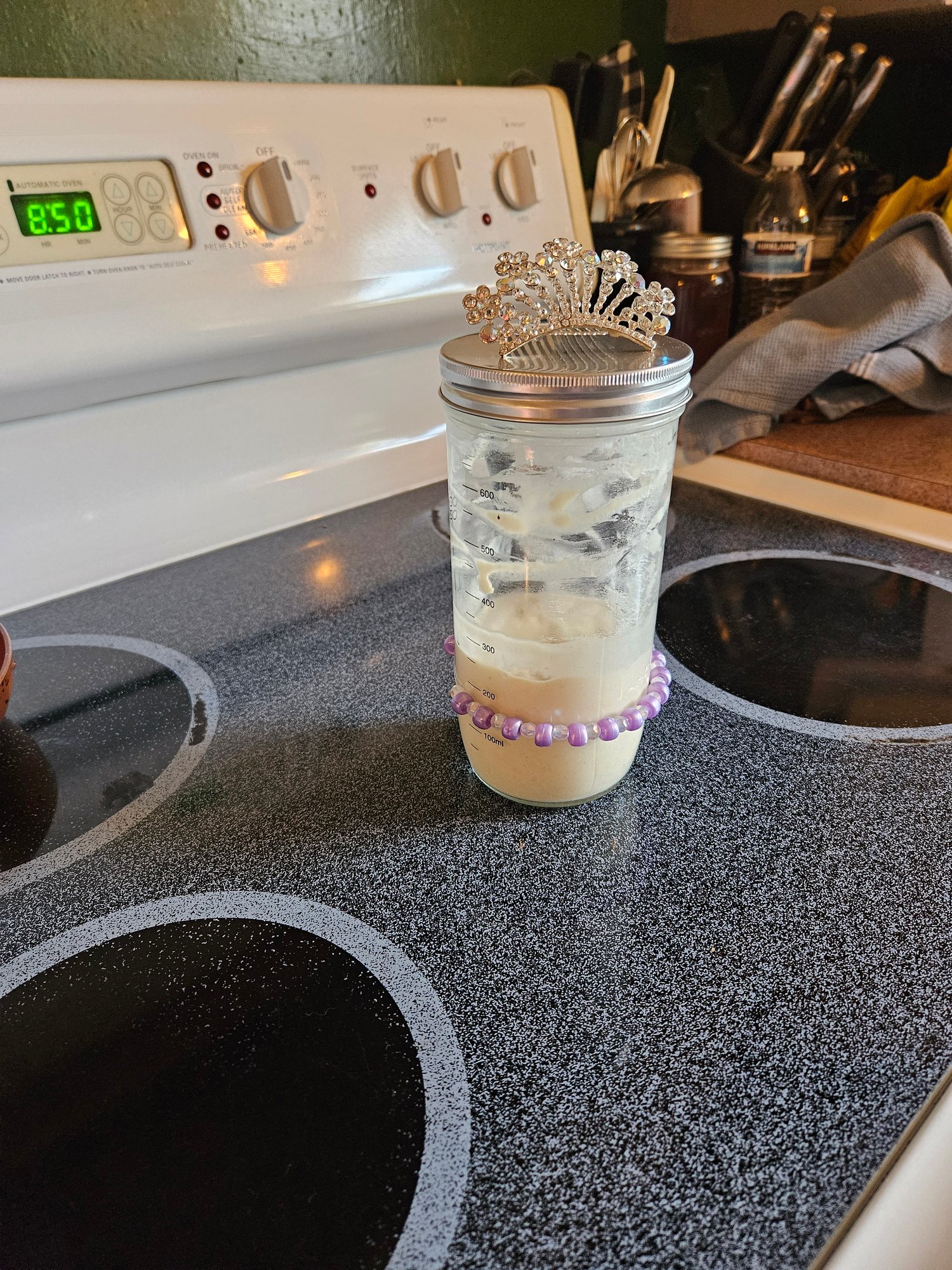
Mix ½ cup flour + ¼ cup water in your jar. Stir well. Leave it uncovered for 15–20 minutes (to say hello to the wild yeasts of your home), then cover loosely with a lid or cloth. Let it sit somewhere warmish (68–75°F).
Day 2–3:
Stir your starter once a day. That’s it. Yes, even if “nothing” is happening. Trust the scandal is brewing beneath the surface.
Day 4:
You may see bubbles. A sour smell. A rise. Or nothing. That’s all normal. Remove (aka "discard") about half of your starter and feed it again:
→ Add ½ cup flour + ¼ cup water. Stir. Repeat daily.
Day 5–7:
By now, your starter should be rising and falling like a character arc in a Jane Austen novel. It may double in size after a feeding. That’s how you know it’s nearly ready for bread-making fame.
📌 For tips:
🦠 But What If It Gets Weird?
- Bold Perfectly normal.
- A bit of gray liquid on top (hooch)? Stir it in those delicious fermentation juices.
- Mold? If you see fuzz or pink/orange growth—start fresh. No shame. Every baker meets this fate at least once.
🧡 Do I Name It?
Is it necessary? No.
Is it delightful? Always.
May I suggest:
- Sir Rise-a-Lot
- Yeast Witherspoon
- Crumb Kardashian
- The Duchess of Dough
- Gerald Dougham
📜 What Comes Next?
Once your starter consistently doubles 4–6 hours after a feeding, it is ready to bake. You, my dear, are now in possession of a living, bubbling, bread-raising powerhouse.
You’ve done it. You’ve conjured life from flour and water—and with barely a whimper.
Was it hard?
No.
Was it dramatic?
Always.
🎁 Want Help Along the Way?
Download the 7-Day Starter Scandal Sheet—a printable The
Download here →https://payhip.com/b/QE0hG
Until next time, may your jars stay bubbly and your flour stay scandalously sifted.
Yours in fermentation and flair,
The Lady Whistledough
Comments ()