

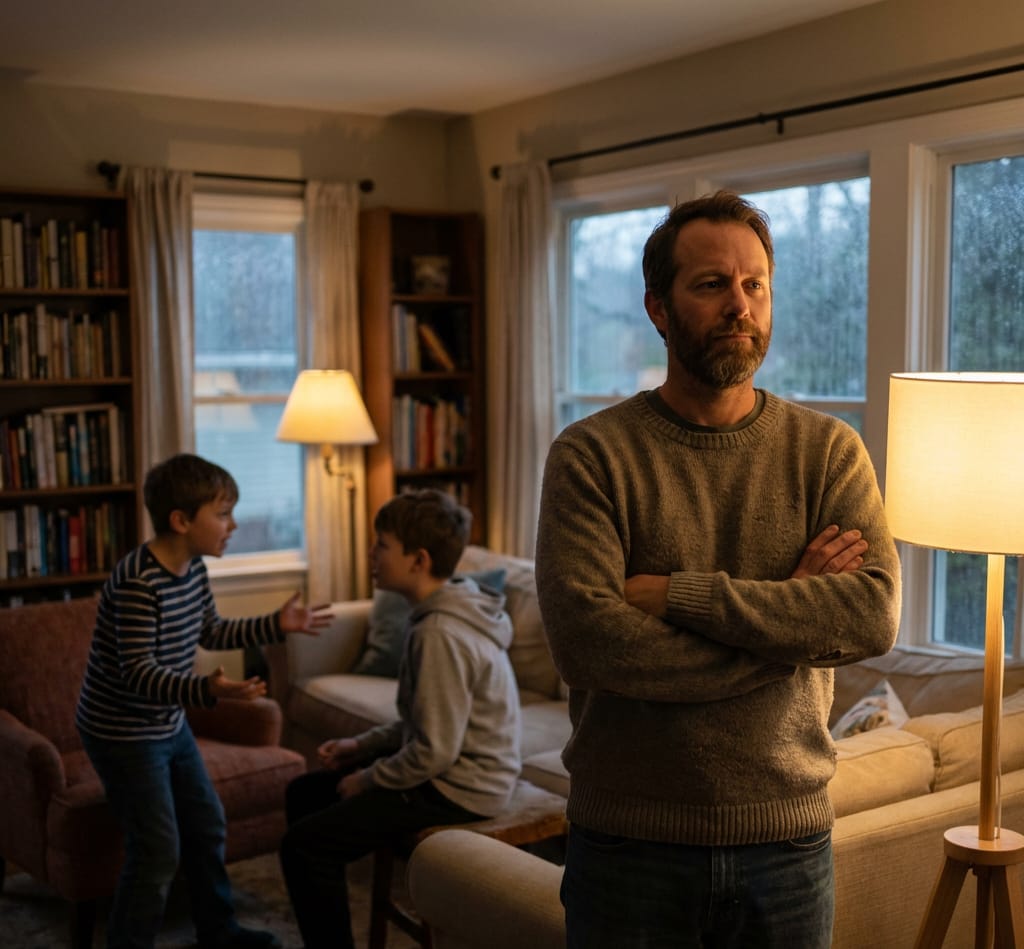
It was late evening.
Homework unfinished. A tablet glowing on the table. Two brothers arguing. The kitchen still messy from dinner.
One of them raised his voice.
The other pushed back.
Their mother looked tired.
The room had that familiar tension — the kind every home experiences when the day has stretched too long.
And in the middle of it, a father walked in.
Not angry.
Not rushed.
Not reacting immediately.
Just observing.
One son looked up first.
Kids always do.
They watch before they listen.
He wasn’t looking for a lecture.
He was watching the reaction.
Because boys measure safety and leadership in microseconds.
The father paused.
And the house waited.
That pause matters more than most fathers realise.
The moment didn’t resolve instantly.
But something important had already happened.
A standard had been seen.
Homes today are under a new kind of pressure.
Constant stimulation.
Digital noise.
Short tempers.
Endless distractions.
Fathers are carrying stress from work, finances, responsibilities, expectations — while raising boys in a world that moves faster than any generation before.
And the result?
Many homes are emotionally reactive environments.
Not intentionally.
But slowly.
This is Fatherhood Under Pressure.
A boy growing up inside emotional instability learns something dangerous:
That authority equals volume.
That leadership equals reaction.
That frustration controls the room.
But the truth is different.
Standards are inherited before they are understood.
And pressure does not create character. It reveals it.
Especially inside a home.
If a boy grows up watching a reactive father, a few patterns tend to appear later in life.
He struggles to regulate emotions under stress.
He mistakes intensity for leadership.
He becomes defensive when challenged.
He avoids responsibility when pressure builds.
Not because he was taught that directly.
But because he saw it repeatedly.
However, when a boy grows up around calm authority, something different forms:
He slows down under pressure.
He observes before reacting.
He respects structure.
He becomes steady in difficult environments.
That difference shows up years later:
In marriage.
In leadership.
In friendships.
In conflict.
This is how fatherhood shapes generations quietly.
A father’s emotional posture becomes the emotional ceiling of the home.
Not speeches.
Presence.
Control.
Consistency.
Here are the pillars behind this law:
1. The Pause Before Response
Strong fathers delay reaction.
Not out of weakness but control.
That pause tells a son:
pressure does not control this house.
2. Tone Shapes Authority
Children don’t just hear instructions.
They measure tone.
Calm instruction builds respect.
Frustrated instruction builds resistance.
3. Stability Over Dominance
Many men confuse authority with dominance.
Real authority feels stable, not intimidating.
Sons follow stability.
4. Emotional Containment
A father absorbs tension rather than spreading it.
This changes the entire climate of a home.
5. Predictability Builds Trust
A boy relaxes when he knows:
My father doesn’t explode.
He leads.
Here are simple actions fathers can apply immediately:
1. The 5-Second Leadership Pause
Before correcting your son this week pause for five seconds.
Observe first.
This rewires the dynamic.
2. Lower Your Voice, Not Your Standard
Deliver discipline calmly but firmly.
Your tone carries more authority than volume.
3. One Calm Correction Per Day
Choose one moment daily where you intentionally lead without emotion.
Your son will notice.
4. Reduce One Source of Household Chaos
Screens during dinner, loud reactions, or rushed mornings.
Leadership begins by stabilizing the environment.
This message is part of a deeper framework being built through The Father & Son Project.
Inside the programs on Payhip, fathers learn how to:
Build authority without becoming harsh
Raise resilient sons in a distracted world
Create structure that boys respect
Lead their home with calm strength
This is for fathers who take responsibility seriously.
Not for:
Passive parenting
Fathers looking for shortcuts
Men who avoid leadership in the home
Because raising a strong son requires intention.
And standards.
The work starts small but the impact lasts generations.
Most people think fatherhood is built through big moments.
It isn’t.
It’s built through tone, posture, presence, and consistency under pressure.
A boy doesn’t just remember what you said.
He remembers how the room felt when you walked into it.
Standards are inherited before they are understood.
Pressure does not create character. It reveals it.
Weight builds gravity.
Growth builds audience.
Leadership begins at home.