
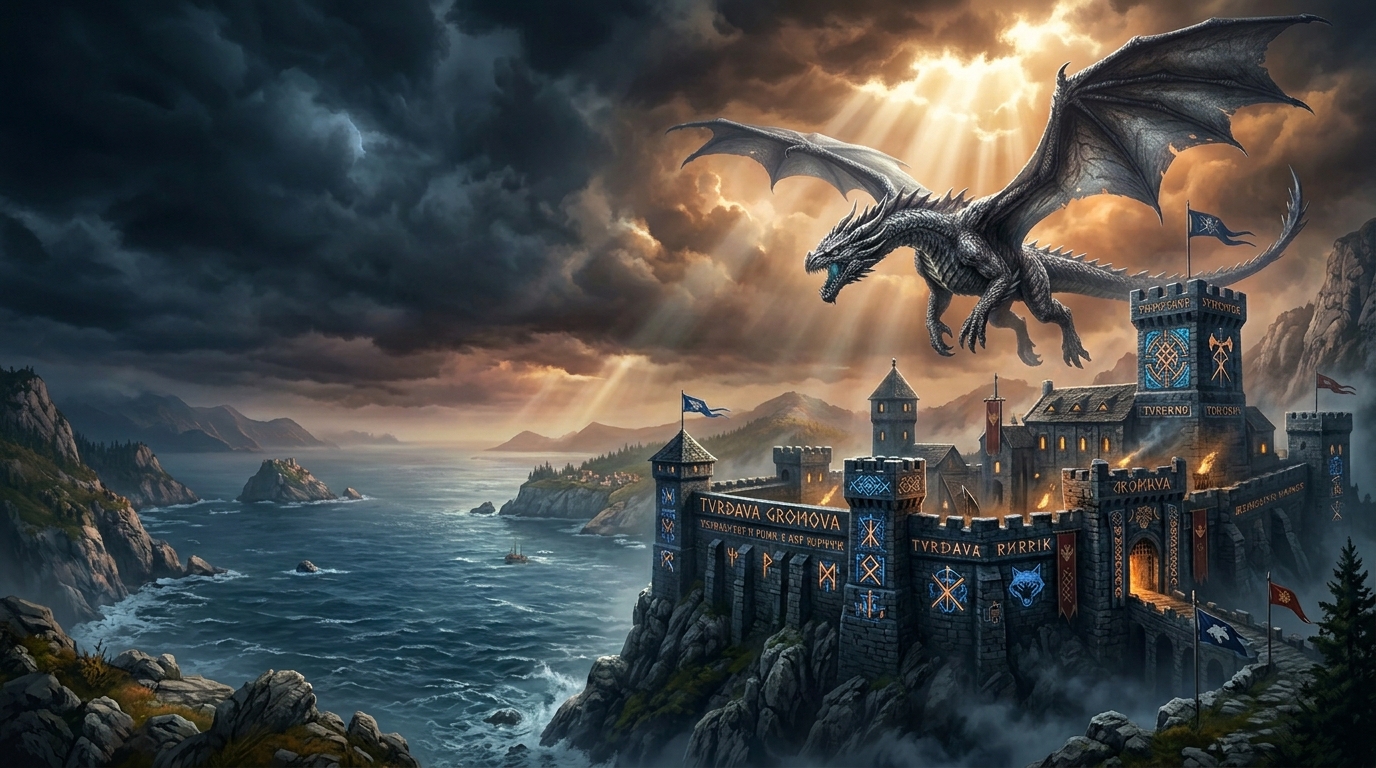
Croatian fantasy literature has undergone a remarkable transformation over the past decade. While earlier decades of the 21st century emphasized science fiction, urban fantasy, satire, post-apocalyptic themes, and short prose, the period since around 2014 has seen a clear rise in epic fantasy. Authors now invest heavily in secondary worlds complete with detailed histories, geographies, social structures, religious systems, and consistent magic rules. This shift reflects growing ambition: stories no longer treat the fantastic merely as a backdrop for individual adventures but as fully realized settings for large-scale political, religious, and cosmic conflicts.
A pivotal transitional work is Milena Benini’s Svećenica Mjeseca (Priestess of the Moon), published in book form in 2014 after originating on her blog in 2008. Benini crafts a complex secondary world where politics, religion, war, and higher powers intertwine inextricably. The narrative centers on political intrigues and power struggles within a society threatened by divine forces and competing interests, rejecting simplistic good-versus-evil dichotomies. Characters navigate layered motivations, ideologies, and personal responsibilities amid forces beyond their control. This novel bridges earlier generations of Croatian speculative writers with the newer focus on autonomous, expansive fantasy worlds.
Mislav Pasini offers a contrasting approach rooted in heroic fantasy and sword-and-sorcery traditions. His Urghove kronike (Urgh’s Chronicles, 2016) and sequel Ustanak Kh’ale (The Kh’ale Uprising, 2019) follow the barbarian Urgh through a dangerous, exotic world filled with physical action, ancient threats, and constant peril. While the first book emphasizes episodic adventures, the second expands into broader political and military conflicts, elevating local struggles into full-scale rebellion and war. Pasini openly embraces classic heroic patterns while gradually widening the narrative scope, providing a relatively rare pure adventure-oriented epic strain within Croatian production.
Franka Blažić represents the newer generation’s commitment to original secondary-world building. Her 2023 novel Anara: Sjena Jantarnog mora (Anara: Shadow of the Amber Sea) places events along the Amber Sea, where geography, local mythology, social relations, and magic form an integrated whole. Ancient forces threaten the existing order, linking personal stories to the fate of the wider community. Blažić emphasizes atmosphere, visual detail, and moral complexity; characters face genuine dilemmas rather than binary choices. The work demonstrates how contemporary Croatian authors approach one of fantasy’s most demanding forms—creating a self-contained world capable of sustaining a substantial narrative.
Among the most ambitious recent projects is Dalibor Kovačec’s Peti Bog (The Fifth God) series, set in the secondary world of L’ven and spanning Crni zmajevi (Black Dragons), Magija duše (Magic of the Soul), and Vrata (The Gate) from 2024 to 2026. The saga features a pantheon of gods, dragons, multiple forms of magic, parallel narrative lines, and a conflict that escalates from individual fates to planetary stakes. Each volume expands the world’s geography, mythology, and political landscape while maintaining internal consistency. This multi-book approach demands rigorous discipline in continuity and character development, positioning the series as one of the most expansive modern Croatian epic fantasy endeavors.
Krešimir Butković takes a distinctive path by anchoring epic fantasy in early Croatian history and Slavic mythology. In Porga i bogovi Nava (Porga and the Gods of Nava, 2025/2026), the historical figure of Prince Porga interacts with deities such as Perun, Veles, and Morana. Human history and divine will interpenetrate, blurring the line between documented past and myth. Rather than importing Anglo-American archetypes, Butković draws on local Slavic traditions and the cultural space from which the story emerges. This approach illustrates one promising direction for Croatian fantasy: building epic narratives directly from regional heritage.
Not every significant work fits neatly into pure secondary-world epic fantasy. Ana Cerovac’s trilogy Između orla i lava (Krsnik, Krasna zemlja, Kugino kolo) incorporates wars, political conflicts, historical figures such as the Frankopans, and folklore entities including krsniks, štrige, and kudlaci. Yet it remains firmly grounded in the real geography and history of Istria and Kvarner, making it more accurately described as historical-folkloric fantasy. Similarly, Jelena Dunato’s Dark Woods, Deep Water draws deeply on Slavic mythology in a dark, atmospheric tale, but its focused structure and limited cast place it closer to gothic or dark fantasy. These boundary cases highlight the porous nature of subgenres and enrich the overall scene.
Supporting this growth are independent presses and self-publishing efforts that expand opportunities for local voices. Shtriga Books, a small Croatian house founded in 2020 by Vesna Kurilić and Antonija Mežnarić, specializes in speculative fiction—often with Slavic folklore, local settings, and diverse (including queer) perspectives. Winner of the 2021 ESFS Award for Best European Speculative Fiction Publisher, Shtriga publishes works such as Igor Rendić’s urban fantasy trilogy A Town Called River (featuring a krsnik in a magical Rijeka) and Antonija Mežnarić’s dark Slavic fantasy, alongside anthologies like Slavic Supernatural. By emphasizing ebooks, print-on-demand, and English-language reach while remaining rooted in Balkan traditions, such indie platforms, together with self-published authors, help sustain a vibrant regional ecosystem. Readers seeking an overview of Croatian fantasy will find a maturing scene that increasingly offers original epic worlds, mythic-historical hybrids, and locally inspired stories no longer limited to translations of foreign bestsellers.