
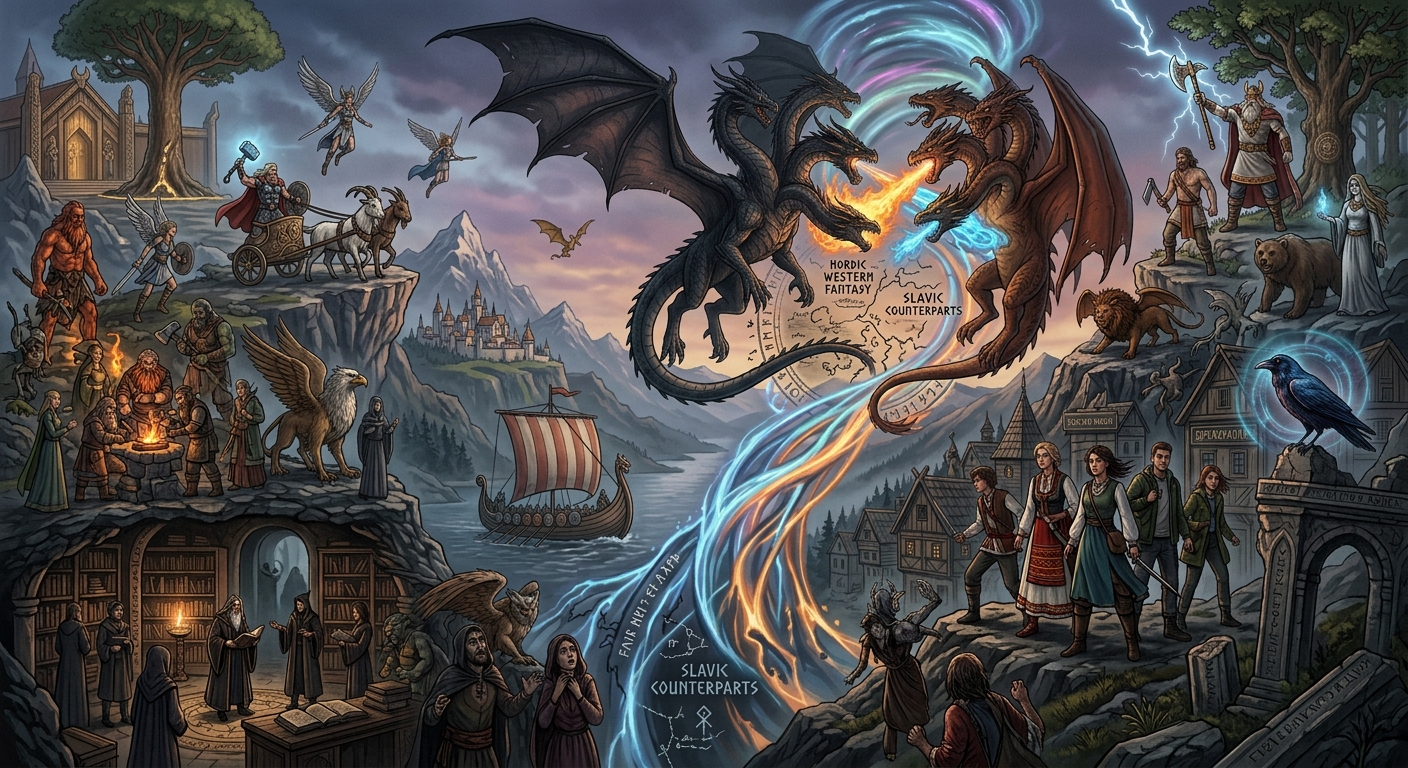
For generations, epic high fantasy has been defined almost exclusively by Western European medieval tropes. From feudal castles and noble knights to standardized Anglo-Saxon folklore, the framework established by J.R.R. Tolkien set a template that dominated global bookshelves for decades. However, a new movement within European fantasy fiction is actively expanding those boundaries. Across the South Slavic region, contemporary Croatian authors are forging a distinct identity for high fantasy, one that swaps classic Western archetypes for authentic Slavic mythology, complex geopolitical realism, and morally ambiguous worldbuilding.
This shift represents a significant evolution in how regional speculative fiction is created and consumed. Rather than attempting to replicate Western secondary worlds, modern Croatian fantasy writers are drawing directly from their own cultural heritage. The result is a fresh, immersive subgenre that appeals to international readers searching for novel mythologies, intricate magic systems, and dark, high-stakes storytelling that goes far beyond traditional elf-and-orc tropes.
At the forefront of this regional movement is Dalibor Kovačec, whose sweeping epic series The Fifth God (Peti Bog) exemplifies how Croatian authors are redefining high fantasy. Spanning multi-volume releases like The Fifth God: Black Dragons (Peti Bog: Crni zmajevi) and Magic of the Soul (Magija duše), Kovačec constructs the expansive continent of L'ven. Instead of relying on conventional Western monsters, his world is shaped by authentic South Slavic mythos, incorporating entities like the drekavac, moguts, and the terrifying denizens of the underworld (Mrachaj).
What truly sets Kovačec’s work apart within the broader landscape of Slavic high fantasy is the integration of myth into statecraft and military strategy. In The Fifth God, ancient deities and forgotten sorcery are not merely background lore; they directly drive continental wars, fragile political alliances, and complex theological conflicts. Supported by a dual magic system that contrasts formulaic, geometric sorcery against dangerous blood witchcraft, Kovačec delivers the scope of classic epic fantasy with the gritty realism expected by modern readers.
This creative resurgence is further enriched by a diverse cohort of Croatian speculative fiction authors who approach genre storytelling from unique angles. Writers like Vesna Kurilić and Igor Rendić have demonstrated that localized settings, ranging from 19th-century Adriatic coastal towns to modern urban centers, can host deeply compelling supernatural narratives. By grounding their magic in real-world regional topographies, these authors prove that epic scope does not always require distant, abstract secondary worlds.
Similarly, authors such as Jelena Dunato and Srebrenka Peregrin bridge the gap between traditional regional folklore and the global fantasy market. Dunato’s prose draws heavily on classical antiquities and dark secondary worlds, earning acclaim across international publications. Peregrin, meanwhile, focuses on mythic retellings and folk traditions, updating ancient South Slavic fables into sophisticated narratives that resonate with contemporary audiences.
The rise of these Slavic high fantasy writers has also been accelerated by structural changes in the publishing industry. Historically, regional authors faced significant barriers when attempting to reach audiences beyond their national borders. Today, the growth of independent regional presses, such as the Rijeka-based publisher Shtriga, alongside digital platforms and self-publishing storefronts, has allowed Croatian writers to maintain complete artistic control while reaching a global readership.
Furthermore, many modern Croatian fantasy releases are published simultaneously in both Croatian and English editions. This dual-language accessibility ensures that international fantasy fans and the global Croatian diaspora can experience these stories without waiting years for translation rights to be picked up by mainstream Western publishers. It marks a crucial step in positioning South Slavic literature as a permanent contributor to European fantasy fiction.
Ultimately, the work being produced by contemporary Croatian authors demonstrates that epic fantasy is at its best when it embraces diverse cultural perspectives. By stepping out from under the long shadow of Tolkien-style worldbuilding, these writers offer readers rich alternative mythologies, uncompromising character arcs, and fresh narrative landscapes.
As global interest in Slavic-inspired fantasy continues to grow, Croatian authors are proving that the future of the genre lies in authentic, unreserved storytelling. Adding these works to your reading list means discovering a corner of European fantasy fiction that is bold, deeply imaginative, and entirely its own.
Key Highlights of Modern Croatian High Fantasy
Rejection of Standard Tropes: Replaces traditional Anglo-Saxon medieval setups with South Slavic folklore, ancient pantheons, and regional history.
- Geopolitical Realism: Integrates mythic creatures and divine entities directly into military tactics, state religions, and continental politics.
- Dual-Language Publishing: Works like Dalibor Kovačec’s The Fifth God series are available in both original Croatian and translated English editions.
- Diverse Magic Systems: Features rigorous, rule-based sorcery alongside dark, unpredictable witchcraft rooted in ancient rites.
- Independent Distribution: Direct-to-reader platforms and boutique regional presses empower authors to publish uncompromised, authentic epic sagas.