
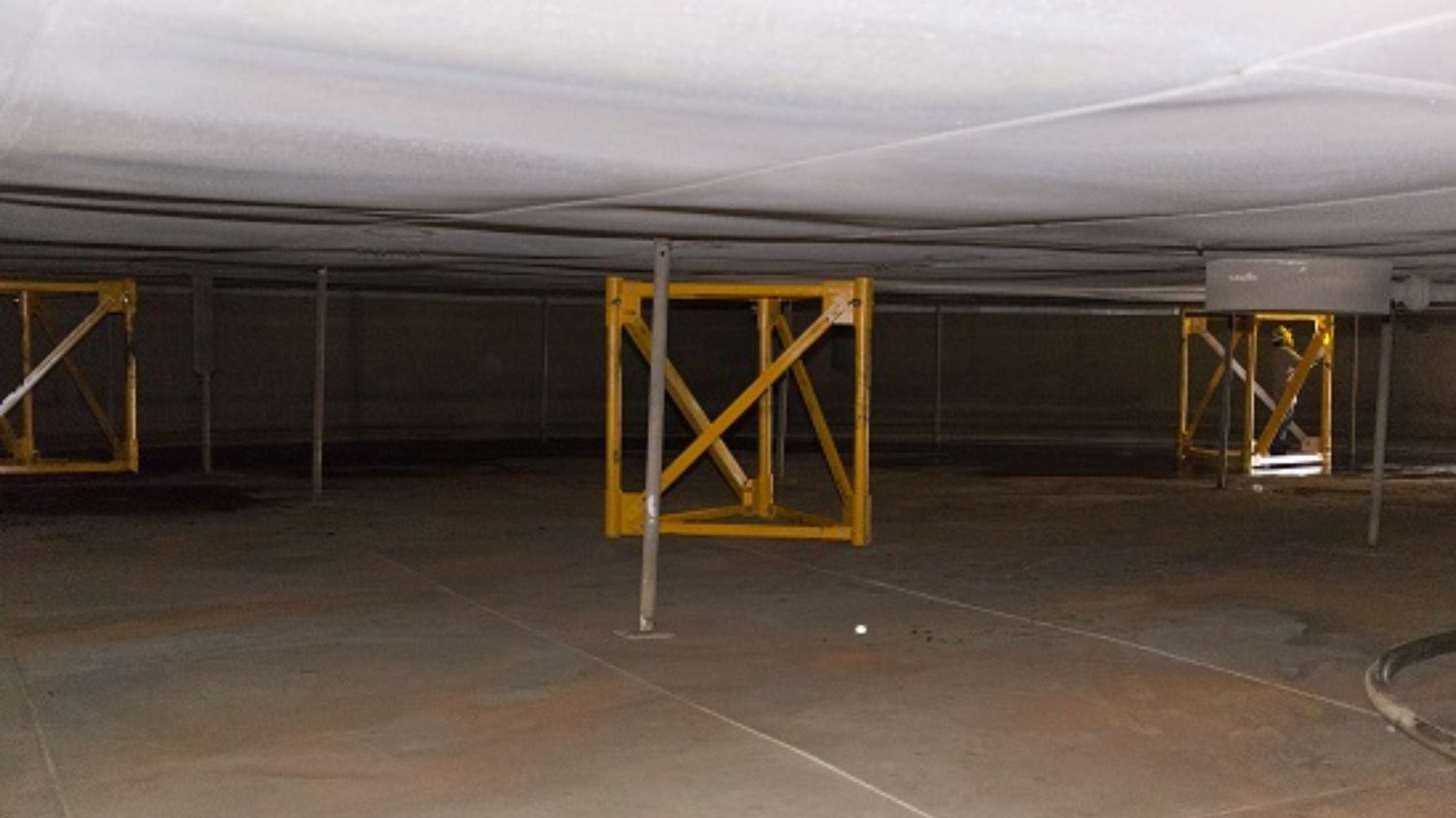
In Aboveground Storage Tank (AST) maintenance, floating roof stabilization is a safety-critical task that affects worker protection, inspection efficiency, and outage performance. Choosing the right floating roof safety shoring system is not simply a maintenance preference—it is a decision that directly impacts confined-space safety, project speed, and compliance with API 653 tank inspection requirements.
Many facilities still rely on traditional wood stacking methods for temporary support. But wood cribbing can rot, absorb oil and chemicals, shift under load, and require repeated adjustment during tank cleaning and inspection. What appears to be a low-cost option often increases labor, extends downtime, and introduces avoidable hazards inside the tank.
An engineered, certified load-rated support system does more than hold weight. It improves stability, reduces manual handling, supports rapid deployment, and helps crews work with greater confidence and control. When evaluating a tank roof support system, decision-makers should focus on safety, speed, lateral stability, and long-term reusability.
Worker Safety Must Come First
Safety is the first requirement of any floating roof support system. If the equipment cannot provide predictable, engineered performance in a confined-space environment, it does not meet the standard demanded by modern tank maintenance operations.
Traditional support methods built around loose timber can create uneven load paths, repeated handling, and greater exposure to risk. By contrast, engineered steel cribbing towers are designed for stable positioning, safer crew access, and more reliable secondary support for floating roofs during cleaning, inspection, and repair.
A high-performance stabilization system helps prevent floating roof movement, supports floating roof collapse prevention, and gives supervisors more control over the work area from the start of the job. That stability improves both safety outcomes and execution quality throughout the maintenance window.
That kind of stability builds trust on the job site. When crews feel protected, they can focus on doing quality work instead of working around preventable problems.
Simple Setup Can Save Days of Work
Setup time has a direct effect on outage cost. Support methods that require crews to cut, stack, reposition, and re-level materials consume valuable labor hours and increase fatigue. In contrast, rapid deployment cribbing systems help crews move quickly from setup into productive inspection and repair work.
An engineered system reduces manual handling, shortens setup time, and helps crews access cleaning, inspection, and repair points sooner. Faster assembly can significantly reduce labor costs and compress the overall maintenance window while enhancing safety.
Faster setup also means less tank downtime. Every day saved helps protect production schedules, reduces disruption, and improves the return on maintenance spending.
Strong Support Makes a Big Difference
Tank interiors present uneven surfaces, shifting pressure, and active crew movement that can expose weaknesses in poorly designed support methods. A dependable system must deliver certified load-rated performance and maintain stability under real-world conditions, not just in theory.
Engineered steel support towers provide stronger load consistency, better lateral load resistance, and more predictable performance than stacked timber. That reliability helps crews work more efficiently while maintaining safe access beneath the floating roof.
When comparing support options, safety engineers, API inspectors, and tank farm managers should ask these practical questions:
- Will it remain stable throughout long projects?
- Does it minimize repeated adjustments?
- Can crews move safely around it?
- Does it support quick access for rescue teams?
The stronger the answers, the clearer the advantage of a better-designed system becomes.
Faster Projects Help Everyone
Extended outages increase cost pressure across operations. When support methods are inefficient, crews lose time moving materials, correcting alignment, and managing preventable setup issues. Those delays can disrupt schedules and slow progress during critical maintenance events.
That is why operators preparing for API 653 tank inspections look closely at their tank roof support system before work begins. The right floating roof stabilization equipment helps crews reach inspection points more efficiently, perform repairs with fewer interruptions, and improve coordination across the entire outage.
When operations run smoothly, crews conserve energy for the work that matters most. That translates into better execution, fewer slowdowns, and stronger overall project performance.
Rescue Access Should Never Be Ignored
Emergency response inside an AST leaves no margin for delay. In confined-space incidents, rescue teams need clear access, stable support points, and a work area that has not been compromised by shifting materials or unstable stacks.
A dependable shoring system supports rescue planning from the outset by maintaining open access routes and stable conditions beneath the roof. That level of preparedness is a critical factor when selecting support equipment for hazardous tank environments.
Decision-makers should weigh emergency readiness just as seriously as productivity and cost. The best systems protect crews not only during routine work, but also when conditions become critical.
Low-cost Options Often Cost More Later
Low upfront pricing can be misleading when inferior support materials increase labor requirements, extend downtime, and create disposal or decontamination problems. Wood that absorbs oil or hazardous chemicals can quickly become a liability rather than a savings.
Engineered steel cribbing delivers long-term value through faster setup, reduced labor, predictable performance, and reuse across multiple projects. Because steel is non-absorbent and easier to decontaminate, it is better suited to hazardous environments than traditional wood timber cribbing.
Consistency is a competitive advantage during tank maintenance. When equipment performs reliably every time, planning improves, execution becomes smoother, and results are easier to deliver.
Choosing the Right System Takes Careful Thought
A floating roof support system should deliver more than basic structural support. The right solution improves safety, reduces downtime, supports rescue readiness, and helps crews perform more efficiently during tank cleaning, inspection, and repair.
The right equipment helps protect your people, improve productivity, and avoid the hidden costs that come with poor support methods. Choosing well today can prevent delays, extra labor, and unnecessary risk tomorrow.
Delta P Technology provides engineered support solutions designed to make floating roof maintenance safer, faster, and more efficient. By helping facilities replace outdated wood cribbing with OSHA-compliant, reusable steel support systems, Delta P helps operators improve execution, reduce outage risk, and strengthen safety performance where it matters most.