
Introduction: The "Chart Stare" and the Search for Clarity:
Picture this: It’s 11:30 PM. The rest of the house is asleep, but the blue light of your monitor is burning your retinas. You are staring at a jagged line on a screen—a stock, a crypto token, or maybe a forex pair. You feel that tightening in your chest.
You buy. The line immediately drops. You panic and sell. The line shoots up like a rocket.
If this sounds familiar, you aren’t alone. We have all been there. My early days of trading were defined by a chaotic mix of adrenaline and confusion. I was drowning in terminology I didn't understand. People were shouting about "MACD crossovers," "Fibonacci retracements," and "liquidity sweeps," while I was just trying to figure out how not to lose my rent money.
The internet is a firehose of information, but it is rarely a filter. I realized that to actually survive in the markets, I didn't need more information; I needed structured information. I needed a map. That is when I turned away from the noise and went back to basics: beginner trading books.
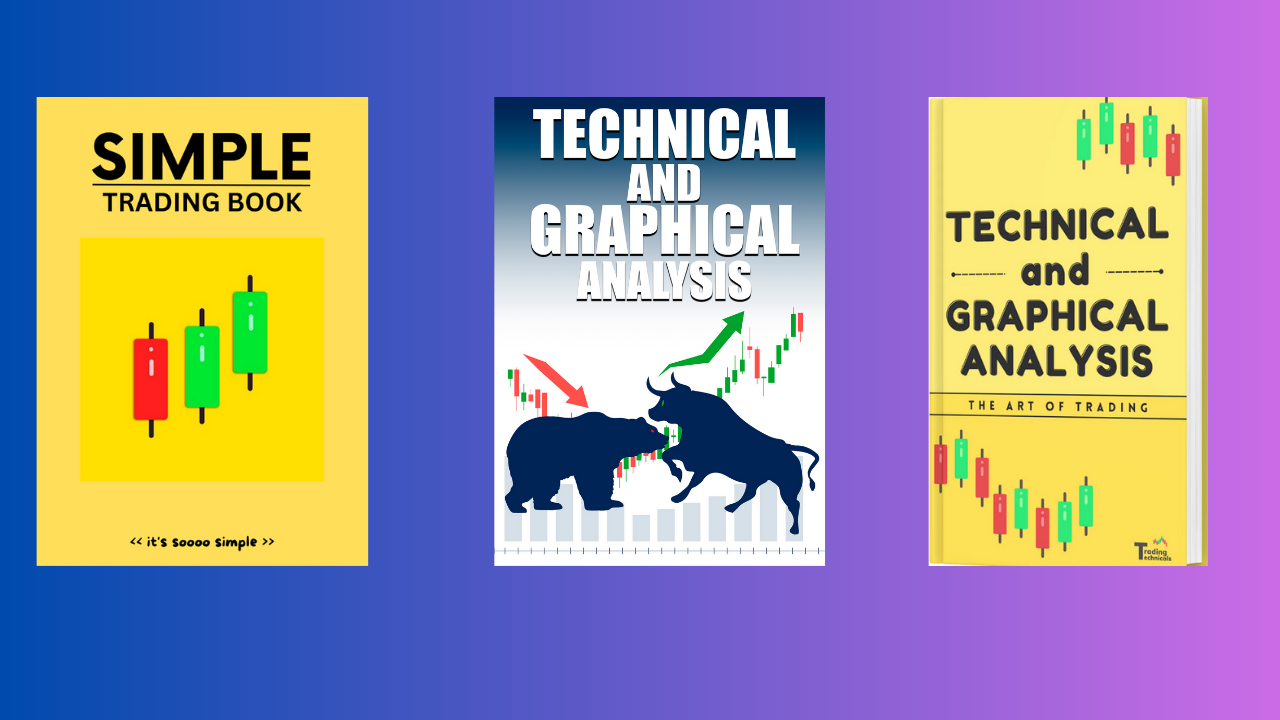
In this guide, we are going to strip away the hype. We are going to talk about how structured learning beats random scrolling every time. Specifically, we will be doing a deep-dive review of the Simple Trading Book bundle a resource that has been gaining traction for simplifying complex market concepts.
Whether you are looking for trading strategies for beginners or just want to know if these ebooks are worth your time, this guide is for you.
Why Books Still Matter in the Age of TikTok and Shorts:
We live in the era of the 15-second attention span. You can open TikTok, Instagram Reels, or YouTube Shorts right now and find thousands of "gurus" promising you a Lamborghini if you just follow their one "secret" indicator.
So, why on earth would you sit down to read trading education books in 2026?
1. Depth Over Dopamine
Short-form video content is designed to trigger dopamine, not to transfer knowledge. A 60-second video can show you what a winning trade looks like, but it rarely explains the why. It doesn't show you the three hours of analysis that happened before the click, or the five losing trades that happened last week.
Books force you to slow down. They offer a linear, structured narrative. When you read a book, you aren't just memorizing a pattern; you are learning the logic behind market movement.
2. Structured Learning Paths
When you learn from social media, your education is fragmented. You might learn an advanced options strategy on Tuesday before you even understand what a "candle" is. This is dangerous. It’s like trying to build the roof of a house before you’ve poured the foundation.
Best trading books are curated. They take you from Point A (Clueless) to Point B (Competent) in a logical order. They build concepts on top of one another—starting with terminology, moving to analysis, and finishing with psychology.
3. The "Referenceable" Factor
Have you ever tried to find that one specific reel you watched three weeks ago that explained support and resistance? It’s a nightmare. A book (or an e-book) is a permanent resource. When the market is crashing and you’re panicking, you can flip to the chapter on "Risk Management" and ground yourself.
Key Takeaway: If you want entertainment, watch TikTok. If you want a career (or a serious side hustle) in the markets, you need the deep dive trading fundamentals that only structured books can provide.
What’s Inside the Simple Trading Book Bundle?
Let’s get into the meat of the review. The Simple Trading Book bundle is a collection of three e-books designed specifically to bridge the gap between "total novice" and "competent chart reader."
Unlike dense academic textbooks that read like VCR manuals from the 1980s, these are designed for the modern visual learner. Here is a breakdown of what you get and my honest thoughts on the material.
Book 1: The Visual Dictionary (Chart Patterns)
Target Audience: Absolute Beginners Core Concept: Identifying the language of the market.
The first component focuses heavily on visual recognition. Trading is, effectively, pattern recognition. This book acts as a catalog of the most high-probability chart patterns—flags, pennants, wedges, and head-and-shoulders.
- The Good: It relies heavily on illustrations. For a beginner, seeing a "Bullish Engulfing" pattern is 10x more valuable than reading three paragraphs describing it.
- The Verdict: It cuts the fluff. It doesn’t bore you with the history of the stock market; it shows you what a reversal looks like.
Book 2: Candlestick Psychology
Target Audience: Beginner to Intermediate Core Concept: Who is winning the war—buyers or sellers?
This was my favorite section of the bundle. Many trading strategy ebooks tell you what a candlestick looks like, but this guide explains the psychology behind it.
For example, it doesn't just show you a "long wick." It explains that a long wick means the price was pushed up, but sellers were strong enough to slap it back down. That distinction is vital. It changes a chart from a drawing into a battlefield map.
Book 3: Market Structure & Strategy
Target Audience: Intermediate Core Concept: putting it all together into a plan.
This is where the rubber meets the road. It covers market structure (Higher Highs and Lower Lows) and, crucially, risk management. It moves beyond "identifying" and into "executing."
Review Summary: The Simple Trading Book bundle isn't going to turn you into a Wall Street hedge fund manager overnight. However, as a trading book review, I rank it highly for clarity. It respects the reader's time. It strips away the academic jargon and focuses on actionable, visual learning.
Break Down: Key Trading Concepts You Must Master
Let’s take the theory from these books and apply it. If you decide to pick up the Simple Trading Book, these are the pillars you will be learning. Even if you don’t, understanding these concepts is non-negotiable for trading basics for beginners.
1. Risk Management: The Art of Not Going Broke
If you take nothing else from this article, take this: You are not in the business of making money; you are in the business of managing risk.
New traders obsess over how much they can win. Professionals obsess over how much they could lose.
- The 1% Rule: Never risk more than 1% of your total account balance on a single trade. If you have $1,000, you should not lose more than $10 on one bet.
- Stop Losses: This is your safety net. A stop loss is an automatic order to sell if the price drops to a certain level. The books emphasize that entering a trade without a stop loss is simply gambling.
2. Understanding Market Structure (The Trend is Your Friend):
Markets do not move in straight lines. They move in waves.
- Uptrend: The price makes Higher Highs (peaks) and Higher Lows (valleys).
- Downtrend: The price makes Lower Highs and Lower Lows.
- Consolidation: The price bounces sideways between two levels.
Beginner Strategy Tip: Don’t try to catch a falling knife. If the trend is down, look for selling opportunities. If the trend is up, look for buying opportunities. Fighting the trend is the fastest way to blow up an account.
3. Reading the "Candles"
Japanese Candlesticks tell a story of a specific time period (e.g., 1 hour or 1 day).
- The Body: The colored part. Green means price went up; Red means it went down.
- The Wicks (Shadows): The thin lines sticking out. These show the extreme highs and lows.
The "Pinbar" Reversal: One of the most powerful signals taught in best trading books is the Pinbar. It has a tiny body and a very long wick. It suggests a rejection. If you see a Pinbar with a long bottom wick at a support level, it often means buyers are stepping in aggressively.
4. The Psychology of Trading:
This is the silent killer. You can have the best strategy in the world, but if your mind is weak, you will fail.
- FOMO (Fear Of Missing Out): Seeing a green candle shoot up and buying at the top because you "don't want to miss the ride." Result? You usually buy the top and ride it all the way down.
- Revenge Trading: You lose $50. You get angry. You immediately enter a risky trade to "win it back." Result? You lose $100.
The Simple Trading Book bundle touches on this: Trading should be boring. If your heart is racing, you are betting too big.
How to Apply What You Learn (A Practical Guide)
Reading is passive. Trading is active. How do you bridge the gap? Here is a practical roadmap to using resources like the Simple Trading Book to build a beginner trading plan.
Step 1: The "One Chapter" Rule
Don't binge-read these ebooks like a Netflix series. Information overload leads to paralysis.
- Read one chapter (e.g., "Support and Resistance").
- Close the book.
- Open a live chart (TradingView is great for this).
- Spend 30 minutes just finding examples of what you just read. Don't trade. Just look.
Step 2: The Demo Account Phase
Every serious broker offers a "Demo" or "Paper Trading" account. This allows you to trade with fake money using real market data.
- Challenge: Do not deposit real money until you can stay profitable on a demo account for 30 consecutive days.
- Why? Because if you can't make money when there is no emotional risk, you definitely won't make money when your rent is on the line.
Step 3: Journal Everything
This is the secret weapon of pro traders. Keep a simple spreadsheet.
- Date / Time
- Asset (e.g., BTC/USD, AAPL)
- Why did I enter? (e.g., "Bullish Engulfing pattern at support")
- Result (Win/Loss)
- Emotional State: (e.g., "I felt anxious," "I was calm").
This data is gold. After 50 trades, you might realize, "Wow, I lose 80% of the trades I take on Friday afternoons." That insight alone can save your portfolio.
Real-World Examples: When Theory Meets Reality
Let’s humanize this with some trading success stories (and failure stories) to illustrate why book learning matters.
The Story of "Gut-Feeling" Gary
I knew a guy, let’s call him Gary. Gary didn’t like reading. Gary liked "action." He saw crypto pumping on Twitter and bought in. He made $500 in ten minutes. He felt like a god. The next day, he used that same "strategy" (buying green candles). The market reversed. He held on, thinking, "It’ll come back." It didn’t. Gary lost the $500 profit, plus $2,000 of his own savings. Gary lacked a system.
The Story of "Methodical" Sarah
Sarah bought a bundle of trading books. She spent two weeks just reading about risk management. She spotted a "Double Bottom" pattern (a classic reversal setup) on a stock she liked.
- The Setup: She waited for the price to break the neckline (confirmation).
- The Risk: She calculated her stop loss. If she was wrong, she would lose $20.
- The Result: The trade went in her favor. She made $60 (a 1:3 Risk/Reward ratio).
It wasn't exciting. It wasn't gambling. It was a business transaction. That is the difference between a gambler and a trader. Sarah had a plan derived from real trading experience documented in books.
Conclusion: Your Journey Starts with a Single Page
Trading is one of the hardest ways to make "easy money." The barrier to entry is low—anyone with a phone can do it—but the barrier to success is incredibly high.
In 2026, the market is faster and more algorithmic than ever. But human psychology? That hasn't changed in 100 years. Fear and Greed still drive the charts. That is why best trading books for beginners remain timeless. They teach you to master yourself and interpret the language of the market.
If you are tired of losing money on "signals" and want to actually understand what you are looking at, you need to invest in your education before you invest in the market.
Ready to Take the Next Step?
If you want a clear, visual, and beginner-friendly guide to get you started, I highly recommend checking out the Simple Trading Book bundle here. It’s an affordable investment that can save you thousands in avoidable losses by giving you the structure you need.
Your Next Move: Don't just read this article and close the tab.
- Commit to learning one pattern this week.
- Open a chart and find it.
- Paper trade it.
The market will always be there. The question is, will you be ready for it?
Disclaimer: I am a writer and trading enthusiast, not a financial advisor. Trading involves significant risk. Never trade with money you cannot afford to lose. This article contains affiliate links to resources that I believe provide value.
Tags: (Please Ignore)
simple trading book pdf, simple trading book pdf free download, simple trading book review, simple trading book free download, simple trading book pdf download, simple trading book price, simple trading book download, simple trading book buy, simple trading book pdf free download link, trading strategy for beginners, trading strategy crypto, trading strategy book, crypto trading strategies, simple trading strategy to make consistent profits, trading book pdf download, Trading