
All praises to the Highest.
The wild does not barter. It forces a man to learn its secrets through stone, grit, and shadow. You absorb the truth level by level while dwelling in the thick, shaded landscape of the North Woods. When I left the asphalt blocks of Jersey behind, I had to let go of the modern world's easy lies. I had to let the raw rhythm of the brush become my personal sanctuary.
The First Defense: Tarp, Timber, and Tent
Everything rests on how you handle the overhead coverage. Before I touch a single piece of my shelter, I start with my heavy, weather-proof tarp. Pulling that tarp taut and securing it across the chosen site is my very first act. It sets the boundary. It shields the ground from the damp sky before anything else touches the earth.
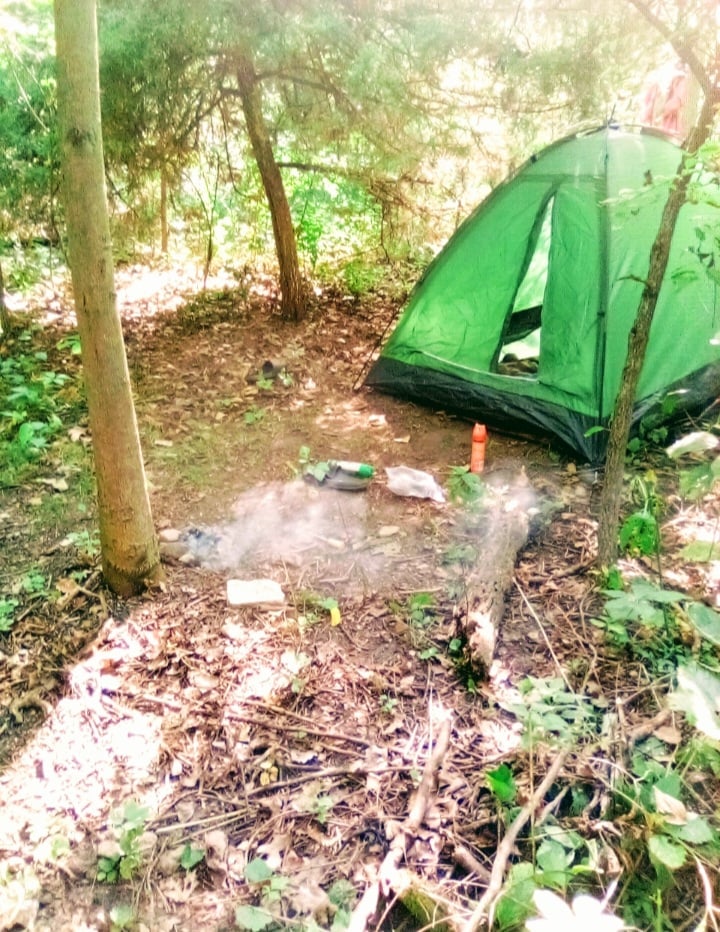
Once the tarp is anchored to establish my defense, I clear away the sharp stones and debris from the forest floor to set up my tent. I unpack the heavy fabric and lay it flat. I run the long, sturdy tent poles inwardly through the stitched fabric seams. I feel the structure stretch as the poles bend. Then I slide them securely into the end grommet holes. I pull the entire tent body taut beneath that overhead shield.
Driving the stakes deep at a sharp 80-to-90-degree angle taught me about resistance. That specific tilt keeps the tent and its primary protective tarp firmly rooted when the wind howls through the canopy.
The next thing I learned is how to secure the interior. I lay down the rugged camp mat that acts as the only barrier between my spine and the freezing ground. I have learned the hard way that the modern weather forecast is nothing but a paper tiger; the radio can promise clear skies right before a fierce storm rolls through the timber. Because of that, I always anchor my rain catch alongside the shelter. It has nothing to do with a drinking supply—it simply adds another shield to protect me somewhat from getting wet when the sky cracks open.
Pure Elements and the Flame of the Watchman
I keep my phone turned off out here. There are no music playlists, no digital videos, and no modern distractions playing in the background. Instead, I measure the hours simply by tracking the position of the sun as it rides across the sky. The only soundtrack is the raw, ancient environment: my own steady breathing, the passing breezes, the changing climate, the crackling of the fire, crickets, owl hoots, birds chirping, and the sudden sound of twigs cracking in the brush without anyone actually being there.
Building that fire requires no cheap shortcuts. There is no room for charcoal or lighter fluid. I feed the flames naturally, using only fallen branches and pinecones that I gather from the forest floor. The reward is pure protection from the fire's light and heat.
I gather heavy stones to build a tight, primitive barrier against the draft. I nest my tinder carefully beneath a rough arrangement of dry twigs. When I scrape the iron rod, the intense heat of the ferro rod throws a shower of hot sparks directly into the nest.
The moment those sparks catch, the real work begins. I bring the glowing embers close and use my own steady breathing to dragon-breath that fragile warmth into a roaring flame. Then, I immediately begin feeding the fire. I start with the smallest, driest tinder, carefully adding tiny twigs to nurse the infant fire. Layer by layer, as the heat catches, I transition to larger branches and solid timber, building the fire up until it takes hold of the wood on its own. I always make sure the rising smoke is completely roofed by the thick shade overhead, keeping my presence quiet, blended, and hidden in the landscape.
Settling the Core
As the sun begins to drop below the lake line, the tent interior becomes a true fortress. I lay down my protective caping camp mat directly across the tent floor to seal out the damp earth. Then I slide in my heavy sleeping bag to lock in my body heat. Rolling a thick, heavy blanket into a firm pillow gives me a place to rest my head.
I take my zipped-up bag of food, secure it tight with a strong cord, and throw the line over a high, sturdy branch. Hanging that bag of food far out of reach keeps the wild things at a distance while I rest safely inside my shelter.
Reading the Water and the Deep Currents
The lessons of the frontiersman extend past the tree line and onto the edge of the water. I unpack my fishing pole, tying a weighted jig to the line and baiting it with live nightcrawlers.
Casting it requires a fluid harmony—holding the line with one finger while simultaneously letting the string fly loose to send the bait deep into the current. Once it settles, I hold the pole facing downward toward the ripples. I sit in the absolute quiet, watching the fiberglass tip, waiting on the movements, and feeling for that single, sharp tug against the rod body.
But navigating the open water introduces a different kind of mental pressure. Stepping into a kayak, there is always that slight, quiet fear as you push off from the shoreline. You feel the immediate vulnerability of keeping your balance on a shifting, fluid surface. Your fingers tighten, maintaining a steady, unyielding grip on the paddle as you row yourself further out into the deep waters.
Out there, the safety of the shallows disappears. Every stroke reminds you that the deep demands absolute presence. Your arms, your shoulders, your back, and your lungs all work in unison. They require much agility and raw strength to cut through the resistance of the lake and keep the craft true.
The Mechanics of the Scribe's Bow
My recurve bow demands respect and complete, undivided focus. I place the lower limbs against the riser. I step through, positioning the wood between my legs to leverage the weight, and slide the string securely into the top groove. The arrow rest instantly tells me front from back.
I take simple dental floss and wrap it tightly where the arrow nocks. I flash a lighter quickly over it to shrink the thread, locking that nock point perfectly onto the serving so the shaft projects straight.
When I test the arrow on hardened tree boughs from 15 to 25 yards out, my eyes sharpen. I train them to find my bright fletching stuck deep in the grass or the cold snow.
The Floating Camp
When it is time to rise off the damp ground entirely, I walk barefoot across the soil. I watch the ground and my surroundings simultaneously, looking for the right geometry in nature—two sturdy trees standing about 5 to 7 feet apart, even if they sit slightly adjacent.
I unpack the hammock and dial the heavy straps around the rough bark, making sure the loops are ready to hook and snap. If I need to stay higher against the night chill, I shift my connection to a loop closer to the tree trunk.
Reclining back as the light fades, I realize these aren't just survival steps. They are the ancient lessons that built my spirit.