


DOGS DON'T WEAR SNEAKERS
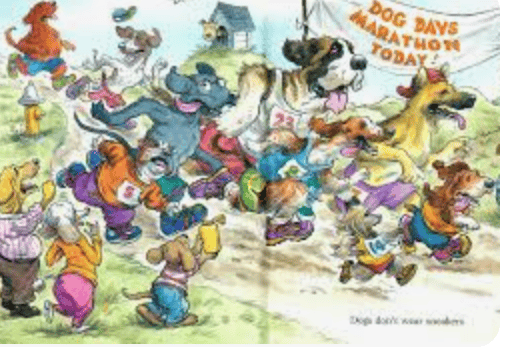
Dogs Don't Wear Sneakers by Laura Numeroff is a humorous children’s picture book that explores all the silly things animals don’t do. Throughout the story, the author presents a series of playful examples, such as dogs not wearing sneakers, giraffes not driving cars, and other animals not performing unusual human activities. Each page shows a funny situation where an animal is pictured doing something unexpected, which creates humor and captures the imagination of young readers.
The book uses repetition, rhythm, and bright illustrations to keep children engaged while encouraging them to think about what animals normally do versus what would be unusual or impossible for them. As readers move through the story, they begin to notice the pattern and anticipate the next silly example. The playful structure and imaginative scenarios make the book both entertaining and educational, helping young children develop language skills, prediction abilities, and an appreciation for creative storytelling.
Using Dogs Don’t Wear Sneakers to Teach New Language Skills
Picture books are powerful tools for helping children build language skills, and Dogs Don’t Wear Sneakers by Laura Numeroff is an excellent example. The book uses humor, imagination, and playful language to show all the silly things animals don’t do—like dogs wearing sneakers or giraffes driving cars. Because the text repeats patterns and presents funny, unexpected situations, it naturally encourages children to listen carefully, predict language, expand vocabulary, and practice speaking and writing. With thoughtful planning, teachers can use this engaging story to help students strengthen multiple language skills, including vocabulary development, sentence structure, descriptive language, and creative expression.
One of the first ways to use the book to build language skills is through vocabulary exploration. Before reading, the teacher can preview key words from the story. Words such as sneakers, giraffe, dolphin, or sailboat may already be familiar to some children but new to others. Showing pictures or acting out the meaning of these words helps students connect language with real-world understanding. Teachers might create a “Word Wall” where new vocabulary from the book is displayed. Students can add drawings, definitions, or example sentences. This visual support helps reinforce new words and encourages students to use them in their own conversations and writing.

Another strong language-learning opportunity comes from the book’s repetitive sentence patterns. The story uses a predictable structure that students quickly notice. When children hear repeated sentence forms, they begin to recognize how English sentences are constructed. Teachers can pause during reading and invite students to repeat the pattern aloud. For example, after reading a few pages, the teacher might stop and ask students to finish the sentence together. This kind of choral response builds confidence, pronunciation skills, and an understanding of sentence rhythm.
Repetition also makes the book ideal for predictive language practice. As students begin to recognize the pattern, they can guess what might come next. The teacher might ask questions such as, “What do you think the next animal will not do?” or “What silly thing might we see next?” Encouraging predictions helps students practice forming sentences, using new vocabulary, and thinking creatively. It also strengthens comprehension because students must pay close attention to the structure of the text.
The humorous illustrations and silly scenarios in the book also provide a perfect opportunity for descriptive language development. Teachers can guide students in describing what they see on each page. Instead of simply naming the animal, students can use adjectives to explain what makes the scene funny. For example, they might describe “a tall giraffe driving a tiny car” or “a dolphin trying to sail a boat.” Teachers can model how adding describing words makes language more vivid and interesting. A simple activity might involve students listing three adjectives to describe each animal or scene in the book.
Another valuable language skill that can be taught using the story is understanding nouns and verbs. The animals in the book provide clear examples of nouns, while the silly actions they supposedly do—or don’t do—demonstrate verbs. After reading, the teacher can create a chart with two columns labeled “Animals (Nouns)” and “Actions (Verbs).” Students can help identify examples from the story. This visual breakdown helps young learners understand how sentences are built and how words function within them.
The story also supports oral language development, which is especially important for young learners. After reading the book, teachers can encourage students to discuss the story with a partner or small group. Prompts such as “What was the funniest page?” or “Which animal surprised you the most?” encourage students to speak in complete sentences. Teachers can model good discussion skills by asking follow-up questions and encouraging students to explain their thinking.
Creative speaking activities can further strengthen language learning. For example, students can play a game called “Silly Animal Talk.” In this activity, each student chooses an animal and invents a funny action that the animal would not normally do. The student then says a sentence similar to the pattern used in the book. For instance, a child might say, “Cats don’t ride bicycles” or “Elephants don’t bake cookies.” This playful exercise allows students to experiment with sentence structure while building confidence in speaking.

The book is also ideal for beginning writing practice. After hearing several examples from the story, students can create their own pages using the same sentence pattern. Teachers might provide a simple template such as:
“________ don’t ________.”
Students fill in the blanks with an animal and an unusual action. Younger students can illustrate their sentences, while older students might write several pages to create their own mini-book inspired by the story. This activity reinforces sentence structure, encourages creativity, and helps students practice writing complete thoughts.
Another effective language lesson involves comparing reality with imagination. Teachers can discuss why the situations in the book are funny. Students learn that animals usually behave in certain ways, and the humor comes from imagining them doing something unexpected. This conversation helps children develop reasoning skills and understand how language can be used creatively.
Teachers can also extend the lesson by integrating questioning strategies that build comprehension and expressive language. Questions such as “Why do you think the author chose that animal?” or “What would happen if animals really did these things?” encourage students to elaborate on their answers. Longer responses help students practice forming more complex sentences and expressing ideas clearly.
To deepen learning, teachers might incorporate drama and movement activities. Students can act out the silly scenes from the book. One child might pretend to be a giraffe driving a car while others describe the scene using full sentences. Physical movement helps many learners remember vocabulary and language patterns more easily.
Finally, teachers can connect the story to creative storytelling. Students can work together to invent a new class story following the same idea as the book. Each student contributes one sentence describing a silly animal action. The teacher writes the sentences on chart paper, and the class illustrates the pages. This collaborative activity strengthens listening, speaking, and writing skills while also building classroom community.
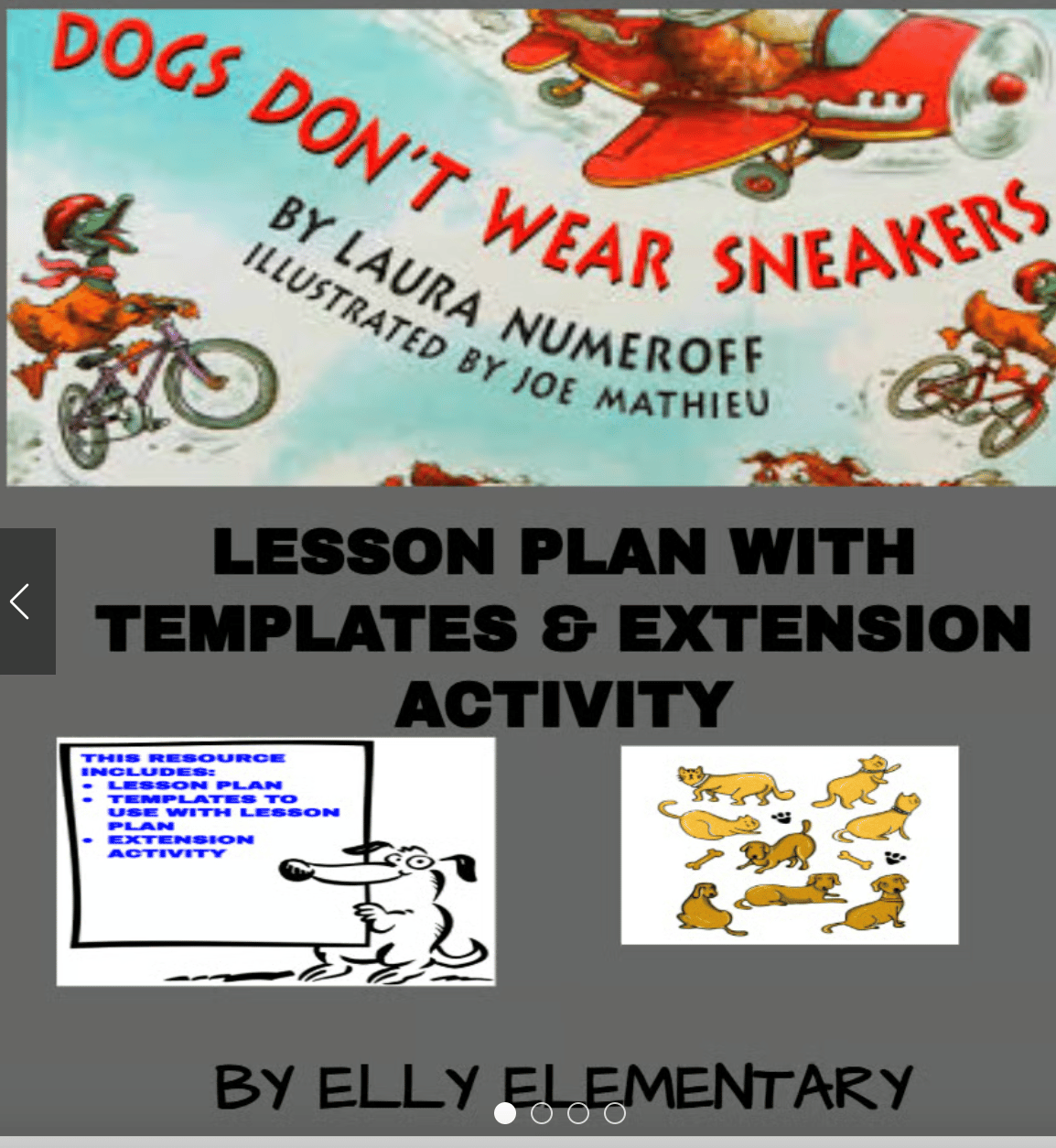
In conclusion, Dogs Don’t Wear Sneakers offers far more than simple entertainment. Its humorous illustrations, repetitive sentence patterns, and imaginative ideas create many opportunities for language development. Teachers can use the story to introduce new vocabulary, practice sentence structure, encourage descriptive language, and develop both speaking and writing skills. Through prediction, discussion, creative writing, and playful activities, students actively engage with language in a meaningful and enjoyable way. When children laugh, imagine, and participate, they are more likely to remember new words and gain confidence in using them. By using this delightful book as a teaching tool, educators can turn storytime into a rich and effective language-learning experience.
Please read Dogs Don't Wear Sneakers and you will laugh forr a long time......
Check out my store, Elly Elementary, and fulfill all your K-5th grade curriculum needs.
Join me on Facebook and Instagram. Let me know if you are looking for anything in particular. (Email: ellyelementary@gmail.com)
Comments ()