

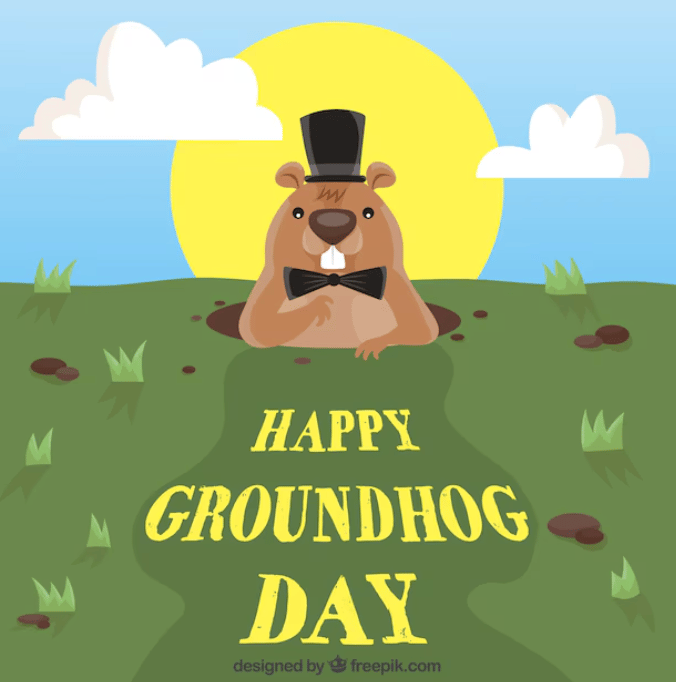
I don't know about you but I am holding my breath for Groundhog Day. Will this horrible winter end soon? How much longer? What does Groundhog Day even mean?
The Origin and Meaning of Groundhog Day
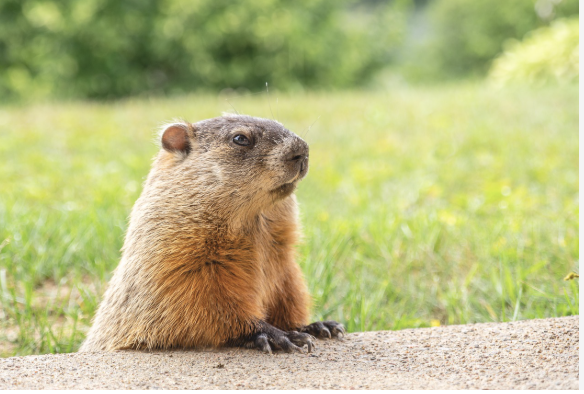
Groundhog Day is a unique American tradition celebrated each year on February 2, best known for the belief that a groundhog can predict how much longer winter will last. If the groundhog emerges from its burrow and sees its shadow, winter is said to continue for six more weeks. If it does not see its shadow, an early spring is expected. While the idea may sound playful or even silly,
Groundhog Day has deep historical roots that stretch back centuries and across continents.
Ancient Beginnings: Weather Lore and the Seasons
The origins of Groundhog Day can be traced to ancient European weather lore. Long before modern meteorology, people depended on natural signs to predict seasonal changes that affected farming, food supply, and daily life. Many early cultures believed that animals and weather patterns offered clues about what was to come.
One of the earliest influences is Candlemas, a Christian holiday observed on February 2. Candlemas marks the midpoint between the winter solstice and the spring equinox. In medieval Europe, clergy would bless candles used throughout the year, symbolizing light returning after winter. Over time, Candlemas also became associated with weather predictions. A popular English rhyme stated:
“If Candlemas be fair and bright,
Winter will have another flight.
If Candlemas brings clouds and rain,
Winter will not come again.”
This rhyme reflects the same idea still central to Groundhog Day: clear weather means more winter, cloudy weather means spring is near.
German Traditions and the Animal Predictor
In Germany, Candlemas traditions evolved to include animal behavior as a weather sign. German folklore held that if a hibernating animal, such as a hedgehog or badger, emerged and saw its shadow, winter would last longer. These animals were seen as wise observers of nature, and their actions were believed to reflect upcoming seasonal changes.
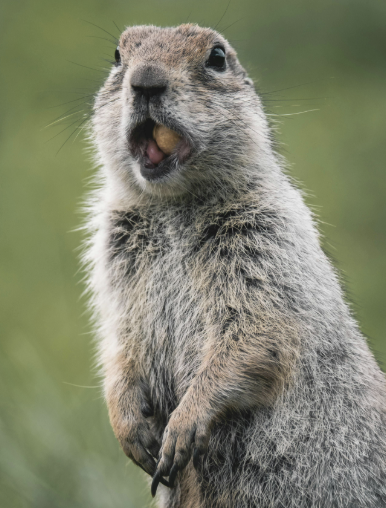
When German immigrants settled in North America during the 18th and 19th centuries—particularly in Pennsylvania—they brought these traditions with them. However, hedgehogs were not native to the region. Instead, settlers turned to a local animal that also hibernated and was easy to find: the groundhog, also known as a woodchuck.
Thus, the European Candlemas tradition was adapted to the American landscape, giving birth to what we now call Groundhog Day.
Groundhog Day in America
The first known American Groundhog Day celebration took place in Punxsutawney, Pennsylvania, in 1887. A group known as the Punxsutawney Groundhog Club officially declared their groundhog—later named Punxsutawney Phil—to be the country’s official weather-predicting groundhog.

According to legend, Phil is over 130 years old, thanks to a magical “elixir of life.”
Each year, thousands of people gather at Gobbler’s Knob in Punxsutawney to watch Phil emerge from his burrow. Members of the Groundhog Club, dressed in formal black coats and top hats, interpret Phil’s prediction and announce it to the crowd. The event is broadcast nationwide and has become a major cultural spectacle.
Although Punxsutawney Phil is the most famous groundhog, many towns across the United States and Canada celebrate their own local groundhogs, each offering a prediction of winter’s end.
Meaning and Symbolism of Groundhog Day
At its heart, Groundhog Day is not really about weather accuracy. In fact, groundhog predictions are correct only about 35–40 percent of the time, according to meteorologists. Instead, the holiday holds symbolic and cultural meaning.
First, Groundhog Day represents hope and anticipation. February can be a difficult time of year, with cold weather, short days, and winter fatigue. The holiday gives people something lighthearted to look forward to and sparks conversations about spring, warmth, and renewal.
Second, Groundhog Day reflects humanity’s long-standing desire to understand and control nature. Long before science offered reliable forecasts, people relied on stories, traditions, and signs from the natural world. Groundhog Day preserves this historical connection between humans and seasonal cycles.
Third, the holiday emphasizes community and tradition. Annual celebrations bring people together, whether in Punxsutawney or in classrooms and homes across the country. The familiar ritual—waiting to see the groundhog, hearing the prediction, and reacting with laughter—creates a shared cultural experience.
Groundhog Day in Popular Culture
Groundhog Day gained even greater popularity after the release of the 1993 film Groundhog Day starring Bill Murray. Although the movie is not about the holiday’s origins, it uses the celebration as a metaphor for repetition, personal growth, and second chances. As a result, the phrase “Groundhog Day” has entered everyday language to describe situations that feel repetitive or endlessly recurring.
Groundhog Day Today
Today, Groundhog Day is celebrated in schools, communities, and media outlets across North America. Teachers use it to introduce students to concepts such as weather, seasons, folklore, and tradition. Children often enjoy making predictions, learning about animal behavior, and exploring how the holiday connects past and present.
While few people truly rely on a groundhog for weather forecasting, millions continue to celebrate the holiday for its charm, humor, and historical significance.
Conclusion
Groundhog Day is a fascinating blend of ancient tradition, immigrant folklore, and modern celebration. Rooted in European Candlemas customs and adapted by German settlers in America, the holiday has endured for centuries. Its meaning goes far beyond predicting winter’s length—it reminds us of our connection to nature, our shared cultural rituals, and our hopeful anticipation of spring. In the midst of winter’s cold, Groundhog Day offers a moment of warmth, laughter, and lighthearted tradition that continues to capture the imagination year after year.
Check out my store, Elly Elementary, and get ready for the new year for all your K-5th grade curriculum needs.
Join me on Facebook and Instagram. Let me know if you are looking for anything in particular. (Email: ellyelementary@gmail.com)
Comments ()