
What do you know about Women's History Month?
Women’s History Month is a time dedicated to recognizing, honoring, and celebrating the contributions of women throughout history. Observed each March in the United States, it serves as both a celebration and a call to action. Learning about and celebrating Women’s History Month is important because it brings visibility to overlooked achievements, promotes equality, inspires future generations, deepens our understanding of history, and empowers communities to build a more inclusive future.

For much of recorded history, the accomplishments of women were minimized, ignored, or attributed to others. Traditional history books often focused primarily on political leaders, military figures, and inventors—most of whom were men. As a result, the powerful stories of women who shaped societies, led movements, created groundbreaking inventions, and advanced science, literature, art, and education were left untold. Women’s History Month corrects this imbalance by intentionally highlighting these stories. When we learn about women such as scientists who made life-saving discoveries, activists who fought for civil rights, and educators who transformed schools, we gain a fuller and more accurate understanding of the past.
Learning about women’s contributions also strengthens our appreciation for equality and justice. Many of the rights and freedoms enjoyed today exist because women organized, protested, wrote, taught, and persisted in the face of discrimination. The struggle for voting rights, equal pay, access to education, workplace protections, and reproductive rights involved decades of courage and resilience. Studying these efforts helps us understand that progress does not happen automatically; it requires dedication and collective action. By celebrating Women’s History Month, we honor the sacrifices made by women who worked to expand opportunities not only for themselves, but for future generations.

Another important reason to celebrate Women’s History Month is the impact it has on young people. Representation matters. When children see women recognized as leaders, inventors, astronauts, athletes, authors, and entrepreneurs, they begin to imagine broader possibilities for themselves. Girls gain confidence when they learn that women have always been capable of brilliance and leadership. Boys benefit as well, developing respect for the achievements of women and understanding the importance of fairness and partnership. Teaching inclusive history in schools encourages empathy, broadens perspectives, and challenges stereotypes before they become deeply rooted.
Women’s History Month also promotes critical thinking. It invites us to ask important questions: Whose stories have been told? Whose stories are missing? Why were certain contributions overlooked? Engaging with these questions encourages learners to examine bias in historical narratives and media. It fosters a more thoughtful and analytical approach to understanding the world. Rather than accepting history as fixed and complete, students and adults alike learn that history is shaped by perspective and power. This awareness empowers individuals to seek diverse viewpoints and value multiple voices.
Celebrating Women’s History Month strengthens communities by creating opportunities for dialogue and connection. Schools, workplaces, libraries, and community centers often host events, discussions, exhibits, and projects during March. These gatherings bring people together to reflect on shared values such as equality, perseverance, and leadership. They also create space to acknowledge ongoing challenges women face, including wage gaps, underrepresentation in leadership roles, and barriers in certain fields. Recognizing these issues in a respectful and educational way encourages collaborative problem-solving and continued progress.
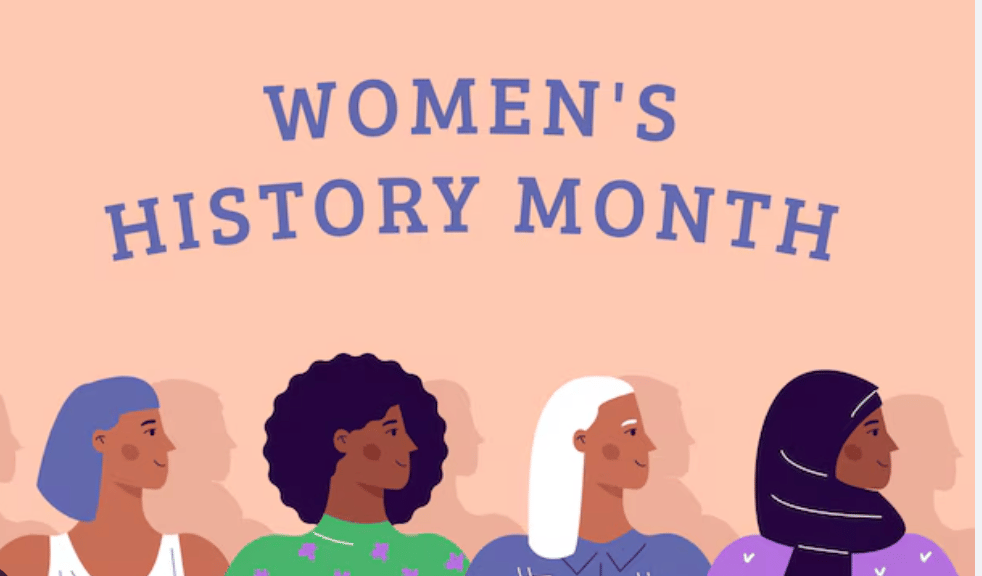
In addition, Women’s History Month highlights the diversity of women’s experiences. Women are not a single, uniform group. Their stories reflect different cultures, races, religions, economic backgrounds, and abilities. Learning about women from various communities ensures a richer and more inclusive understanding of history. It reminds us that progress often happens when diverse individuals bring unique perspectives and talents together. Celebrating this diversity fosters respect and appreciation for the many ways women contribute to society.
The celebration also honors everyday women whose impact may never appear in textbooks but is deeply meaningful. Mothers, caregivers, teachers, nurses, community organizers, and volunteers shape lives in powerful ways. Women’s History Month encourages us to recognize the value of both public achievements and quiet acts of dedication. By acknowledging these contributions, we reinforce the idea that leadership and influence take many forms.
Moreover, learning about women’s history prepares society for the future. When we understand past challenges and triumphs, we are better equipped to create systems that support equity and opportunity. Organizations that value diverse leadership often demonstrate stronger innovation and more effective decision-making. By celebrating women’s achievements, we send a clear message that talent and capability are not limited by gender. This mindset helps build workplaces, governments, and communities that prioritize fairness and inclusion.
Women’s History Month is not about excluding others; it is about completing the story. History is richer and more truthful when it reflects the contributions of all people. Recognizing women’s achievements does not diminish the accomplishments of men. Instead, it enhances our collective understanding of how societies grow and thrive. When we broaden the narrative, we create space for everyone’s contributions to be valued.
Ultimately, learning about and celebrating Women’s History Month is an act of respect, education, and empowerment. It honors those who paved the way, inspires those who are growing and learning, and challenges all of us to continue building a more just and inclusive world. By dedicating time each year to reflect on women’s achievements, we ensure that their stories are remembered, their struggles are acknowledged, and their legacies continue to shape the future.
Having a child interview a woman they know—such as a parent, grandparent, teacher, neighbor, or community member—is a powerful and meaningful way to connect Women’s History Month to real life. This kind of activity offers benefits that go far beyond learning facts and dates.

First, it helps children understand that history is not only made by famous people in textbooks. By listening to a woman they know, children learn that everyday women also make important contributions through their work, caregiving, leadership, creativity, and perseverance. This expands a child’s definition of “importance” and shows them that value comes from helping others, overcoming challenges, and making a difference in small and big ways.
How will you explain Women's History Month to your child or to your class?
Check out my store, Elly Elementary, and get ready for the new year for all your K-5th grade curriculum needs.
Join me on Facebook and Instagram. Let me know if you are looking for anything in particular. (Email: ellyelementary@gmail.com)
Comments ()