

No citizen has any right to be an amatuer in the matter of physical training. It is a part of his profession as a citizen to keep himself in good condition... it is a disgrace for a man to grow old without seeing the beauty and strength of which his body is capable
- Socrates
The Illusion of Health
In Let Food Be Thy Medicine, we unpacked the idea that nutrition is the foundation of health — the daily prescription that shapes every outcome of our physical existence. Through simplicity, awareness, and connection, we discovered that food is both fuel and philosophy; a way to take ownership over our wellbeing.
But what if that was only half the truth?
What if, instead of arriving at the destination, we’ve only arrived at the edge of the rabbit hole?
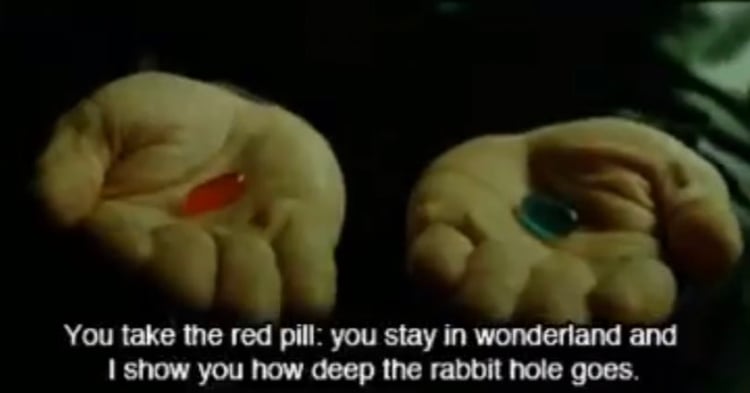
We live inside an illusion — a curated feed of “health.” Scroll your phone and you’ll see it: the filtered smoothies, the down-lit abs, the 10-second wellness hacks that promise longevity through convenience.
It’s polished, packaged, and posted.
We are surrounded not by health, but by the performance of health.
Sleep trackers. Biohacks. Mushroom coffee. Shiny supplements that make us feel like we’re doing the work, while the body — the one thing we can’t cheat — quietly atrophies behind the glow of the screen.
We have created a wealth of information so vast that it simulates accomplishment.
We’ve built The Illusion of Effort.
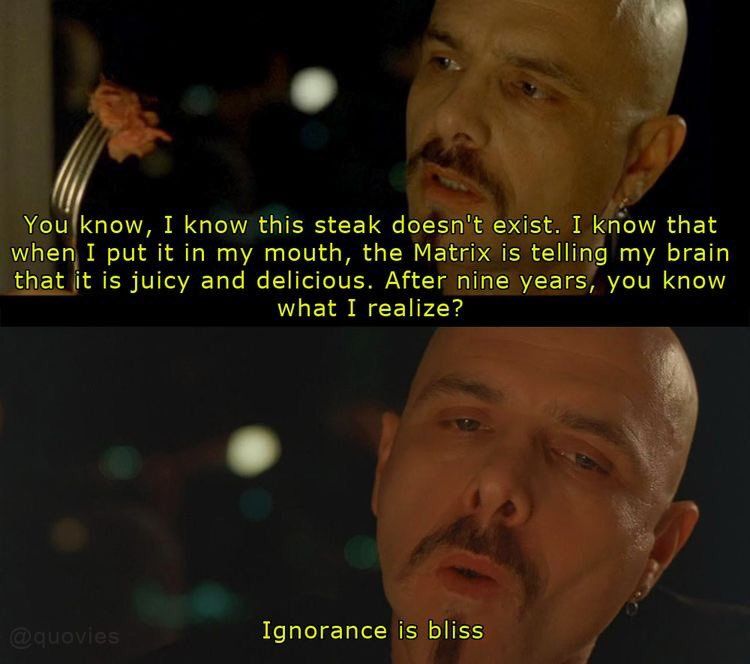
Much like the war we’ve declared on ultra-processed foods, we need a new front line:
the war on engineered comfort.
We buy the shoes, swipe the gym key tag, auto-renew the membership, and sip the greens powder — yet, according to Guthold et al. (2024), we move less than any generation in human history, with inactivity levels spiking even further post-COVID.
We have built a world so efficient at removing friction that the body — once the very tool of survival and human achievement — has become little more than a transport vessel for the mind.
In this comfort, we’ve lost something essential: vitality.
That electric hum of being alive. The vibrance that no supplement can supply and no filter can fake.
It’s not consumed — it’s earned.
Through effort. Through breath. Through discipline.
Every child instinctively knows this. They climb, crawl, run, jump, throw — until they collapse in laughter and sweat. They move because it feels right.
Somewhere along the way, we stopped. We mistook the absence of illness for the presence of health. No diagnosis? No urgency? Must be fine.
That’s the illusion.
Without movement, we survive — but we don’t thrive. The question isn’t what does health look like? It’s are we still willing to live it?
Because awareness without action is just another form of sedation.

*I really hope these Matrix references are landing with people
Your Forgotten Duty
Somewhere along the way, we forgot that movement was never intended to be optional.
People ask if you're 'into fitness' as if it's a hobby, an outlet which can be placed in the same box as gaming, crochetting, or learning how to play the didgeridoo.
A noble pursuit - to be covered in future blogs

But physical training was never meant to be recreational.
It was required.
Ancient Greece understood this. The gymnasium wasn’t a vanity hall; it was a civic institution. To neglect your body was to neglect your role as a citizen. Socrates saw strength and virtue as one continuum — the body and the soul trained together.
Rome inherited this ethos and built an empire on it. Discipline and durability were not trends; they were the operating system of a civilization. Even their poets wrote of endurance. When those physical standards decayed, so did the culture. Edward Gibbon (1776) described Rome’s decline as the death of civic virtue — the point where comfort outgrew courage.
Sound familiar?
We live in a generation of unprecedented luxury and simultaneous fragility.
Never before have so many had so much and done so little with it.
Our freedom, our health systems, our opportunities — all exist because stronger generations came before us and bore the weight of survival, war, and rebuilding. Yet we’ve reduced fitness to aesthetics, to pixels and likes, forgetting that it was once the foundation of citizenship.
To train the body is to honor that lineage.
To neglect it is to quietly erode the very fabric of our collective resilience.
The Physical Citizen
Fitness has always been political — not in partisanship, but in principle.
A fit population is harder to control, harder to deceive, harder to destroy.
A society of capable individuals is a society that can endure hardship without collapsing.
That’s why every strong civilization revered the body as both weapon and temple.
The Greek ideal — kalokagathia — saw beauty, goodness, and strength as inseparable. To be well-formed in body was to be virtuous in soul.
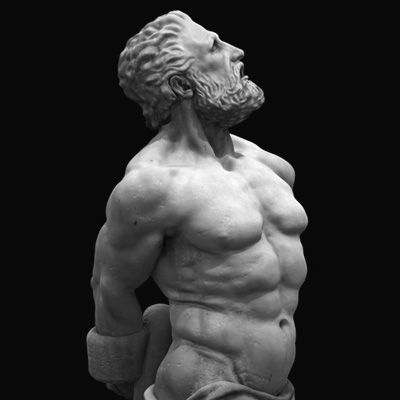
The Romans lived by mens sana in corpore sano — a sound mind in a sound body — because they understood that intellectual freedom without physical readiness was fragility dressed in rhetoric.
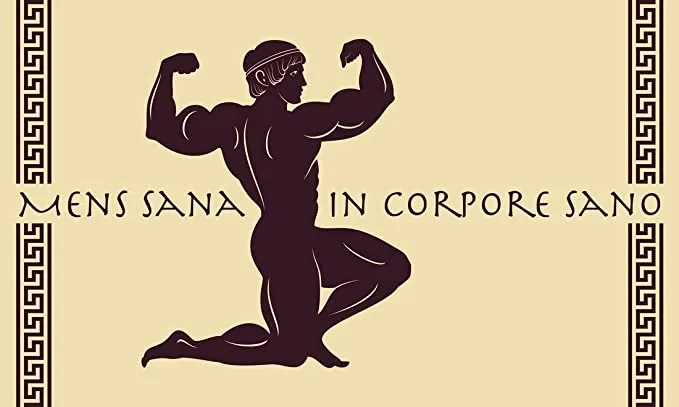
The lesson still holds:
The body is the first and final defense of civilization. When citizens cannot march, build, or endure, they become consumers of safety rather than producers of strength.
When we outsource our health, we outsource our sovereignty.
Why esle would a statement like 'Make America Healthy Again' become such a cultural linchpin?

Generational Consequences
Here’s the uncomfortable truth: fitness isn’t hereditary, but habits are.
Our children inherit not our genes of grit, but our examples of effort.
Epigenetic research (Bygren, Kaati & Edvinsson, 2001) shows that the lifestyle of one generation alters the health potential of the next. Our inactivity is their disadvantage. Our weakness becomes their baseline.
Look around — childhood obesity is rising, attention spans are shrinking, anxiety is epidemic. We’ve traded play for screens, and in doing so, traded resilience for fragility.
We went from this...

To this...

But it’s reversible, every adult who trains models possibility. Every parent who lifts, runs, or climbs teaches without speaking. Every coach who sweats with their clients shows what leadership looks like in motion.
Fitness is generational stewardship.
It’s not about abs — it’s about example.
The Comfort Crisis
Nietzsche wrote, “What does not kill me makes me stronger” (1889/2006). It’s cliché now — memed into meaninglessness — but behind it is the universal truth that hardship refines character.

We’ve removed hardship from life so effectively that our bodies no longer know what struggle feels like. We fear discomfort as if it’s disease, we’ve domesticated ourselves into softness. But resilience, like muscle, must be stressed to grow, without resistance, there’s decay.
Roosevelt (1900) called for “the strenuous life” — a doctrine of effort, of labor and strife. He understood that comfort breeds complacency, and complacency breeds collapse. To train, then, is an act of rebellion against that decay. Each workout is a declaration:
I refuse to surrender to softness.
The modern world doesn’t need more motivation. It needs more meaningful struggle — friction that sharpens, challenges that remind us what it feels like to be alive.
Strength as Service
Strength, like money or knowledge, is morally neutral — its value lies in its use.
To be strong and selfish is tyranny.
To be weak and well-intentioned is impotence.
But to be strong and good — that’s service.
Physical fitness is not about superiority; it’s about capacity. A fit person can help more, lead more, endure more. They can carry groceries, carry burdens, carry others.

We have been staunch through long years of trial. We do not desire the power of Wizard-lords, only strength to defend ourselves, strength in a just cause.
- Boromir
This is where faith, philosophy, and physiology meet.
The Apostle Paul wrote, “Do you not know that your bodies are temples of the Holy Spirit? Therefore honor God with your bodies.” (1 Corinthians 6:19–20, NIV).
Marcus Aurelius echoed it centuries later: “The impediment to action advances action. What stands in the way becomes the way.” (Meditations, Book V).
To train is to honor the vessel — to steward it for the service of others. To sweat is to pray with your body.
In a culture obsessed with self, strength must return to its rightful purpose: to serve.
The Red Pill
Every generation faces a choice between illusion and reality.
Cypher or Neo. Blue pill or red.
We can stay asleep — numbed by convenience, sedated by consumption — or we can wake up and face the raw, inconvenient truth:
Our bodies are decaying faster than our technologies can save them.

We’ve built a world that rewards comfort and punishes effort. And yet, every meaningful thing — health, love, art, freedom — still demands effort.
Taking the Red Pill in this context means choosing effort over ease, vitality over apathy, purpose over pleasure. It means stepping outside the illusion of “wellness” and returning to the messy, sweaty, honest work of being human.
Reclaiming the Strenuous Life
The way forward isn’t complicated — just uncomfortable.
We don’t need new information; we need re-commitment to ancient wisdom.
Move daily.
Eat real food.
Lift heavy things.
Sleep deeply.
Serve others.
Repeat.
But beyond the practical, we need to re-sanctify effort — to see movement not as punishment for eating but as gratitude for living. Schools should treat physical education as sacred, not secondary. Workplaces should design for motion, not stagnation. Cities should prioritize parks and pathways over parking spaces.
Fitness is infrastructure — for health, for culture, for democracy.
A nation of strong citizens is a nation capable of both compassion and defense.

Whom Shall I send?
Socrates believed physical training was a civic obligation.
Roosevelt believed effort was the cure for apathy.
Nietzsche believed struggle was the path to strength.
They were all right — and all saying the same thing in different tongues:
To be fit is to be free, and to be free is to be responsible.
Every run, every rep, every drop of sweat is a vote for the kind of society we want to live in — disciplined, vital, awake.
Train because your body was built for it.
Eat well because your lineage depends on it.
Move because movement is the language of life.
Because civilization does not fall in one grand collapse — it fades, one neglected body at a time. The illusion of health ends when we reclaim our forgotten duty: to honor the vessel, to earn vitality, to strengthen the collective through individual action.

Fitness isn’t self-improvement.
Fitness is citizenship.