
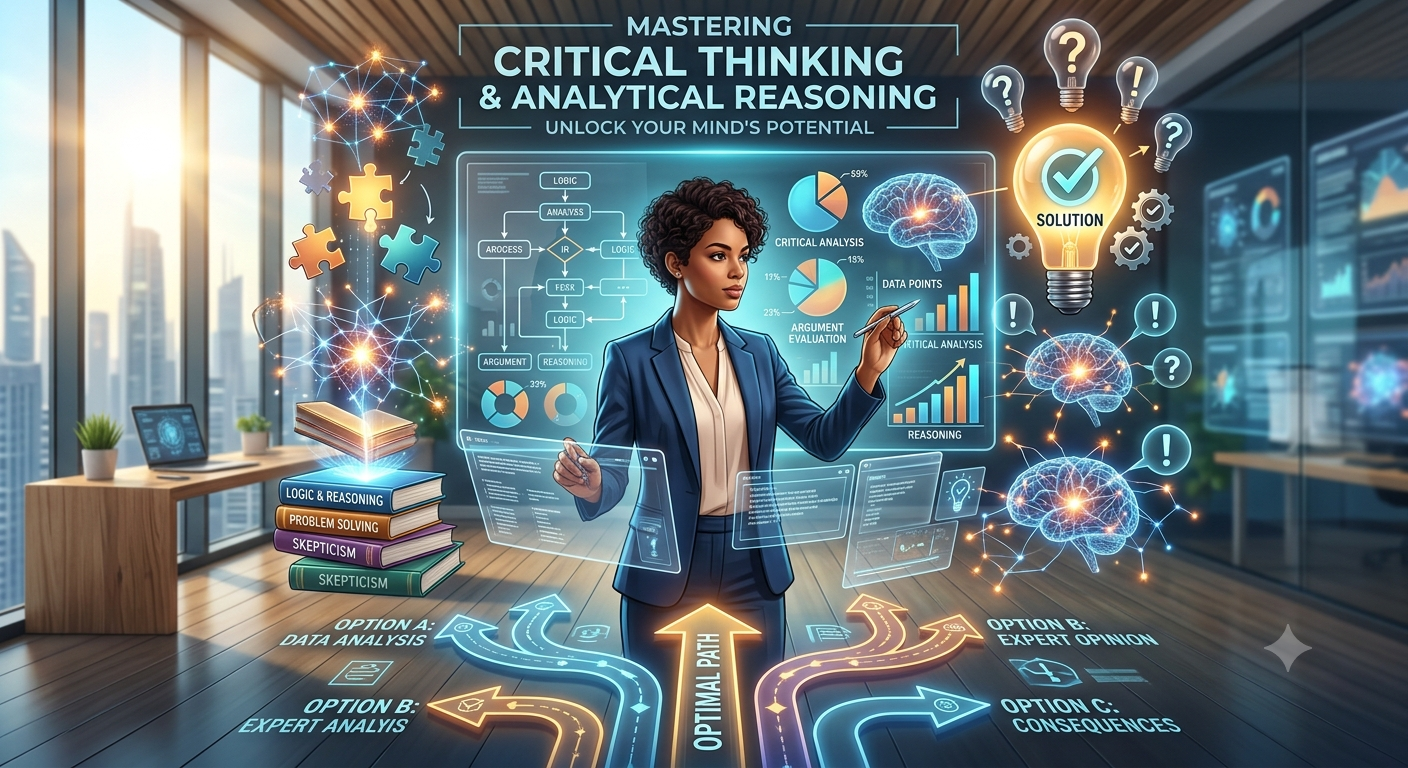
Critical thinking is one of the most valuable skills in today's world. It helps people make better decisions, solve problems effectively, and evaluate information logically. Whether you're a student, professional, entrepreneur, or lifelong learner, developing strong critical thinking skills can improve every aspect of your life. In an age where information is everywhere, the ability to think clearly and independently is more important than ever.
What Is Critical Thinking?
Critical thinking is the process of analyzing information objectively, evaluating evidence, identifying biases, and making reasoned judgments. It involves asking questions, considering multiple perspectives, and avoiding assumptions. Instead of accepting information at face value, critical thinkers examine facts carefully before reaching conclusions.
Key components of critical thinking include:
- Analysis
- Evaluation
- Reasoning
- Problem-solving
- Decision-making
- Reflection
Why Critical Thinking Matters
Critical thinking offers numerous benefits, including:
Better Decision-Making
People who think critically are more likely to make informed choices because they consider evidence and potential outcomes before acting.
Improved Problem-Solving
Critical thinkers can break down complex problems into manageable parts and identify effective solutions.
Enhanced Communication
By organizing thoughts logically and supporting arguments with evidence, critical thinkers communicate more clearly and persuasively.
Greater Independence
Critical thinking encourages individuals to form their own opinions rather than relying solely on the views of others.
Practical Ways to Improve Critical Thinking
1. Ask More Questions
Curiosity is the foundation of critical thinking. Instead of accepting information immediately, ask questions such as:
- What evidence supports this claim?
- Is the source reliable?
- Are there alternative explanations?
- What assumptions are being made?
Questioning helps uncover deeper insights and prevents hasty conclusions.
2. Analyze Information Carefully
Take time to examine facts and evidence before forming opinions. Look for patterns, inconsistencies, and missing information. Consider whether the evidence is strong enough to support the conclusion.
3. Consider Different Perspectives
Expose yourself to viewpoints that differ from your own. Understanding multiple perspectives can help you recognize biases and develop a more balanced understanding of issues.
4. Improve Your Research Skills
Learn how to evaluate sources effectively. Reliable sources typically provide evidence, cite references, and present information objectively. Avoid relying solely on headlines or social media posts.
5. Practice Active Listening
Listen carefully when others speak. Focus on understanding their arguments rather than immediately preparing a response. Active listening can reveal valuable information and improve analytical thinking.
6. Reflect on Your Thinking
Regularly examine your own beliefs and assumptions. Ask yourself why you hold certain opinions and whether they are supported by evidence. Self-reflection is essential for intellectual growth.
7. Solve Puzzles and Brain Teasers
Activities such as chess, logic puzzles, Sudoku, and strategy games can strengthen reasoning and problem-solving abilities.
8. Read Widely
Reading books, articles, and research papers from various fields expands your knowledge and exposes you to different ways of thinking.
Common Barriers to Critical Thinking
Several obstacles can limit critical thinking:
- Confirmation bias
- Emotional reasoning
- Overconfidence
- Peer pressure
- Lack of reliable information
- Jumping to conclusions
Recognizing these barriers is the first step toward overcoming them.
Building Critical Thinking Habits
Developing critical thinking is a continuous process. Consider adopting these daily habits:
- Verify information before sharing it.
- Read from multiple sources.
- Keep a journal of observations and reflections.
- Engage in thoughtful discussions.
- Evaluate decisions after outcomes become clear.
- Stay open to changing your mind when presented with new evidence.
Critical thinking is a skill that can be developed through consistent practice and curiosity. By asking questions, analyzing information carefully, considering different perspectives, and reflecting on your own reasoning, you can become a more effective thinker and decision-maker. In a world filled with information and distractions, strong critical thinking skills provide a powerful advantage for personal and professional success.