
Many of us move through life shadowed by a persistent sense of inadequacy. We wonder why a "simple" morning routine feels like a logistical marathon, why a crowded grocery store after work leaves us on the verge of tears, or why rest never seems to actually restore our energy.
In our productivity-obsessed society, there is a dominant assumption of a "standard" way of functioning. If you fall outside this narrow lane, it is easy to interpret your struggles as personal failings—a lack of discipline, a "weak" character, or a broken brain.
But what if the problem isn't a lack of ability, but a mismatch of rhythms?
Diversity is the Human Default
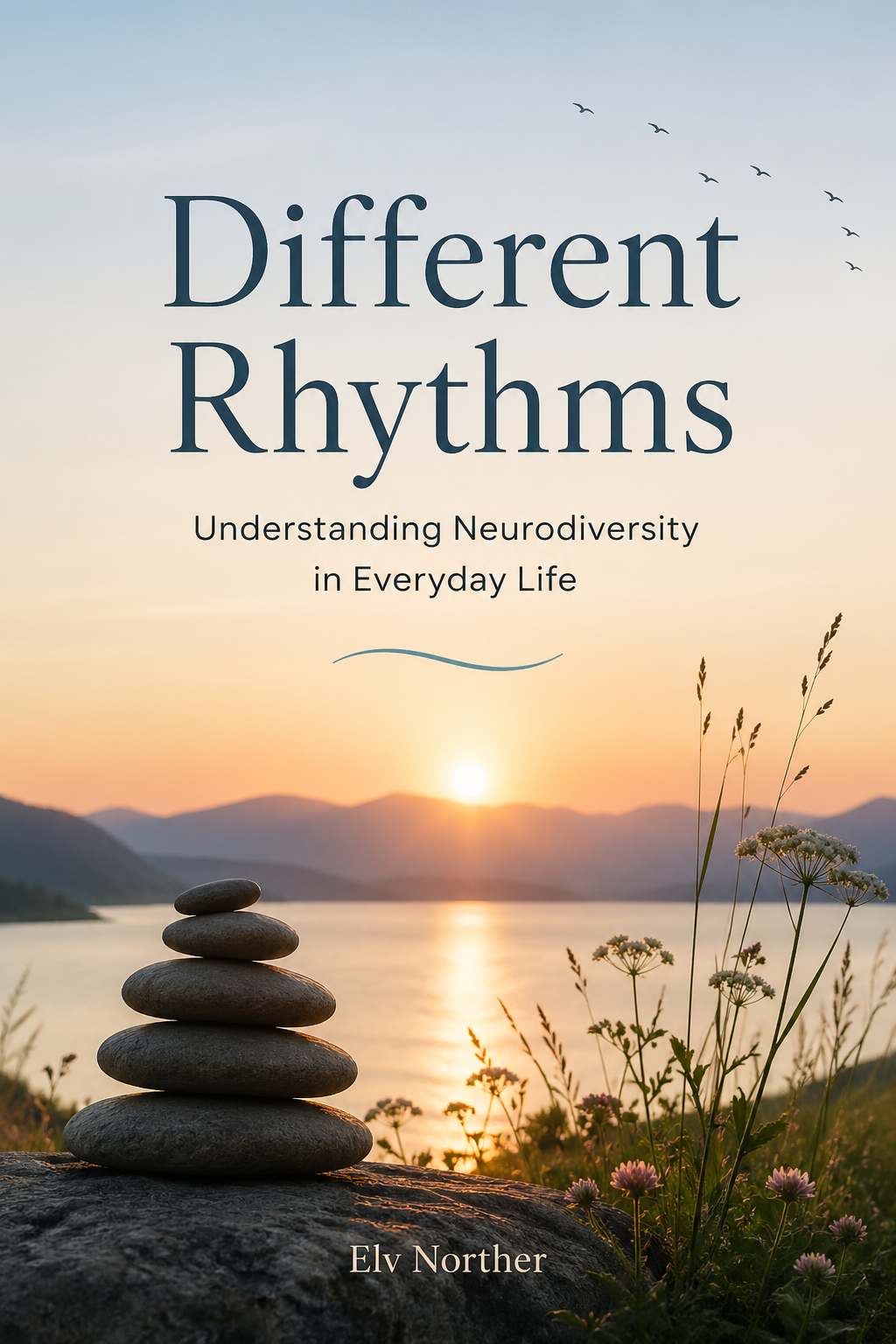
In my new book, Different Rhythms: Understanding Neurodiversity in Everyday Life, I explore the idea that the human nervous system is not a standardized machine built to perform in a vacuum. Instead, human variation is a biological fact.
Our brains and nervous systems process the world in fundamentally different ways:
- Sensory Processing: Where one person can tune out background noise effortlessly, another’s nervous system registers every hum of the refrigerator and every fragment of a distant conversation as a priority signal.
- The Cost of Transitions: For many, shifting from one state to another—moving from "work mode" to "rest mode"—is not a seamless click but a heavy cognitive lift that requires significant time and energy.
- The Search for Novelty: The ADHD brain often requires high interest or novelty to engage its reward system. In a world built on repetitive structure, this isn't a "deficit" of attention; it's a specific style of attention.
Environment vs. Failure
The most important shift we can make is moving away from the "disorder" model toward the mismatch model.
If you ask a fish to climb a tree, it will spend its entire life believing it is stupid. Similarly, when a neurodivergent person tries to survive in systems designed for a singular "standard" rhythm, the result is inevitable: burnout.
In this context, uupumus (burnout) isn't a sign that you aren't resilient enough. It is a biological signal that your internal rhythms have been in a state of constant friction with your external environment. Difficulty is not a failure; it is information.
"Once we accept that neurodivergence is part of natural human variation, difficulty is no longer automatically interpreted as a personal flaw."
Finding Your Rhythm
Inclusion doesn't start with "fixing" people so they can fit into rigid boxes. It starts with understanding. It starts with recognizing that there is no single "right" way to perceive, regulate, or exist.
If you have ever felt "too much" or "not enough" for the world around you, remember: Your rhythm is not an error. It is a different kind of music.
Discover Clarity and Relief
If you are looking for a deeper understanding of how your mind works—or how to support the people in your life who move to a different beat—my book is now available.
Different Rhythms moves between the latest neuroscience and lived experience to offer a reflective, accessible guide to neurodiversity. It is an invitation to rethink "normal" and embrace the value in minds that move differently.
- Order on Amazon: https://a.co/d/06J9s0nz
- Visit the Shop: https://payhip.com/ElvNorther
#Neurodiversity #ADHDawareness #SensoryProcessing #MentalHealthMatters #Neurodivergent #SelfUnderstanding #BookLaunch #AmazonBooks #ADHDSupport #InclusiveDesign #DifferentRhythms #BrainHealth #PsychologyBooks #SelfCareTips