
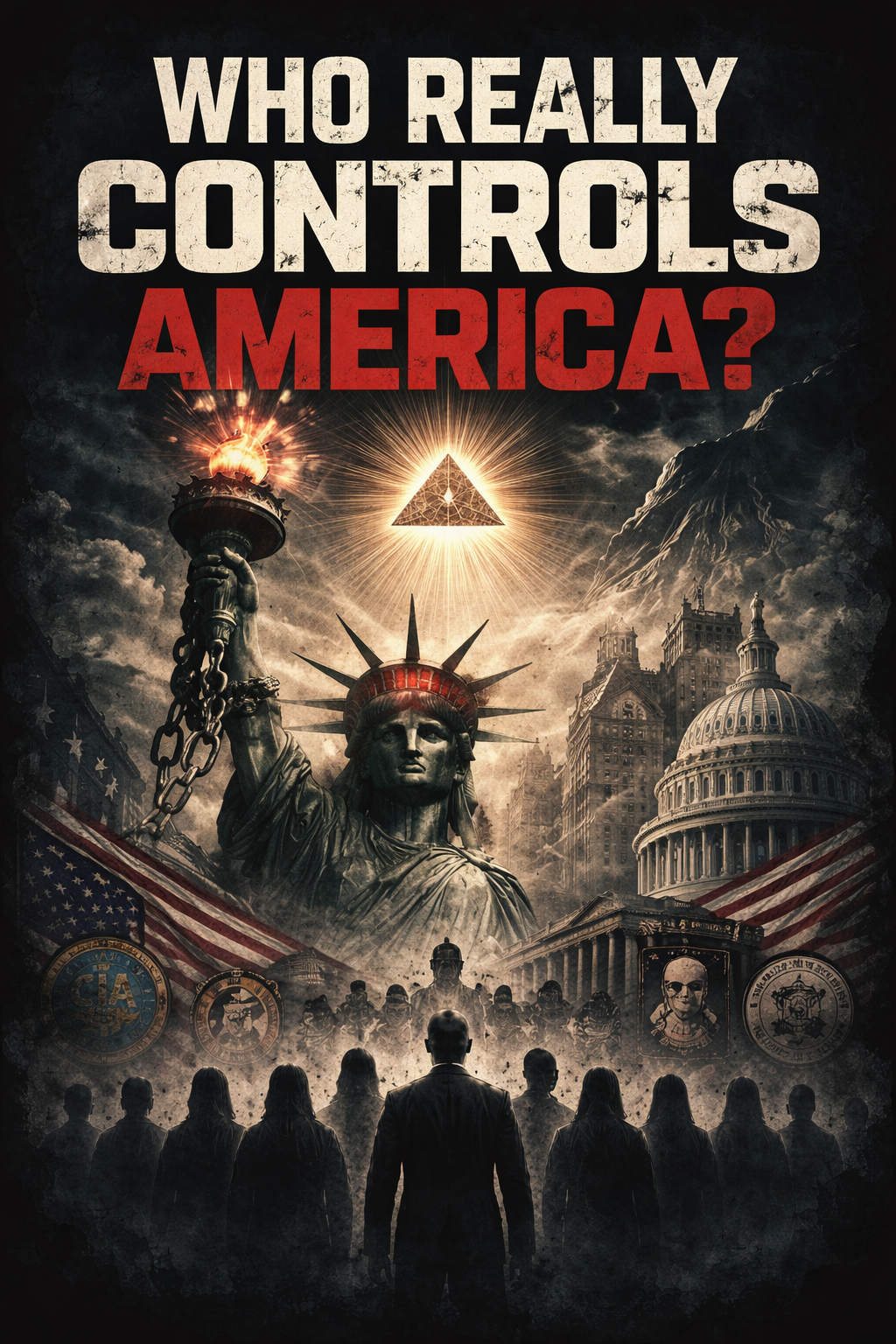
There comes a point in every collapsing society when the lie becomes more important than reality.
That point arrives when the foundational relationship between the populace and its governing structures fractures, marking a critical and often perilous transition in public discourse. The pursuit of truth, a verifiable, objective reality is subtly but definitively replaced by a mandate for utility. People are no longer asked to critically evaluate whether a statement is factual; they are instead commanded to accept its usefulness in maintaining the existing power dynamic, regardless of its fidelity to reality.
This shift manifests in several pernicious ways that erode intellectual independence and civic responsibility. First, critical inquiry is supplanted by rote memorization and repetition. Citizens are asked to repeat slogans, easily digestible and emotionally charged phrases designed to terminate thought, instead of engaging in the difficult but necessary work of asking penetrating questions, seeking nuance, and demanding evidence. The slogan becomes a substitute for understanding.
Second, the natural, healthy skepticism born of empirical observation is suppressed in favor of unquestioning obedience to authority. The public is instructed to trust institutions implicitly, even in the face of demonstrable failures or contradictory evidence. Judging outcomes the actual, measurable impact of institutional actions is deemed subversive. The focus moves from accountability for results to the mere maintenance of institutional prestige, creating an environment where incompetence can flourish so long as the institution's facade remains intact.
Finally, the essence of governance and leadership is reduced to a theatrical performance. There is a systemic effort to confuse performance with substance. Public relations, polished rhetoric, and meticulously managed optics, the spectacle of action are presented as equivalent to genuine, substantial reform or effective policy. The act of appearing to govern becomes the primary goal, obscuring the actual lack of meaningful achievement or true ethical leadership.
This convergence of commanded utility over truth, slogans over questions, institutional faith over observed outcomes, and performance over substance represents a dangerous inflection point. It is a moment where the society has collectively traded the intellectual rigor required for self-governance for the comforting, manipulative clarity offered by those in power. That is not merely a hypothetical scenario; it is the corrosive reality of the political and cultural moment we currently inhabit.
The official narrative, a soothing but deceptive lullaby, insists the economy is stabilising, that inflation is merely cooling after a necessary fever, and that the fundamental institutions are strong. We are told the markets are resilient, the future is full of opportunity, and the only requirement is to keep working, keep spending, keep borrowing, keep trusting the system, and, most importantly, keep silent about any doubts.
Yet, for anyone living outside the bubble of financial headlines anyone with a functioning brain, a crushing stack of bills, and eyes wide enough to see past the manufactured optimism this story is visibly and rapidly falling apart. The fundamental truth is not that the system is healing; it is that the system is profoundly breaking. Worse, it is not merely collapsing under its own weight; it is being intentionally broken and dismantled in full public view while the population is systematically fed a steady diet of distraction, division, and political theatre meticulously disguised as genuine hope or meaningful change.
The evidence of this systemic fracture is no longer subtle. It is everywhere:
The Great Squeeze on Households: Prices continue their relentless, upward march, eroding savings and stability, while wages for the vast majority stagnate or lag critically behind. The purchasing power of the average paycheck is shrinking into oblivion. Households are being squeezed from every conceivable direction simultaneously: housing costs are astronomical, food and energy are prohibitively expensive, and essential services are increasingly unaffordable.
The Crushing of the Engine: Small and medium-sized businesses, the true engine of employment and innovation, are being systematically crushed. They are caught in an impossible vice between weak consumer demand (because customers are broke), exponentially higher operational costs (due to inflation and supply chain instability), and aggressive financial pressure they cannot possibly absorb forever. Their failure is not an unfortunate market correction; it is the destruction of economic diversity.
Debt as a Survival Mechanism: Debt has ceased to be a tool for investment or growth; it has become the essential, miserable way of life. This is not due to weakness, laziness, or moral failure on the part of the populace. It is because the base cost of merely surviving—of existing inside this rigged system keeps climbing at a rate far exceeding the ability of the average person to earn. As a result, credit strains are surfacing with alarming frequency. Delinquencies are rising, savings are depleted, and the entire structure of consumer confidence has become brittle, a glass house waiting for the next minor tremor.
Systemic Fragility and Institutional Decay: Supply chains, the critical arteries of the global economy, remain profoundly fragile, excessively stretched, and exposed to shocks—be they geopolitical, environmental, or public health crises that governments and multi-national corporations can no longer honestly pretend are temporary or "transitory." The facade of institutional strength is also cracking. Regulatory bodies are frequently revealed to be captured, political discourse is poisoned by self-interest and corruption, and public trust in core institutions from central banks to the media is evaporating.
The Ritual of False Salvation: And yet, despite the irrefutable evidence of a manufactured economic decline and a corrupt political structure, millions of people continue to behave as if the entire process of politics is a salvation ritual. They cling desperately to the illusion that the next election, the next political personality, or the next policy tweak will miraculously save them from a system that is intentionally designed to enrich a powerful few at the expense of the many. This relentless focus on political theatre serves only as the final, most effective layer of distraction, diverting attention away from the fundamental economic extraction and decay occurring beneath the surface.
The modern political spectator stands perpetually transfixed by the dazzling spectacle of the stage, a crowd awaiting the arrival of a solitary savior. Their engagement is a transaction of faith, transferring their own power and agency onto personalities, the empty cadence of slogans, sophisticated campaign branding, and the comforting but poisonous fantasy that a single election, one charismatic leader, a perfectly crafted speech, or a triumphant media cycle will somehow manage to reverse a colossal machine that has spent generations meticulously entrenching its foundations. This behavior is not informed political awareness; it is profound, deeply ingrained dependency. It is the inevitable outcome when the citizenry is systematically trained to consume politics with the same passive, emotional fervor they apply to sport, celebrity gossip, or vapid reality television.
They choose a team, a political franchise to align with. They ostentatiously wear the designated colours, repeat the mandated lines and talking points, jeer with partisan fury at the designated villains, and bellow their approval for the strongman or the populist darling. They are captivated by the drama of the surface. Crucially, all the while they are distracted by the theatrical performance, the actual machinery of power—the interconnected systems of finance, bureaucracy, and global governance keeps grinding relentlessly, slowly but surely reducing the individual's sphere of freedom and prosperity.
This is the quintessential genius of modern, slow-burn decay. It has shed the crude, recognizable uniform of historical tyranny. It no longer bursts forth wearing a literal black mask and wielding a blunt instrument of suppression. Instead, it arrives impeccably dressed in a tailored suit, armed with focus-grouped, polished messaging, wrapped in the comforting, often aggressively patriotic language of national defense and cultural preservation, and sporting a perpetually camera-ready, reassuring smile.
The decay speaks in the language of improvement, telling the populace it is fixing a broken system while, in the background, it quietly and methodically tightens the screws of control. It assures the public it is a staunch defender of individual freedom while simultaneously and systematically narrowing the spectrum of viable economic, social, and political options available to the average citizen. It preaches a sermon of temporary hardship, assuring everyone that the pain the inflation, the lack of opportunity, the erosion of rights—is not only temporary but entirely necessary, even morally noble, a sacrifice for the greater good.
It issues the constant, soothing decree: trust the plan. And as the populace nods and trusts, that very process incrementally strips away their essential foundations of autonomy: their purchasing power through engineered inflation and wage stagnation, their personal autonomy through ever-increasing surveillance and regulation, their privacy through digital monitoring and data harvesting, and ultimately, their very ability to meaningfully resist the encroaching system through the fragmentation of community, the monopolization of information, and the pre-emptive criminalization of dissent. The illusion is one of choice; the reality is a subtly managed, ever-tightening cage.
This crisis extends far beyond mere incompetence or poor leadership. It represents a pathology, a fundamental sickness embedded deep within the structure of modern society.
The Weaponization of Appearance and Emotion
What we are witnessing is the sophisticated evolution of a system that has mastered the art of weaponizing appearances and emotional control. This architecture understands a fundamental truth of mass psychology: a populace that is perpetually entertained, emotionally saturated, and internally divided is far easier to control than one that is thoughtful and unified. The strategy is clear: instead of confronting the arduous, complex, and painful root causes of genuine societal decay—the structural breakdown of economies, the erosion of shared culture, and the catastrophic failure of governing institutions—the public consciousness is systematically diverted.
This diversion takes the form of an endless, manufactured drama—a perpetual cycle of arguments centered on superficial personalities, ephemeral scandals, performative tribal loyalties, and highly-scripted outrage. Every day, a new controversy is rolled out, perfectly tailored to maximize division and emotional investment. Every week, a new villain is identified and then summarily sacrificed. Every month brings another hollow promise that the next electoral cycle, the next policy pivot, or the next protest will finally usher in change.
Yet, the core results remain horrifyingly consistent: the pressure ratchets up on ordinary working people. Centralized systems be they corporate, governmental, or technological accumulate more and more unchecked power. Dependency on the state or on these central platforms increases. The space for independent thought, critical discourse, and genuine civic breathing room shrinks day by day.
The Paradox of Willful Psychological Investment
And yet, in the face of this increasingly transparent mechanism of control, too many people participate willingly. They cheer. They clap. They demand the next act.
They embrace the performance because it is infinitely easier to swallow than the bitter truth. It is deeply comforting to hold the belief that somewhere, somehow, a plan is being executed in their favor. It is more psychologically soothing to imagine that some powerful, secretly benevolent figure is fighting a shadow war on their behalf than to accept the reality: that the very structure of the system is fundamentally hostile to their long-term interests and flourishing.
This preference for fantasy manifests as a debilitating intellectual laziness: it is easier to worship the visible personalities on the stage than to confront the hidden incentives and complex architectures of the systems that govern us. It is simpler to repost a catchy, emotionally resonant slogan than to undertake the difficult, disciplined work of studying economic incentives, legal frameworks, and power dynamics. It is more gratifying to rage at the visible puppet the politician, the talking head, the CEO than to identify and expose the powerful, hidden hands that are moving the strings backstage.
The Lie That Sustains Collapse
This is the central reason why the collapse is allowed to continue its inexorable slide. It is not simply because those who hold the reins of power are ruthless, though they are. It is primarily because millions remain deeply, psychologically invested in the lie.
They do not merely tolerate the lie; they need the lie for their own emotional survival. The lie offers a cheap form of hope without demanding the personal discipline, intellectual rigor, and collective action required for real change. It provides a ready-made, tribal identity without demanding the arduous process of self-knowledge and critical thought. It provides an endless stream of external enemies to shout at and focus their righteous anger upon, thus relieving them of the terrifying obligation to understand the architecture of the cage that encircles them.
This profound psychological capture is the true survival mechanism of broken systems. They endure longer than they logically should, not because of their inherent strength or efficiency, but because they have successfully harnessed the mass emotional vulnerability of the people they ostensibly serve.
To observe the current state of affairs the predictable cycles of outrage, the focus on the trivial, the avoidance of the structural and to conclude that it is merely accidental is to willfully ignore the most significant and chilling fact of our time.
This is not entropy; it is design.
The hollowing out of the middle class is not a coincidence; it is a systemic outcome. The extreme fragility inherent in modern food, fuel, logistics, credit, housing, and energy systems is not merely a streak of bad luck. Nor is the relentless squeeze on the productive class the small business owners, the skilled tradespeople, the essential workers a simple, unfortunate side effect of progress. The constant, accelerating movement toward greater financial abstraction, tighter surveillance, increased dependency on mega-corporations and the state, and the concentration of wealth and power into ever-fewer hands is not the result of random chaos or mere bureaucratic ineptitude.
At a certain inflection point, the word "incompetence" ceases to be an adequate explanation for the totality of what we observe. When nearly every major system exhibits the same direction of travel toward centralized control, reduced individual autonomy, and lower resilience one must confront the possibility that what appears to be widespread confusion and failure is, in fact, the precisely executed blueprint for managed decline. This pattern is only successfully maintained because a large portion of the population refuses to acknowledge its existence, interpreting the symptoms as isolated incidents rather than a coordinated strategy.
The New Normal: A Cultivation of Acceptance
This pattern is now becoming undeniably prominent and harder for even the willfully blind to ignore. A profound cultural and economic conditioning is underway, training the public to not just accept less, but to treat this scarcity and instability as the "new normal."
- Shrinking Returns: The shift is from abundance to austerity. Citizens are conditioned to expect smaller portions on their plates, yet face ever-higher bills for basic necessities. The expectation of shared societal prosperity has been replaced by the reality of perpetually diminishing returns.
- Erosion of Trust and Ownership: Trust in nearly all major institutions—government, media, finance, and even health is at historic lows, yet dependence on them is greater than ever. Simultaneously, the path to genuine ownership of a home, productive assets, or even intellectual property is increasingly barred, forcing generations into a permanent state of tenancy and debt.
- The Myth of Hard Work: The foundational promise of the post-war era that sustained, honest hard work would reliably translate into security, upward mobility, and a better future for one's children has been broken. Today, hard work is often the bare minimum required merely to keep one's head above the rising waters of inflation and debt, locking the majority into a cycle of precarity.
- Growth Without Prosperity: Economic "growth" has been decoupled from broad-based prosperity. The official metrics may tick up, but this growth primarily manifests as asset inflation, benefiting only those already holding significant capital, and further fueling corporate concentration and monopolistic power. For the ordinary person, this often means paying an ever-increasing premium for a product or service of declining quality.
The Paradigm Shift: From Public Servitude to Public Exploitation
The most insidious part of this managed decline is the redefinition of the relationship between governing institutions and the populace. The old social contract suggested that institutions existed to protect the public good, ensure fair play, and create a stable environment for citizens to flourish.
That contract has been systematically nullified. The public is now increasingly viewed and treated not as the sovereign or the body to be served, but as a resource to be harvested.
- A Revenue Source: Citizens are seen as a source for constant taxation, fees, fines, and mandatory purchases (e.g., insurance), turning governance into a complex revenue-extraction mechanism.
- A Data Stream: Every interaction, transaction, movement, and preference is meticulously logged and monetized, rendering the individual less a private citizen and more a perpetual data point for corporate and state surveillance.
- A Manageable Mass: Through sophisticated behavioral economics, media manipulation, and algorithmic control, the populace is treated as a manageable mass to be "nudged," monitored, and ultimately "milked" for its economic value and compliance. Individual liberty is increasingly sacrificed on the altar of systemic efficiency and control.
This is the point where the economic shifts transcend mere fiscal policy or market cycles. This pervasive, engineered financial pressure the deliberate destabilization of livelihoods, the removal of economic safety nets, and the conditioning of dependence becomes a tool of social and political control, transforming a population of empowered citizens into a collective of financially fragile, compliant subjects. The economic crisis is, in reality, a crisis of autonomy.
The Architecture of Control: Exhaustion as a Mechanism
The modern state of perpetual anxiety, debt, and overstimulation is not a mere side-effect of economic mismanagement; it is, in many ways, an intentionally engineered condition that culminates in profound social control. When a population is systemically exhausted—mentally, financially, and emotionally—it loses the capacity for the deep, long-term strategic thinking necessary for resistance and effective self-governance.
A populace trapped in the relentless cycle of survival consumes all of their energy. Their focus narrows to the immediate, to the next paycheck, the next bill, the next temporary distraction. The capacity to analyse systemic failures, to organise collectively, or to challenge authority with sustained effort is utterly depleted. This state of financial siege and mental fatigue renders them acutely vulnerable:
- Vulnerability to Fear: Uncertainty about the future breeds a desperate need for safety, making people far more susceptible to fear-based narratives and emergency measures proposed by governing bodies.
- Dependence on Authority: When individuals cannot secure their own future, they become increasingly reliant on the very institutions and authorities that may be responsible for their decline. They exchange liberty for the promise, however illusory, of stability.
- Acceptance of Measures: They become willing to accept draconian policies, surveillance, and infringements on basic rights that they would have vehemently rejected in a time of genuine economic and psychological health.
Economic weakness, therefore, transcends being a mere symptom of decline; it is a critical tool for making that decline permanent. A financially besieged population does not possess the resources, the time, or the psychological bandwidth to organise well, think clearly, or fight effectively. Instead, the default mechanisms are coping, distraction, and a passive waiting for relief that, by design, never fully materialises. This creates a fertile ground for the next layer of manipulation to take root.
The Media Circus: A Dual-Layered System of Deception
Layered atop this foundation of societal exhaustion is a sophisticated and pervasive media circus designed to manage perception, dissipate energy, and co-opt genuine dissent. This operation works on multiple levels:
- The Mainstream Echo Chamber: The mainstream outlets function with predictable obedience, serving as a primary vector for distributing the official line, managing public narratives, and delegitimizing any competing perspectives. Their role is to provide a unified, if narrow, interpretation of events, ensuring a consistent message reaches the largest possible audience.
- The Controlled ‘Alternative’ Sphere: More insidious is the landscape of the so-called alternative world, which is often populated by frauds, cowards, and controlled performers. This sphere gives the illusion of critical thought and rebellion, acting as a crucial safety valve for genuine discontent.
- Playing the Role of Rebels: These figures may flirt with deeper truths—just enough to capture the attention of those who have seen through the mainstream narrative. However, they operate safely within invisible boundaries, knowing precisely how far they can push before they face genuine consequence.
- The Retreat into Monetized Outrage: When they near a point of truly exposing the structure, they invariably retreat into monetised outrage, shallow analysis, and emotionally charged noise. They convert systemic issues into predictable, digestible, and ultimately harmless content.
The key to their success is maintaining a delicate imbalance:
- Enough heat to feel dangerous, but not enough light to expose the structure. The audience feels the emotional charge of fighting the good fight, but never gains the actionable, structural understanding needed to win.
- Enough anger to drive clicks, but not enough clarity to create action. The cycle becomes one of perpetual emotional consumption, not revolutionary change. The energy of dissent is captured, circulated, and ultimately spent, yielding high engagement metrics but zero systemic impact.
The Cost of Truth and the System of Co-option: The reason for this universal pulling-back is starkly commercial and political: going far enough costs something significant.
The moment a commentator or channel truly begins to connect the dots and offer actionable, systemic critiques, they face a series of immediate and severe penalties:
- It costs access: Loss of sources, invitations to forums, and the subtle privileges afforded to controlled opposition.
- It costs monetisation: Demonetization, reduced ad revenue, and the risk of being shut out of major payment processing platforms.
- It costs audience comfort: Deep truths are often inconvenient and demand personal change, alienating the portion of the audience seeking entertainment over enlightenment.
- It costs platform safety: The risk of being deplatformed, shadow-banned, or entirely removed from social media ecosystems for violating terms of service related to 'misinformation' or 'hate speech'.
- It costs the illusion: It shatters the convenient, lucrative, and self-serving illusion that you can keep one foot inside the machine while pretending to stand against it.
To avoid these costs, they universally water everything down. They become expert purveyors of systemic collapse packaged as entertainment. They turn decay into digestible clips. The function of these channels is not to inform, but to manage the speed and direction of public understanding: they feed people just enough truth to keep them engaged and addicted to the content, but just enough distortion and noise to keep them passive and incapable of unifying into a force for genuine change. The content becomes a highly effective tool for harvesting revolutionary energy and converting it into profits and inaction.
That is not resistance. That is sedation.
So let’s go even further. Who is “they”?
“They” are not some cartoon villain in a secret room smoking cigars over a world map. The true nature of this power structure is far more sophisticated, diffuse, and therefore, far harder to pinpoint and oppose. “They” are the interlocking layers of institutional power that shape modern life while pretending to merely administer it. This administration is the genius of their control—the constant, subtle calibration of parameters that define the limits of public possibility. They are the banking interests that influence the terms of economic reality, setting the rules of debt, investment, and capital flow that ensure wealth concentrates upward, making economic dependence a structural feature of society. They are the policy networks and think tanks that dress elite priorities up as public necessity, crafting white papers and strategic reports that serve as the foundational blueprints for legislation and public discourse, effectively manufacturing consensus among the governing class. They are the sprawling foundation systems that shape culture, education, public language, and the boundaries of respectable opinion. These foundations wield massive endowments to direct the flow of cultural production, academic research, and media narrative, ensuring that certain ideas are amplified as 'mainstream' while others are marginalized as 'fringe' or 'extremist,' thereby maintaining an ideological quarantine. They are the corporate power centres that train populations to consume, obey, conform, and outsource judgment. Through constant advertising, corporate media control, and the creation of essential, inescapable technology platforms, they habituate the public into a state of perpetual demand and passive compliance, turning every citizen into a predictable consumer unit. They are the political machines that rotate faces without changing direction.
The electoral drama is often a carefully managed spectacle that offers a false choice between two or more wings of the same establishment, ensuring that regardless of who wins, the fundamental economic and geopolitical vectors of the state remain unchanged. They are the religious, media, academic, and financial gatekeepers who tell ordinary people what safety looks like, what success looks like, what citizenship looks like, and what kind of life they are allowed to call normal. These gatekeepers act as the internal police of the public mind, providing the authoritative script for acceptable behavior and ambition, ensuring the populace remains focused on localized, individual concerns (personal debt, career ladder, entertainment) rather than systemic, collective power.
And yes, this is the territory where certain names keep surfacing in public debate, suspicion, and criticism. These names are not the whole picture, but they represent the visible, structural nodes of a deeply embedded system. People point to institutions such as the Heritage Foundation when they talk about ideological influence, policy shaping, and the manufacturing of acceptable political boundaries. These think tanks are key components of the "revolving door," employing former officials and future appointees, ensuring a continuous feedback loop between lobbying, academic theory, and state power. They point to elite societies like Skull and Bones as symbols of dynastic networking, inherited access, and the closed circles where power often reproduces itself behind a polished public mask. Such societies symbolize the often-unacknowledged hereditary nature of power, demonstrating how personal bonds forged in exclusive settings can translate into disproportionate political and economic influence over decades. They point to intelligence agencies such as the CIA and MI6 as examples of how state power, secrecy, covert influence, and strategic narrative management can shape events far beyond what the public is ever permitted to see clearly. These agencies represent the "deep state" capacity to execute extralegal and geopolitical operations, managing conflict, toppling foreign governments, and shaping global perceptions in ways that are deliberately obscured from democratic oversight.
They also point to transatlantic policy shops and influence networks such as the Atlantic Council, where former officials, military figures, intelligence veterans, corporate power brokers, and strategic insiders circulate through the same ecosystem of narrative management, foreign-policy framing, institutional access, and elite consensus-building. This constant circulation is not simply professional networking; it is the establishment of a unified, transnational ruling class where the interests of national security, multinational corporations, and geopolitical strategy become inextricably merged. That does not mean every person in that orbit is part of one grand script. It means the same class of people keep appearing in the same rooms, around the same funding networks, reinforcing the same worldview, and then presenting it to the public as sober expertise rather than structured power. This is the critical distinction: the system operates not via explicit conspiracy, but via self-selection, shared class interests, and the powerful gravitational pull of a unified, deeply resourced institutional consensus that naturally marginalizes dissenting views.
And when it comes to the CIA, history matters. This is not suspicion floating in empty air. The CIA’s own "Family Jewels" files and the findings of the US Senate’s Church Committee documented decades of improper, unethical, and in some cases illegal conduct, including domestic surveillance, plots involving foreign leaders, mail opening, and abuses that ran directly against the image of a clean, restrained guardian state. The historical record, validated by the state's own investigations, serves as an essential, non-negotiable fact that destroys the carefully curated image of perfect institutional integrity. That historical record matters because it destroys the childish fantasy that secret power always operates inside neat moral lines. It proves that the very institutions tasked with protecting our freedoms have, in the name of national interest a term often defined by the elite systematically undermined democratic and constitutional principles. Once an institution has shown it is willing to cross legal and ethical boundaries in the name of national interest, stability, or strategic necessity, it becomes much harder to accept later reassurances at face value. The historical precedent creates a permanent, rational basis for skepticism, forcing the public to recognize that the rhetoric of security is often a veil for the consolidation of unaccountable power. This is the root of the problem: the institutions that demand absolute trust are the same institutions that have demonstrably earned a high degree of sophisticated distrust.
The reach of modern governmental power is no longer contained solely within the traditional, formal institutions of the state—the military, the intelligence agencies, the civil service. Crucially, this power extends deep into the vast, complex private-contractor ecosystem that has become the indispensable, albeit often opaque, partner of contemporary governments. This shift represents a fundamental outsourcing of what was once presented as the exclusive domain of the state, creating a sprawling architecture of strategic influence and operational capability that runs on billions of dollars in public money.
This ecosystem is populated by a wide spectrum of corporate entities: niche private firms specializing in areas like maritime intelligence (such as Clearwater Dynamics), intelligence-adjacent consultancies, sophisticated surveillance vendors, cybersecurity operators, logistics specialists, and data-analysis giants.
At the apex of this network sit massive, deeply integrated contractor organizations built around behemoths like Booz Allen Hamilton, Palantir Technologies, CACI International, and Leidos. These firms are not merely suppliers of material goods; they are providers of highly sensitive, core governmental functions, becoming integral to intelligence gathering, operational planning, and strategic execution. This ecosystem is populated by a wide spectrum of corporate entities: niche private firms specializing in areas like maritime intelligence (such as Clearwater Dynamics), intelligence-adjacent consultancies, sophisticated surveillance vendors, cybersecurity operators, logistics specialists, and data-analysis giants. At the apex of this network sit massive, deeply integrated contractor organizations built around behemoths like Booz Allen Hamilton, Palantir Technologies, CACI International, and Leidos. These firms are not merely suppliers of material goods; they are providers of highly sensitive, core governmental functions, becoming integral to intelligence gathering, operational planning, and strategic execution. Furthermore, we must include the massive defense and technology contractors like DARPA (the Defense Advanced Research Projects Agency, a government entity that acts as the core driver), Lockheed Martin, Boeing, Northrop Grumman, and Raytheon along with countless smaller, specialized firms. These organizations are critically situated at the intersection of private profit and state power, often operating years or decades ahead of public knowledge in fields like artificial intelligence, quantum computing, surveillance technology, and next-generation warfare. Their technological lead is so vast and their work so cloaked in classification and non-disclosure agreements that the true capabilities and applications of the systems they are developing systems that will fundamentally reshape the future of control and conflict—would undoubtedly make the average person's head spin.
To critics, this private sector involvement fundamentally re-characterizes the nature of modern statecraft. Though these firms operate under corporate branding and their personnel wear tailored suits instead of uniforms, they are viewed increasingly as 'guns for hire' private power centres whose primary allegiance is not to abstract notions of country, citizenship, or the public good. Instead, their first loyalties are pragmatic and commercial: to securing and expanding contracts, maintaining cash flow, ensuring political access, and guaranteeing their institutional relevance within the governmental structure.
This privatization is what makes the modern power structure inherently dangerous and ethically ambiguous. The once-clear boundary separating state power and private power becomes not just blurred, but actively and deliberately obscured. Essential sovereign functions including intelligence work, advanced surveillance capability, critical risk analysis, global logistics, complex cyber operations, and strategic policy support are no longer contained neatly within the confines of secure government walls.
Instead, they are distributed across a decentralized, global marketplace populated by highly paid, highly skilled actors. The core incentives driving these actors are inherently commercial and profit-driven, and their loyalties are fundamentally conditional, tied to the continuation of lucrative contracts. Furthermore, the influence and power of these private entities often expand in direct proportion to public fear, the escalation of geopolitical instability, and the perpetuation of a state of permanent crisis. When the world is unstable, the demand for their 'solutions' and expertise skyrockets, solidifying their place at the centre of global governance.
Whether these private institutions and contractors are viewed as the primary central actors, merely peripheral instruments, or perhaps the clearest symbols of a much deeper, more pervasive architecture of power, the broader conclusion is inescapable: power in the modern world rarely moves along the transparent, democratic channels citizens assume. It increasingly flows through complex, commercialized, and strategically-incentivized networks that the average citizen has neither voted for nor truly possesses the means to understand or hold accountable. The sovereignty of the state, in essence, has been quietly parcelled out to the corporate sector.
Call it an establishment. Call it an elite consensus. Call it a managerial order. The label matters less than the function.
Its function is to herd people into deeper dependency while convincing them it is for their own protection. More monitoring in the name of security. More control in the name of stability. More financial abstraction in the name of innovation. More obedience in the name of responsibility. This is how a digital prison is built in the modern age. Not always with visible chains, but with incentives, pressure, convenience, fear, and carefully managed narratives. We are witnessing the Ari and Rahm Emanuel WWE theatre—a staged drama designed to distract and control, reminiscent of the movie Wag The Dog. As William J. Casey, former CIA Director, is often quoted: "We’ll know our disinformation program is complete when everything the American public believes is false."
You are told America is the saviour of the world. You are told America stand exists to defend the free world. But who really governs the direction of a nation? Is it the average citizen? Or is it the permanent structure that outlives every election, every administration, and every campaign promise? Is it the public, or is it the alliance of financial power, institutional networks, intelligence culture, legacy influence, corporate lobbying, dynastic wealth, and elite social circles that shape outcomes long before ordinary people ever enter the voting booth?
And now look at the so-called war with Iran. The public is told to see only the surface layer: missiles, speeches, patriotic soundbites, and the usual language of necessity. But wars like this also serve another purpose. They create cover. Cover for emergency powers. Cover for censorship. Cover for market manipulation. Cover for energy shocks, supply-chain disruptions, military expansion, and fresh rounds of fear-based obedience. As the conflict intensifies, the Strait of Hormuz is disrupted, oil markets convulse, and ordinary people pay the bill through higher costs, deeper instability, and another step down the ladder of economic freedom. The people at the top speak the language of national security. The people at the bottom live with the consequences.
That does not require a cartoon conspiracy to understand. It requires only a clear-eyed look at how power behaves under stress. Conflict becomes theatre, theatre becomes justification, and justification becomes policy. The war may be sold as a clash of nations, but entrenched elites, strategic networks, and transnational power centres are often far better positioned than ordinary citizens to exploit its chaos. Whether the centre of gravity sits in Washington, the City of London, or the broader alliance of financial and institutional power that links them, the pattern remains the same: the public gets fear, sacrifice, and slogans, while the permanent structure gets more leverage.
That is the question people avoid because once you ask it honestly, the mythology starts to crack, and the accepted narratives of how the world functions begin to dissolve.
Power in the modern world is rarely simple and almost never transparent. It has evolved beyond the crude spectacle of visible tyrants and now operates through a complex, interconnected, and often intentionally obscure web of influence. It moves subtly through the boards of multinational corporations that dictate global supply chains; it is embedded in the colossal endowments of universities and think tanks that shape intellectual discourse; it is centralized in the handful of global banks that underwrite nations; it is disseminated by foundations that fund specific social and political movements; it is legislated by highly sophisticated lobbying networks that draft the laws they seek to control; it is normalized by vast media ecosystems that filter and frame reality; it is systematized by consultancy circles that implement standardized policy across governments and industries; it is protected by impenetrable legal structures that shield the powerful from accountability; it is institutionalized in powerful social organizations that determine acceptable conduct; and in some cases, it is coordinated through clandestine intelligence relationships that manufacture consensus a manufactured consent long before the public believes it made a choice. The faces of the politicians and CEOs change. The slogans used in election cycles change. The party branding and colors change. But the fundamental direction of policy, the core trajectory of global systems, often remains remarkably consistent because the deeper architecture, the scaffolding of institutional and financial control, remains intact, operating regardless of the electoral cycle.
And that is precisely why so many people feel an unsettling, pervasive sense that something is profoundly wrong, even when they cannot fully articulate or explain its source. This intuition is not paranoia; it is a rational response to an irrational reality the lived experience of a fundamental misalignment between the official narrative and the palpable, tangible world.
They can intuitively sense the widening gap between the story they are told a mythos of opportunity, progress, and democratic accountability and the tangible outcome they experience a reality characterized by precarious employment, systemic inequality, and a feeling of powerlessness. They can feel the agonizing cognitive dissonance when the very language of freedom is weaponized, often used to justify policies that, in practice, lead to increased economic dependency. This dependency, subtly woven through mechanisms like crushing student loan debt, fragile gig-economy employment, and mandatory digital identities, ties individuals inextricably to the very institutional structures—be they financial monopolies or state bureaucracies they are promised freedom from.
Furthermore, they recognize that the ubiquitous language of safety and security is frequently and cynically employed to justify ever-increasing surveillance, indiscriminate data collection, and physical control over public and private space. This strategic use of fear systematically erodes civil liberties and normalizes a state of perpetual, low-grade emergency, where privacy is deemed a luxury and independent thought a liability. Most painfully, they observe that the sacred language of democracy and representation is routinely deployed to preserve the entrenched power of opaque, highly influential institutions. These include powerful regulatory bodies, supranational international organizations, and massive financial monopolies that were never truly accountable to the ordinary people in the first place, operating instead through complex, non-transparent processes outside the legitimate, popular democratic process. The result is a hollowed-out democracy, where the theatrical performance of elections masks the continuous consolidation of power by an unelected, self-perpetuating elite.
Once you start to perceive this architecture of deception once you allow the foundational mythology that props up this system to crack the real nature of the battle changes entirely. It is no longer a passive process of simply waiting for the next charismatic political savior to emerge from the machine, or the next heavily-funded electoral campaign to miraculously succeed against institutional inertia, or the next sensationalist media personality to tell you precisely what to believe and who to hate. It is not about seeking a comfortable release by venting your collective frustration into the next predictable, manufactured outrage cycle.
The true transformation is fundamentally internal, personal, and profoundly difficult: it becomes a deep, unwavering battle to reclaim the integrity of your own mind. It demands a commitment to think clearly, autonomously, and independent of the pervasive, emotionally manipulative noise designed to capture and redirect your attention. It requires the intellectual discipline to examine systems, to painstakingly deconstruct the underlying mechanisms of power and control, instead of merely worshipping the comforting, yet ultimately distracting, symbols and personalities presented as substitutes for genuine understanding. It necessitates the conscious, often painful, act of breaking the emotional addiction to political and cultural spectacle the constant drama of conflict designed specifically to distract, polarize, and divide the populace against itself. It is a necessary act of profound rebellion to stop living a life that has been conveniently pre-packaged, institutionally pre-approved, and psychometrically optimized for maximum compliance by governments seeking absolute control, by corporations demanding unquestioning consumer loyalty, by calcified institutions protecting their own inertia, and by cultural managers who fundamentally benefit from your ongoing passivity and predictable, habitual consumption.
Because the truth, the raw, unvarnished truth about power, how it operates, and the price of recognizing it is hard for one brutal, unavoidable reason. It requires responsibility.
Once you genuinely and clearly see the scaffolding of the system, once the illusions fall away, the responsibility for your own life, your own thoughts, and your own future lands squarely and irrevocably back in your hands. There is no longer an excuse for passivity, and the act of seeing becomes the immediate call to action.
Once the illusion of an external savior the 'machine' is shattered, the fundamental shift in perspective becomes unavoidable. You can no longer sustain the comforting pretense that the architects of your current reality will somehow pivot to become the builders of your desired future. The realization dawns that the system, by its very design, thrives on a transactional relationship: it rewards dependence, offering security and comfort for compliance, and systematically punishes independence, which represents a threat to its structural integrity. This truth dismantles the sentimental attachment to the very structures—corporate, political, cultural—that have subtly yet effectively indoctrinated you into a state of perpetual smallness, unquestioning obedience, manageable debt, and constant distraction. When you finally grasp that the life marketed to you as "success" is often nothing more than a more sophisticated, softer form of servitude, you are brought to an existential precipice.
At this juncture, a profound, non-negotiable choice emerges:
You must either remain a willing participant, kneeling to a pre-written script that defines your value, your limits, and your dreams, or you must summon the courage to seize the pen and begin writing your own.
This demanding pivot explains why so few ever complete the journey toward authentic self-ownership. The constraint is rarely a lack of available information or insight; the constraint is the exorbitant emotional and psychological cost of the truth. Truth is expensive because it functions as an acid, dissolving the most cherished illusions. It forcefully ends comfortable, well-worn fantasies about how the world works and who is responsible for your well-being. It necessitates the painful severance of emotional attachments to the very anchors of modern identity: brands, political parties, revered institutions, and pervasive cultural myths.
More intimately, the truth forces a man to confront his own reflection, demanding an honest audit of his personal habits, his deep-seated cowardice, his ingrained dependence, and the carefully constructed edifice of his daily excuses. Where fantasy once provided a soft place to land, truth demands discipline, accountability, and unrelenting self-examination.
But this confrontation, while brutal, yields an incalculable reward a possession the prevailing system is explicitly designed to withhold:
The possibility of a truly meaningful life.
This is not the meaning approved by consensus, nor is it a life curated and presented back to you through a narrow lens. It is not the life hand-selected by bureaucratic mandate, targeted advertising algorithms, corporate strategic planners, political operatives, or institutional gatekeepers. It is, instead, a life built deliberately, piece by piece, anchored in the robust, unshakeable virtues of personal responsibility, radical courage, clear-eyed discernment, and foundational truth. It is a life that belongs to you unequivocally, because you chose it with your eyes wide open, fully aware of the stakes and the sacrifice.
It is in this personal sovereignty that true freedom finds its genesis.
Freedom is not found in rousing political slogans, nor in well-funded campaigns, nor in the empty, performative chest-beating of a managed global empire that claims to be saving the world while simultaneously tightening the grip on its own populace squeezing their resources, surveilling their communications, burdening them with unmanageable debt, and psychologically managing them into compliant submission. Real freedom is not a gift bestowed by an external authority, nor is it a privilege granted by the systems or structures we call "the machine." Instead, it is a profound and intensely personal declaration of independence.
This true emancipation begins the very instant an individual consciously chooses to withdraw consent from the pervasive culture of permission-seeking. It is the moment one ceases to ask the machine—the societal norms, the institutional expectations, the fear of judgment—for clearance to engage in the fundamental acts of selfhood.
This freedom manifests in several critical dimensions:
- Freedom of Thought: It is the refusal to internalize the machine's programming; the deliberate act of thinking one's own thoughts, formulating original perspectives, and challenging the prevailing narratives without fear of intellectual reprisal.
- Freedom of Action: It is the capacity to take decisive, self-directed action. This involves moving from passive contemplation to active creation, building a life not based on prescribed paths or dictated goals, but on one's own deeply held values and vision.
- Freedom of Being: It is the commitment to build an authentic life a life where one's internal self is harmoniously aligned with one's external expression. It is the rejection of pretense and the embracing of genuine self-expression.
Ultimately, this culmination leads to the simplest yet most radical act: simply to live it. To inhabit one's chosen existence fully, without reservation or apology, recognizing that the only necessary permission is the one granted by the self. This is the bedrock upon which genuine human autonomy is built.
Therefore, the mandate is clear and urgent: stop waiting for external rescue. Stop worshipping the stage and its actors. Stop confusing sophisticated political marketing with genuine moral courage. Stop delegating your critical faculty and your very mind to institutions whose functional objective is to despise your independence while feeding ravenously on your fear and your compliance.
For the ultimate, compounding degradation is not simply that the system lies to you day after day.
The final, unforgivable insult is that it actively demands you express gratitude for the chains it places upon you.
It requires you to smile obligingly as you are digitally tracked and profiled; to cheer enthusiastically as your economic security is systematically eroded and you are impoverished; to remain obedient and deferential as your power to act and choose (your agency) is systematically stripped away; and to be grateful as your future is financially mortgaged to vast, opaque powers you neither chose nor can easily identify. The system's goal is to render you so morally and psychologically defeated that you willingly mistake a meticulously managed captivity for the pinnacle of civilization itself.
And if this trap remains invisible to you, consider this chilling axiom: the most effective prison is the one whose inmates have been thoroughly taught to call it freedom. This is not a prison defined by steel bars and high watchtowers, but one constructed meticulously from interlocking narratives, carefully calibrated incentives, pervasive social fear, and expertly managed systems of belief. It is a conceptual prison where unwavering obedience is lauded and rewarded as "responsibility," where utter dependence on the state or corporation is aggressively marketed as "security," and where the simple act of questioning the system's foundational premises is immediately framed and punished as dangerous "extremism" or "conspiracy." In such a self-policing environment, the guards do not need to raise their voices. The walls do not need to be physically visible. Instead, the inmates themselves become the enforcers; they police one another, fiercely defend the conceptual structure that confines them, and viciously attack anyone who dares to suggest that the cage even exists.
No one is coming to free a population that has willingly fallen in love with the comforting familiarity of its cage. This self-imposed servitude is perfectly captured by the cynical and enduring Latin warning: Mundus vult decipi, ergo decipiatur - the world wants to be deceived, so let it be deceived. It is a harsh truth woven throughout the tapestry of human history that a great many people have consistently preferred the structure and psychological safety of comfortable illusions over the terrifying, disruptive demands of uncomfortable truths.
These illusions are seductive precisely because they are passive. They require nothing from the individual: no courage to speak out, no moral responsibility for the state of the world, no dangerous confrontation with the entrenched powers that be, and certainly no painful, profound reassessment of the life, values, and societal roles they have been culturally conditioned and taught to accept. It is a choice of immediate peace over eventual, hard-won liberty.
The intricate system of control whether it be political, economic, or cultural, understands this fundamental human weakness with a cold, surgical precision that the general public will never fully grasp. It knows that the human mind, when faced with cognitive dissonance, often chooses the path of least resistance. It has mastered the craft of manufacturing consent by ensuring an abundant supply of distraction, a steady drip-feed of carefully managed fear, and a constant, dazzling spectacle of entertainment and triviality. The calculation is simple and devastatingly effective: if enough bread and circuses are provided, a critical mass of the population will choose the compelling, curated story over the complex, inconvenient reality.
And so, the relentless, insidious cycle continues: the carefully crafted lie is professionally offered by the authorities; the lie is willingly, even enthusiastically, embraced by a populace seeking psychological comfort; and the cage—the apparatus of control—grows stronger, more sophisticated, and more inescapable precisely because so many within it refuse to admit, even to themselves, that it exists. They become the unwitting, self-policing architects of their own perpetual confinement.
This is the central crisis. It means that salvation, liberation, and real change will never be delivered from the top down. It will not arrive on the wings of a hero, a political savior, or a new movement. That is why the responsibility is yours, and yours alone. The burden of recognition, the courage to face reality, and the commitment to act is an individual one that cannot be deferred or delegated. Not tomorrow. Not after the next predictable election cycle that offers only the illusion of choice. Not after the next spectacular scandal that distracts from the systemic problem. The moment for true confrontation with reality is Now.