
Why Are Clinics Rethinking Their Front Desk Operations?
A patient's experience with a clinic often begins before the actual appointment. It may start with a phone call to book a visit, ask about a prescription or confirm an appointment. However, busy reception desks cannot always answer every call on time. Staff members may already be helping patients, handling paperwork or coordinating schedules. As a result, some callers wait too long or leave without getting the help they need.
This is where a medical AI virtual receptionist can make a real difference. It helps clinics manage routine communication, answer patient calls and schedule appointments without placing extra pressure on front desk staff. With the right technology, healthcare providers can make communication easier while giving their teams more time to focus on patients.
How Does an AI Virtual Receptionist Help Clinics?
A virtual receptionist uses artificial intelligence and conversational technology to communicate with patients. Instead of following only fixed instructions, it can understand common questions and respond in a natural manner.
For example, a patient may call to ask about available appointments. The system can understand the request, check the available schedule and help arrange a suitable visit.
It can also support routine tasks such as:
- Answering incoming patient calls.
- Scheduling and managing appointments.
- Responding to common questions.
- Handling medication refill requests.
- Collecting basic patient information.
- Providing assistance outside regular office hours.
These functions help reduce repetitive work at the front desk. Staff members can spend more time assisting patients who need personal attention.
Why Are AI Virtual Assistants in Healthcare Becoming Important?
Healthcare communication involves more than answering phone calls. Patients need timely information before, during and after their visits. When communication breaks down, clinics may face missed appointments, delayed responses and unnecessary administrative work.
AI virtual assistants in healthcare help address these challenges by supporting different stages of the patient journey.
Consider a small medical practice that receives several calls while its reception team is checking in patients. Without additional support, some calls may go unanswered. A virtual assistant can handle incoming requests and help patients access basic services without waiting for a staff member to become available.
Here are some important benefits:
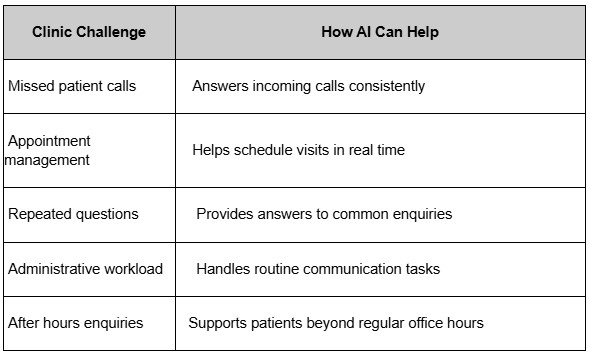
The main purpose is not to remove human interaction. It is to make sure patients receive timely assistance while clinic employees can focus on more important responsibilities.
Can AI Technology Support the Entire Patient Journey?
Yes. Modern healthcare technology can do much more than manage the front desk. When different AI tools work together, they can support communication, clinical documentation and access to patient information.
EnSofia follows this approach through its connected digital employee platform. It offers three specialised solutions that support different parts of clinic operations.
Konvoy: This digital front desk employee answers patient calls, schedules appointments and handles routine requests. It helps clinics manage communication throughout the day, including evenings and weekends.
Kompanion: This solution supports clinicians during patient visits. It transcribes conversations and prepares clinical notes, helping reduce the time doctors spend on documentation.
Kortex: This clinical intelligence assistant reviews patient history, medications and lab results. It prepares useful summaries so clinicians can access relevant information before an appointment.
These tools work together through EnSofia's Sofia intelligence engine. By sharing patient context across different tasks, they help create a more connected workflow.
This approach also addresses an important problem in healthcare. When communication systems operate separately, staff members often need to repeat tasks or search for information across multiple platforms.
What Should Clinics Consider Before Choosing an AI Solution?
Not every clinic has the same requirements. A small practice may need better call management, while a larger clinic may want support with documentation and patient information.
Before selecting a solution, healthcare providers should consider:
- Ease of communication: Can patients interact with the system naturally?
- Workflow integration: Can it connect with existing clinic systems?
- Patient privacy: Does it follow appropriate healthcare data protection standards?
- Task management: Can it handle the routine activities that take up staff time?
- Human support: Can clinic employees step in when a patient needs personal assistance?
The right solution should fit the clinic's existing workflow rather than create additional work.
Final Remarks
Better patient communication starts with making healthcare services easier to access. From answering calls to managing appointments and supporting clinical documentation, AI technology can help clinics reduce administrative pressure and improve daily operations.
EnSofia, Inc. is a Silicon Valley based healthcare software company that develops cloud based patient engagement and automation solutions. Its connected digital employees, Konvoy, Kompanion and Kortex, support clinics across different stages of the patient journey. With a focus on better communication, staff efficiency and patient satisfaction, EnSofia helps healthcare providers build more organised and responsive practices.