

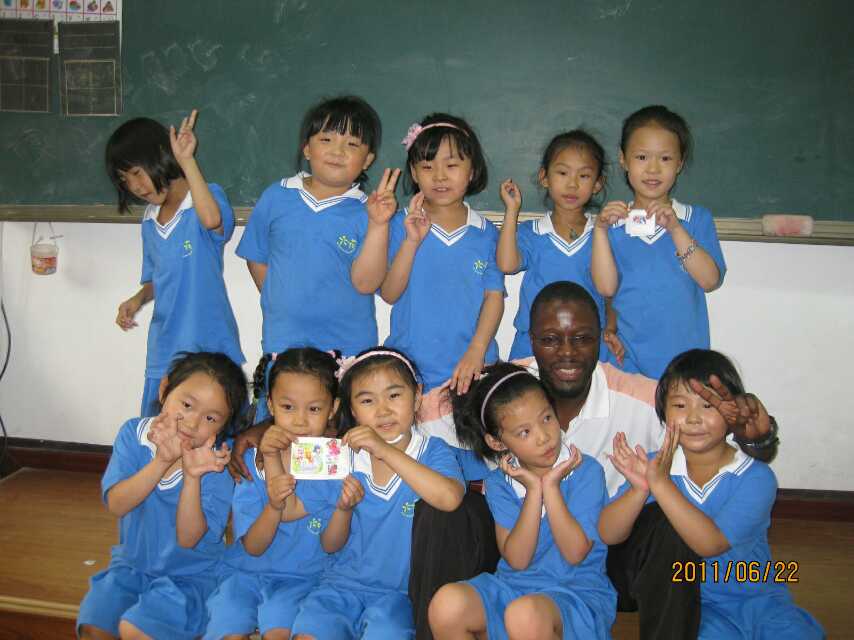
Seven years, forty million hand gestures, and one very confused foreign teacher
Nobody warned me that the most important skill I would need for seven years of teaching in Beijing had nothing to do with lesson plans, phonics charts, or classroom management theory. It was mime. Specifically, the ability to act out the word "caterpillar" for thirty children who spoke no English, while I spoke absolutely no Mandarin, in a room that smelled faintly of baozi and whiteboard marker. This was my life from 2009 to 2016, and I wouldn't trade it for anything — though I will admit there were mornings when I seriously considered a career in plumbing.
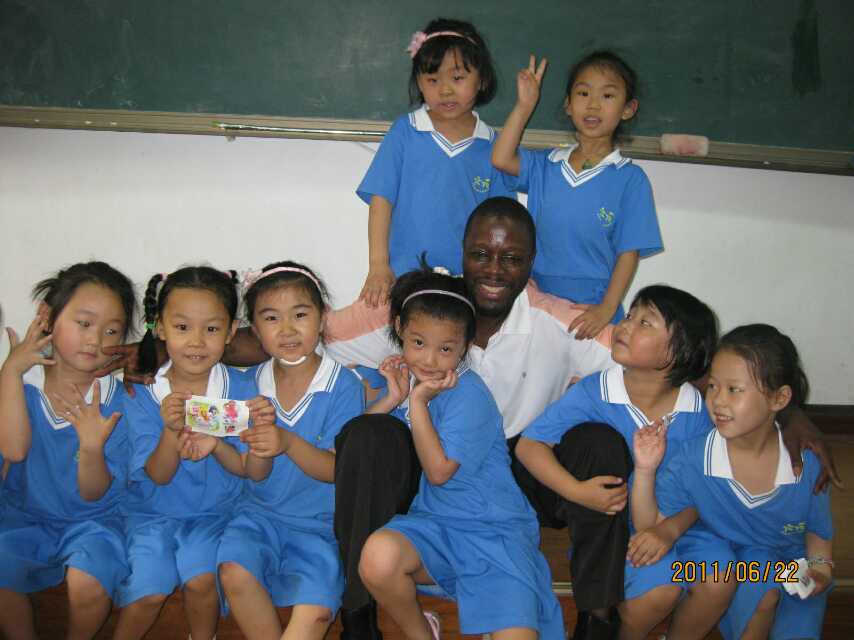
I arrived in Beijing with a TEFL certificate, a suitcase full of optimism, and a phrasebook I never actually opened. My Chinese language level was, to put it charitably, ceremonial. I could say nǐ hǎo. I could say xièxiè. Beyond that, I was essentially a very enthusiastic tourist who had somehow wandered into an elementary school and been handed a marker.
The Celebrity Problem
The first thing nobody tells you about being a foreign teacher in Beijing is that you will be treated like a minor celebrity — not the cool kind, but the kind that gets pointed at in supermarkets. Walking into a classroom of Chinese primary learners for the first time is less like being a teacher and more like being an exotic zoo exhibit that has unexpectedly learned to hand out worksheets.
The staring was immediate and absolute. Thirty pairs of eyes locked onto me like I was something that had just landed from space. A few brave souls crept forward to touch my arm, apparently to confirm I was real. One boy — I'll call him Kevin, because every class in China has a Kevin — spent the entire first lesson simply studying my face with the quiet focus of a scientist cataloguing a new species.
A note on English names: Chinese primary students typically choose or are given English names, and the range is extraordinary. Over seven years I taught students named Apple, Superman, Kobe, Dolphin, Eleven, and — my personal favourite — a very serious seven-year-old who had decided, with full conviction, that his name was Batman.
The celebrity treatment had its heartwarming moments, though. Students would queue up before class to show me things — drawings, toys, photographs of their families. One little girl once presented me with a single grape, wrapped carefully in a tissue, like it was a jewel. I still think about that grape.
Communication by Creative Desperation
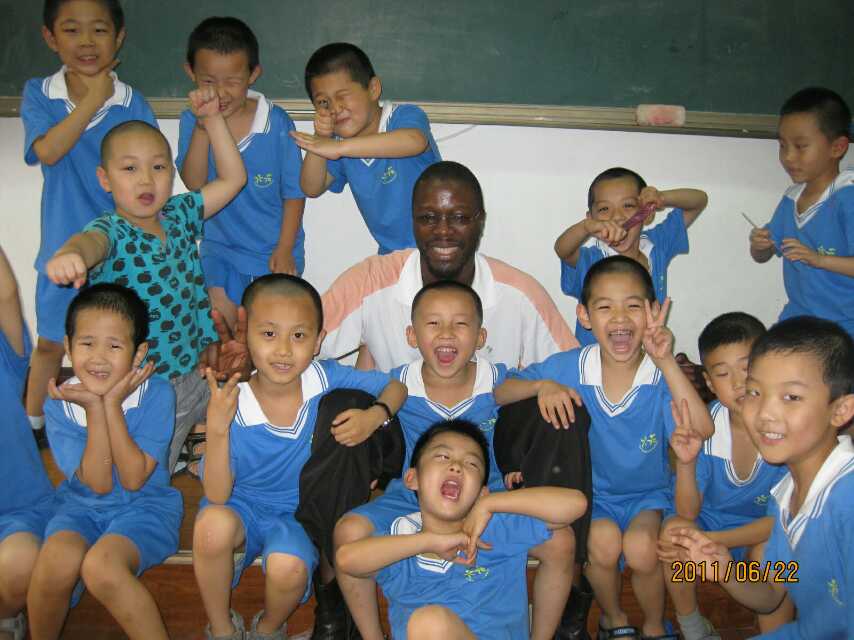
Teaching in a language you don't speak to children who don't speak yours is a masterclass in creative problem-solving. In the absence of Mandarin, I developed what I can only describe as a full physical vocabulary. Every lesson was essentially a one-man theatre performance. Animals were acted out. Weather was mimed. Emotions were performed with the commitment of a stage actor in his final show.
"The children didn't need me to speak Chinese. They needed me to be willing to look completely ridiculous — and on that front, I delivered consistently."
On the art of teaching without words
The children, to their enormous credit, were remarkably good at reading me. They learned my raised eyebrow meant "try again." They knew my exaggerated shrug meant "I have absolutely no idea what you just said but I appreciate the effort." A thumbs up was universal. Jazz hands, it turned out, transcended all cultural barriers entirely.
There was one memorable afternoon when I needed to explain the word "enormous." I had no visual aids handy, so I threw my arms out as wide as they could go, puffed out my cheeks, stomped across the front of the room, and then pointed at the word on the board. There was a brief silence. Then one small girl at the back said, tentatively, "…big?" Close enough. We moved on.
The Learning Style Revelation
Before Beijing, I had absorbed the usual theories about learning styles — visual, auditory, kinesthetic — and felt reasonably prepared to navigate a classroom. What I had not been prepared for was encountering a group of learners whose educational upbringing was so fundamentally different from anything I had experienced that the whole framework needed rethinking from scratch.
Chinese primary students, particularly in Beijing, were extraordinary at memorisation. Truly extraordinary. They could recite entire dialogues, spelling lists, and vocabulary sets with a precision that would make a Swiss watchmaker feel sloppy. Give a Beijing eight-year-old a script, and they would have it letter-perfect within a day.
But then ask them to use that same language spontaneously — to answer an unexpected question, to describe something in their own words — and something very different happened. The confidence would quietly leave the room. The eyes would drop. The child who had just flawlessly recited fifteen sentences would suddenly be unable to produce a single one unprompted.
What I came to understand: This wasn't a failure of ability — it was a mismatch of expectation. These students had been taught that language was something to be mastered correctly, not experimented with carelessly. Getting it wrong in front of others carried a weight that I, coming from a teaching culture that practically celebrated productive mistakes, had completely underestimated.
Learning to bridge that gap — to create enough psychological safety that a child would risk saying something imperfect out loud — became the real work of those seven years. The songs helped. The games helped. The sheer absurdity of watching their foreign teacher act out a thunderstorm helped most of all. Laughter, I found, is a remarkably effective way to convince a child that mistakes are not catastrophic.
Cultural Dispatches from the Front
The cultural differences arrived in waves, small and large, expected and entirely not.
Parent involvement, for instance, operated at a level of intensity I was wholly unprepared for. In my experience before Beijing, parental engagement meant a twice-yearly school meeting and the occasional worried email. In Beijing, it meant parents who tracked their child's English vocabulary acquisition like a stock portfolio. I once had a mother request a detailed written breakdown of why her six-year-old had received a "Good" sticker rather than a "Superb" one. I wrote the breakdown. It took longer than I'd like to admit.
Gift-giving was another cultural dimension that required some adjustment. Students occasionally arrived with small presents — fruit, sweets, once an inexplicably large quantity of instant noodles — given with the kind of quiet sincerity that makes you want to be a better teacher. Refusing a gift was rude. Accepting too enthusiastically was apparently also a bit much. I spent a considerable portion of 2011 trying to calibrate exactly the right level of grateful.
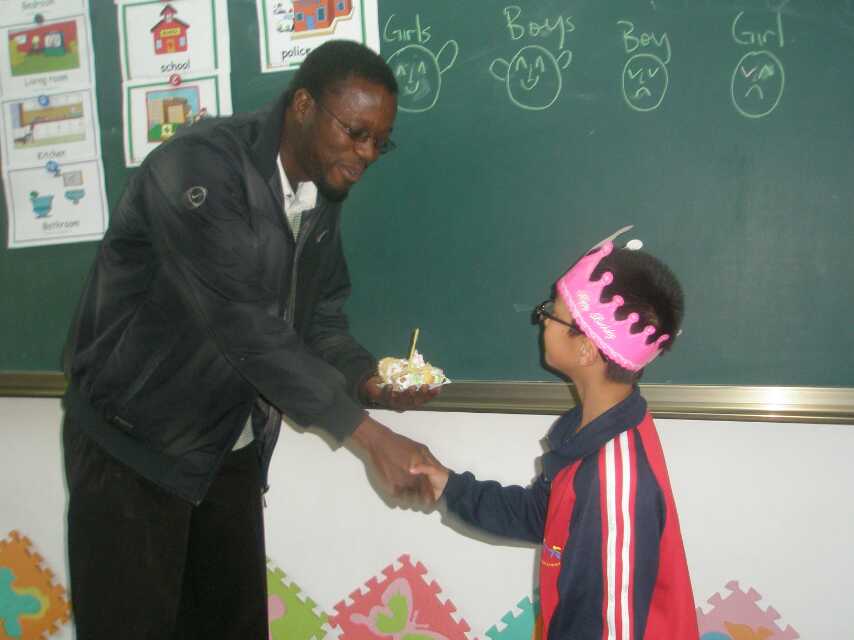
And then there were the classroom dynamics themselves. Silence, in a Chinese primary classroom, did not necessarily mean confusion or disengagement. It often meant careful thought, or a cultural norm around not speaking until you were certain. Meanwhile, the kind of boisterous, hand-waving, shout-it-out participation I had been trained to encourage was, for many of my students, deeply uncomfortable. We found a middle ground eventually — though it took longer than the mime system did.
What Seven Years Teaches You
By the time 2016 came around and I finally packed my bags, my Mandarin had progressed from zero to what I would generously describe as "enthusiastic incompetence." I could order food, navigate the subway, and apologise convincingly — which, as it happens, covers a surprising percentage of daily life.
But more than any language skill, those seven years rewired something in how I think about teaching and about people. I learned that you can communicate an enormous amount without words, and that the instinct to reach across difference — to try, to gesture, to laugh at yourself when you get it wrong — is more powerful than any textbook strategy.
I learned that quiet students are not empty students. That memorisation is a form of mastery, not a shortcut to avoid it. That a child who has been taught to fear mistakes needs patience, not pressure. And that a single grape, offered carefully in a tissue by a seven-year-old who just wanted to be kind, is worth more than a thousand lesson plans.
"The classroom taught me far more than I ever taught it. I arrived as the teacher. I left as someone who had been very thoroughly educated."
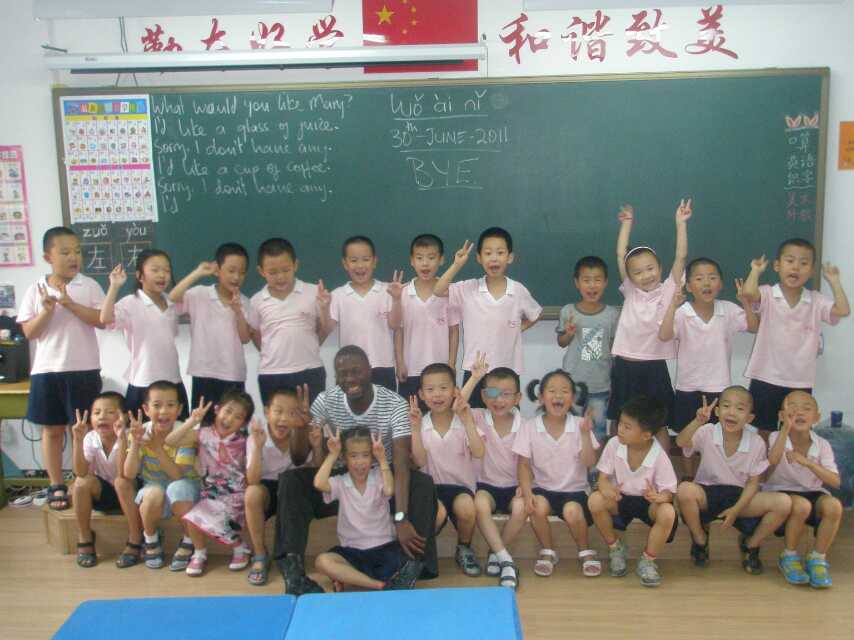
Beijing, 2009–2016
If I close my eyes, I can still see them — thirty faces looking up at me on that first morning, equal parts curious and confused, waiting to see what this strange foreign person was going to do next. I probably made a ridiculous gesture. They probably giggled. And somewhere in that room, Batman was taking notes.
✦ ✦ ✦
Beijing · 2009–2016 | A personal reflection on seven years in the classroom