
If you talk to enough occupational therapists a few years out of school, you'll hear a common thread: the textbooks that got them through their fieldwork rotations end up in a box in the garage pretty fast. Once you're on the job, most day-to-day answers come from Facebook groups, Instagram reels, a coworker down the hall, or whatever comes up first in a Google search. It's faster, it's practical, and honestly — it works, most of the time.
But there's a real cost to drifting away from foundational texts. Quick answers from a colleague or a social post are often built on someone else's interpretation of best practice, stripped of the context, evidence, and nuance that the original research actually contains. Over time, practice can drift from what's actually supported by research and regulation — especially in a specialty area like school-based OT, where the rules (IDEA, IEPs, Least Restrictive Environment, Medicaid billing, and more) are constantly evolving and genuinely high-stakes for the kids you serve.
That's exactly why we think every school-based OT — new grad or twenty-year veteran — benefits from having a couple of solid, comprehensive references on hand. Here are two we consistently recommend.
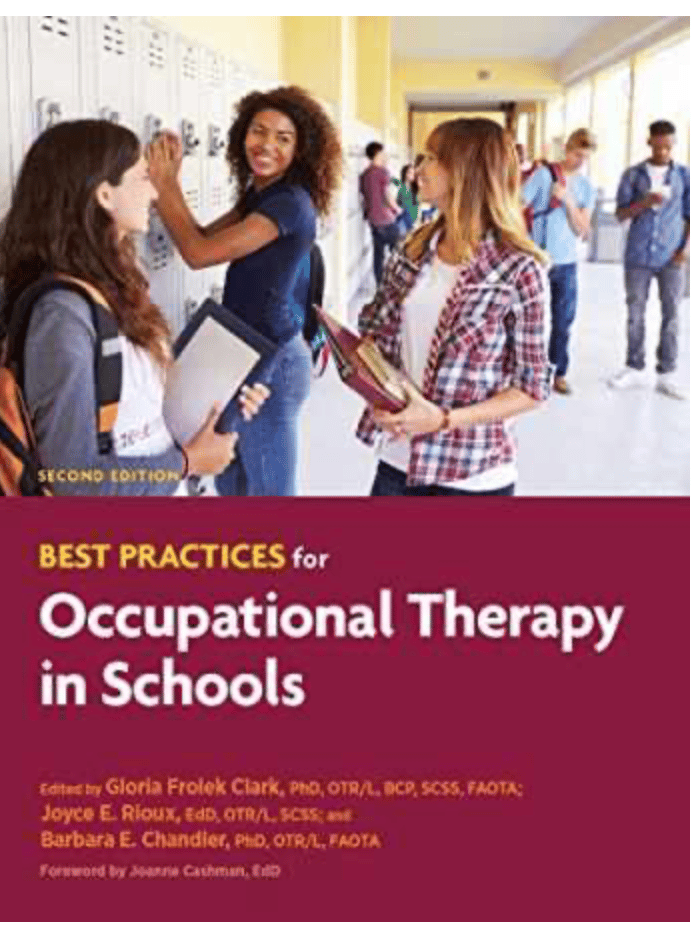
1. Best Practices for Occupational Therapy in Schools, 2nd Edition
Edited by Gloria Frolek Clark, Joyce E. Rioux, and Barbara E. Chandler (AOTA Press), this is the closest thing school-based OT has to a definitive, all-in-one reference — covering best practices from preschool through postsecondary transition, from ADLs to driving. It's built to be used, not just read once: templates for occupational profiles and intervention plans, documentation guidance, assessment tools, and even liability considerations are all included as ready-to-use appendixes.
2.Practical Considerations for School-Based Occupational Therapists
Written by Lynne Pape and Kelly Ryba, both practicing school-based OTs, this one reads more like a field manual than a textbook. It includes reproducible forms, checklists, and questionnaires for evaluation, intervention planning, and progress documentation — and translates federal mandates and IEP requirements into practical, everyday workflows. Because it comes from clinicians who ran their own school-based practice, it feels more like mentorship than lecture.