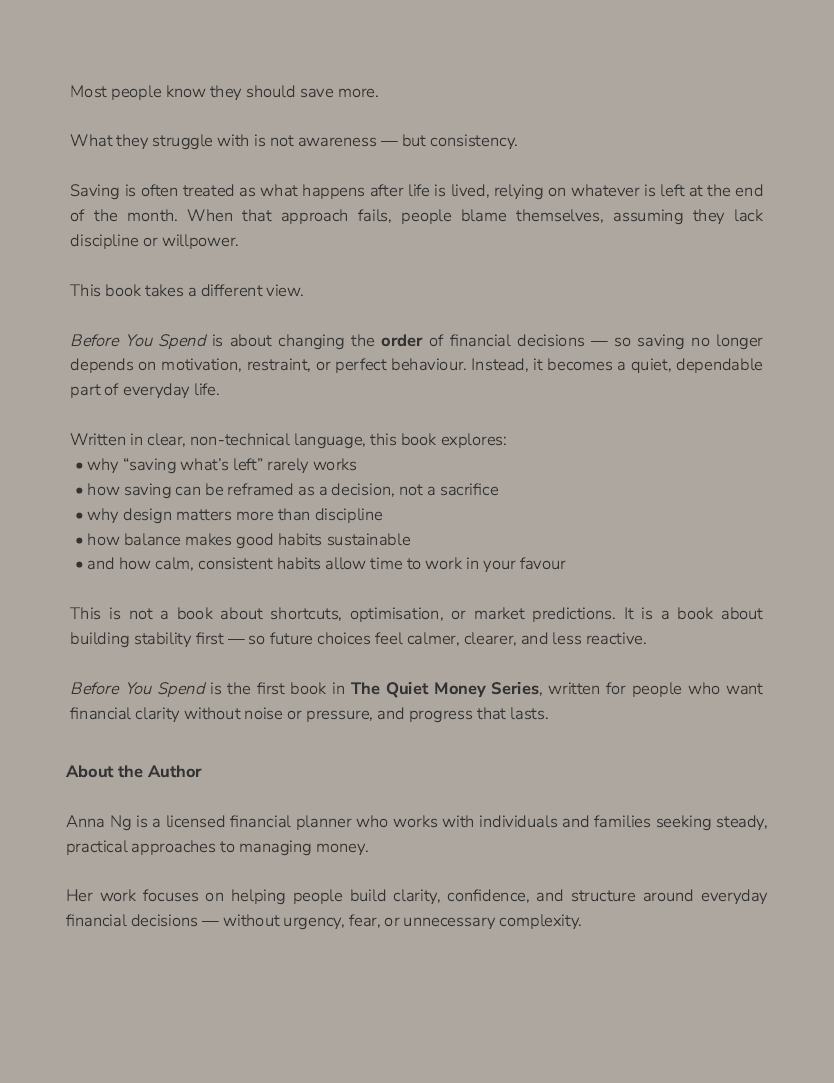

Most people know they should save more.
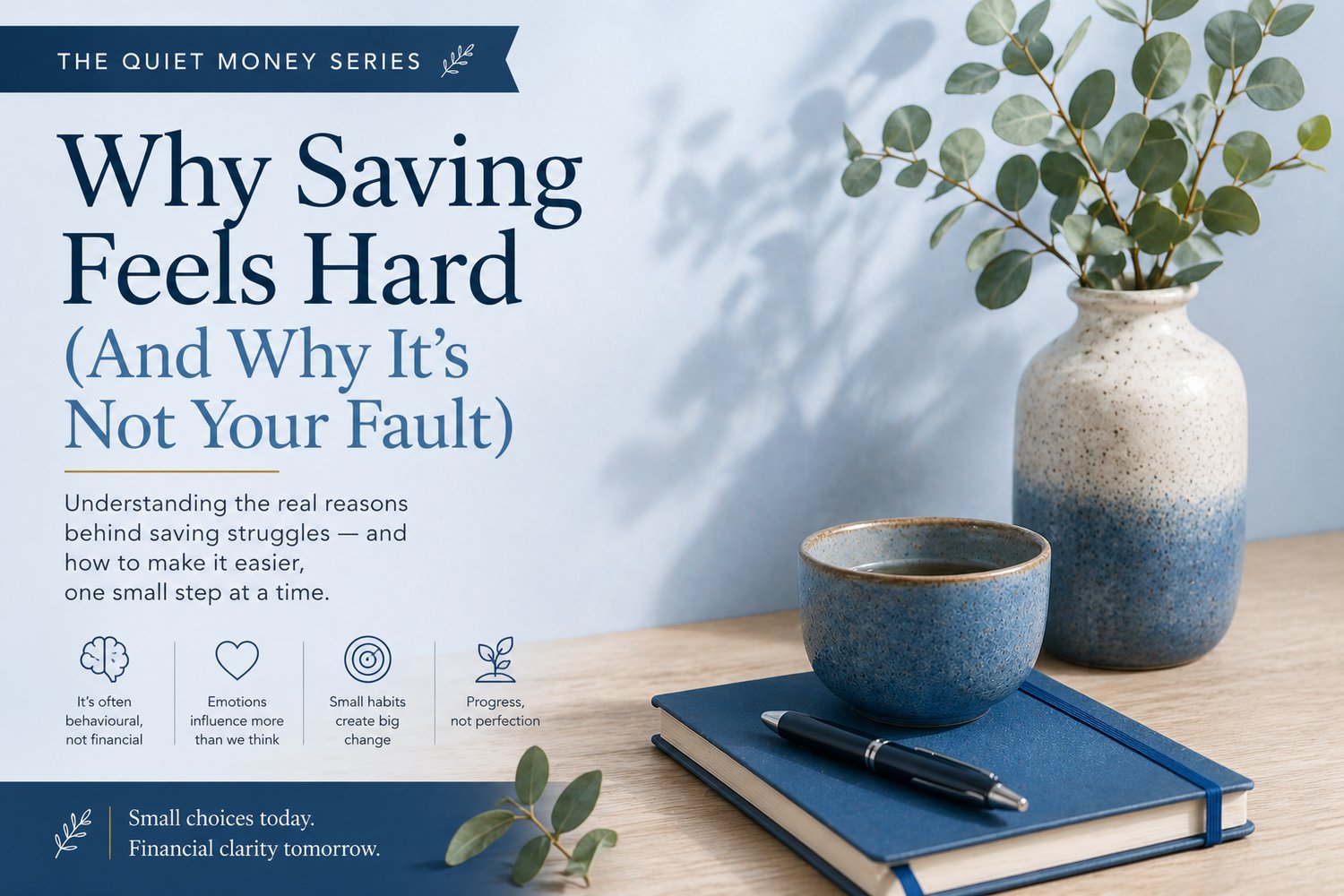
Yet saving often feels inconsistent, fragile, or something that keeps getting pushed to “next month”. When that happens, the instinct is to blame ourselves — to assume we lack discipline, motivation, or financial knowledge.
But what if the problem isn’t effort at all?
The Real Issue Isn’t Willpower — It’s Order
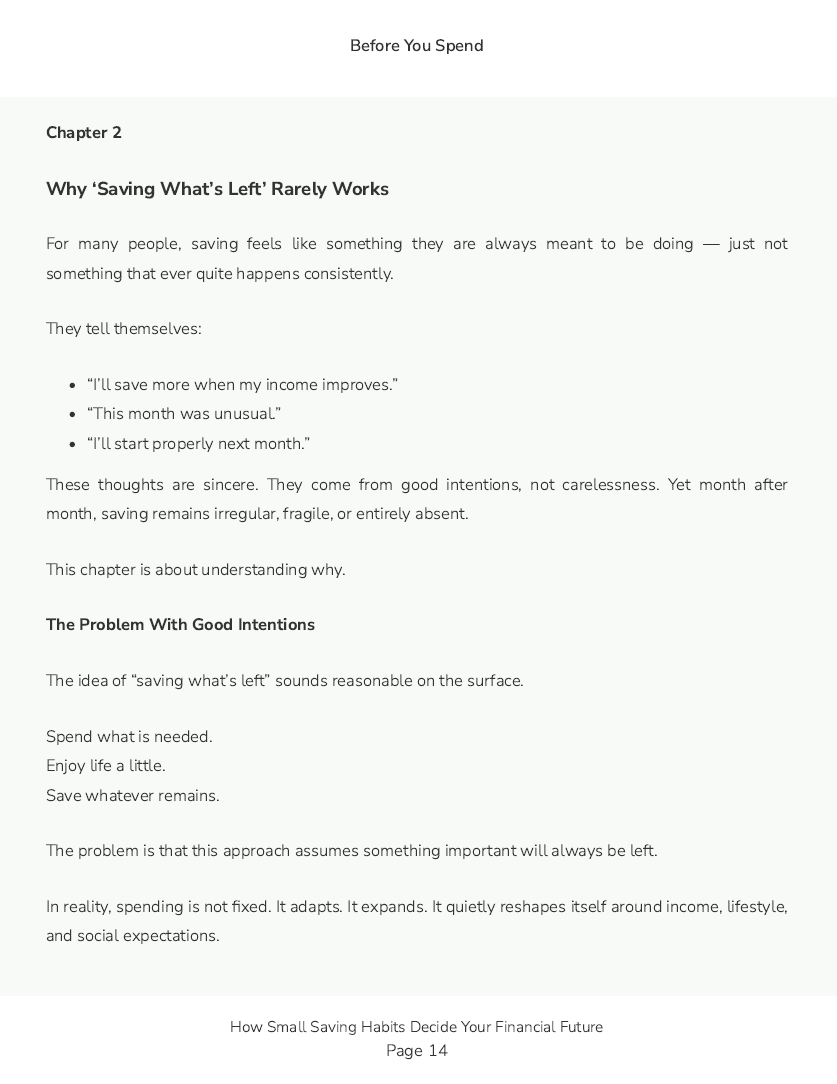
In many households, saving is treated as what happens after life is lived.
Spend what’s needed.
Enjoy what’s left.
Save whatever remains.
On paper, this sounds reasonable. In real life, it rarely works.
Spending is immediate and emotional. Saving is quiet and invisible. When saving is left to the end, it has to compete with everything else — bills, routines, small rewards, and everyday fatigue.
Over time, saving becomes optional not because people don’t care about their future, but because it was never clearly decided first.
Why “Trying Harder” Rarely Fixes This
When saving doesn’t happen, people often respond by trying to be more disciplined:
- tracking expenses more closely
- setting reminders
- promising to do better next month
The problem is that discipline is a limited resource. It fades when life gets busy — which it inevitably does.
Good financial habits aren’t built on constant self-control.
They’re built on design.
Saving Works Best When It’s Decided Early
When saving is treated as a decision made before spending begins, something important changes.
Saving stops feeling like a sacrifice.
Spending becomes clearer and less guilt-laden.
Enjoyment no longer competes with the future.
This shift isn’t dramatic — but it’s powerful.
It’s the difference between relying on motivation and building a system that works quietly in the background.
Calm Doesn’t Mean No Anxiety
Even with good habits in place, money decisions don’t become emotionless.
Markets still move.
Uncertainty still exists.
Doubt still appears from time to time.
What changes is not the absence of anxiety — but what happens next.
Calm means anxiety no longer dictates action.
And that’s often the real difference between progress that lasts and progress that gets undone.
A Book About Getting the Order Right
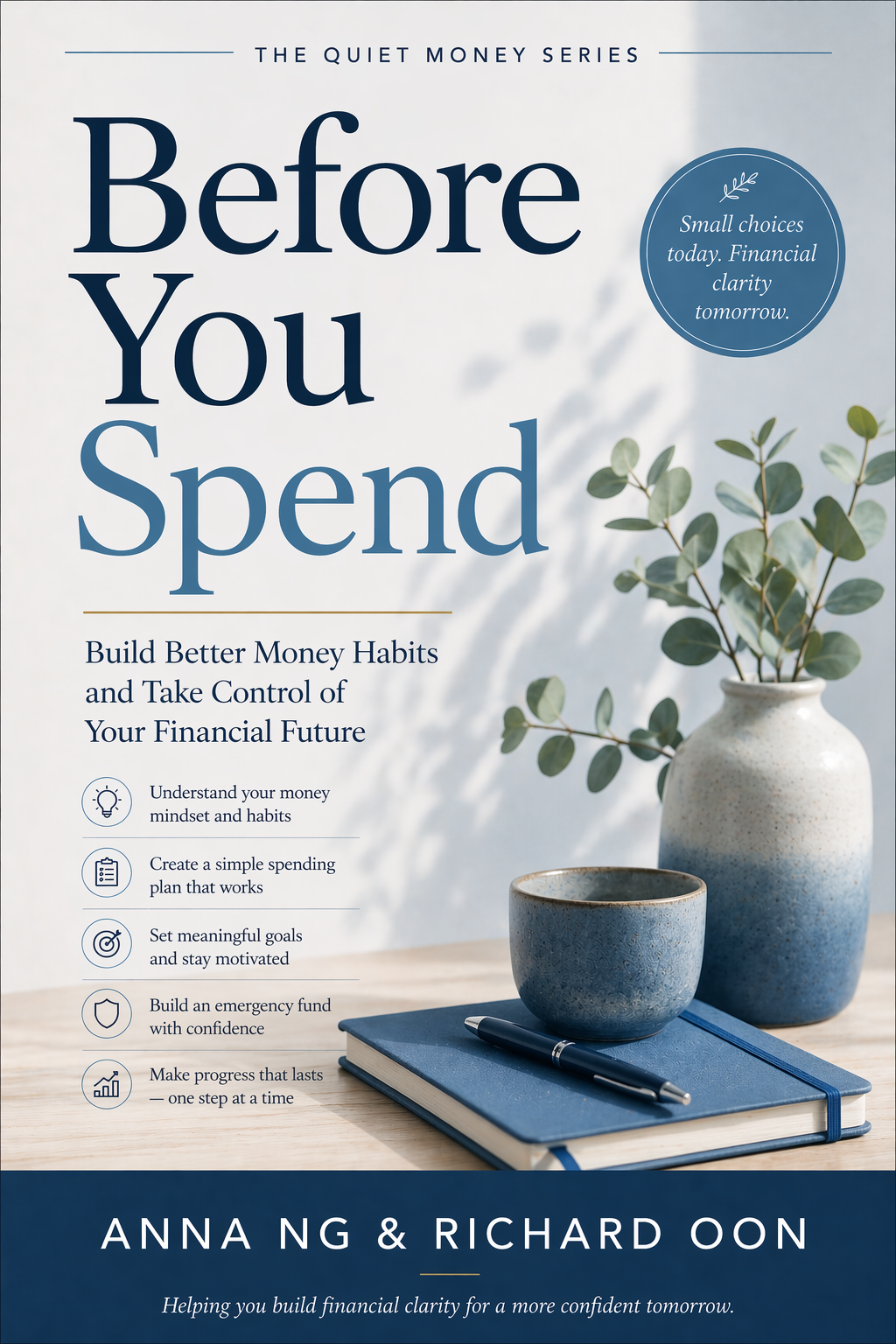
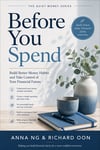
These ideas are explored more fully in Before You Spend, a book written for people who want clarity around money — without pressure, hype, or technical overload.
It’s not an investment guide or a product manual.
It’s a book about habits, order, and designing saving so it no longer depends on willpower.
Because when saving becomes normal, everything else gets easier.
👉 Before You Spend: How Small Saving Habits Decide Your Financial Future
by Anna Ng
The Quiet Money Series
(Available in the store)