Your Cart
Loading

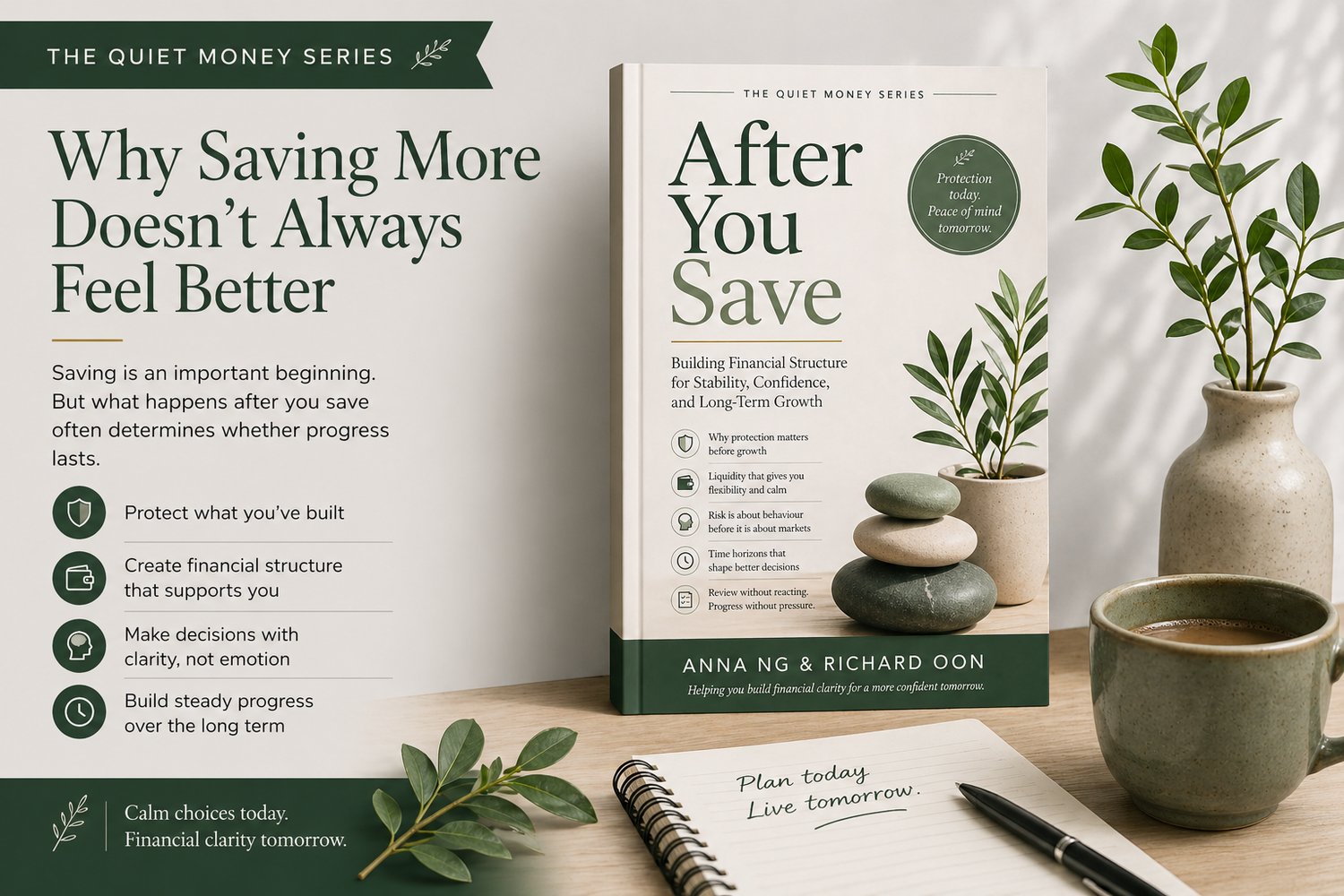
Why Saving More Doesn’t Always Feel Better

Many people assume that once they start saving regularly, financial stress will disappear. But in practice, something else often happens.


They save more — yet still feel uneasy.

They build a balance — yet still worry about unexpected expenses.

They invest — yet feel anxious whenever markets move.


They become more responsible with money… but not always more relaxed.


Why?


Because saving is important, but saving alone does not automatically create financial confidence.


The Missing Layer After Saving Begins


Saving is a milestone.


It shows discipline.

It creates options.

It builds momentum.


But after that first milestone, a different set of questions usually appears:

  • How much cash should I keep available?
  • Am I taking too much risk — or too little?
  • Why do market movements still affect me emotionally?
  • How often should I review my finances?
  • How do I grow wealth without feeling pressured all the time?


These are not saving questions.


They are structure questions.


Why Structure Matters


Many people focus only on growing money. But growth without structure can feel fragile.


Without sufficient liquidity:

  • small setbacks feel larger
  • market declines feel more personal
  • opportunities feel harder to evaluate calmly


Without clear time horizons:

  • short-term money gets invested too aggressively
  • long-term money gets managed too cautiously


Without review discipline:

  • every headline feels important
  • every market move feels like it requires action

This creates unnecessary stress.


Confidence Often Comes From Simplicity


Real financial confidence often looks quieter than people expect.


It may look like:

  • having enough cash reserves to stay calm
  • knowing what each part of your money is for
  • reviewing plans thoughtfully instead of constantly
  • understanding that not every fluctuation matters
  • allowing time to work without interference


This kind of confidence is not flashy.


But it lasts.


The Next Stage After Saving


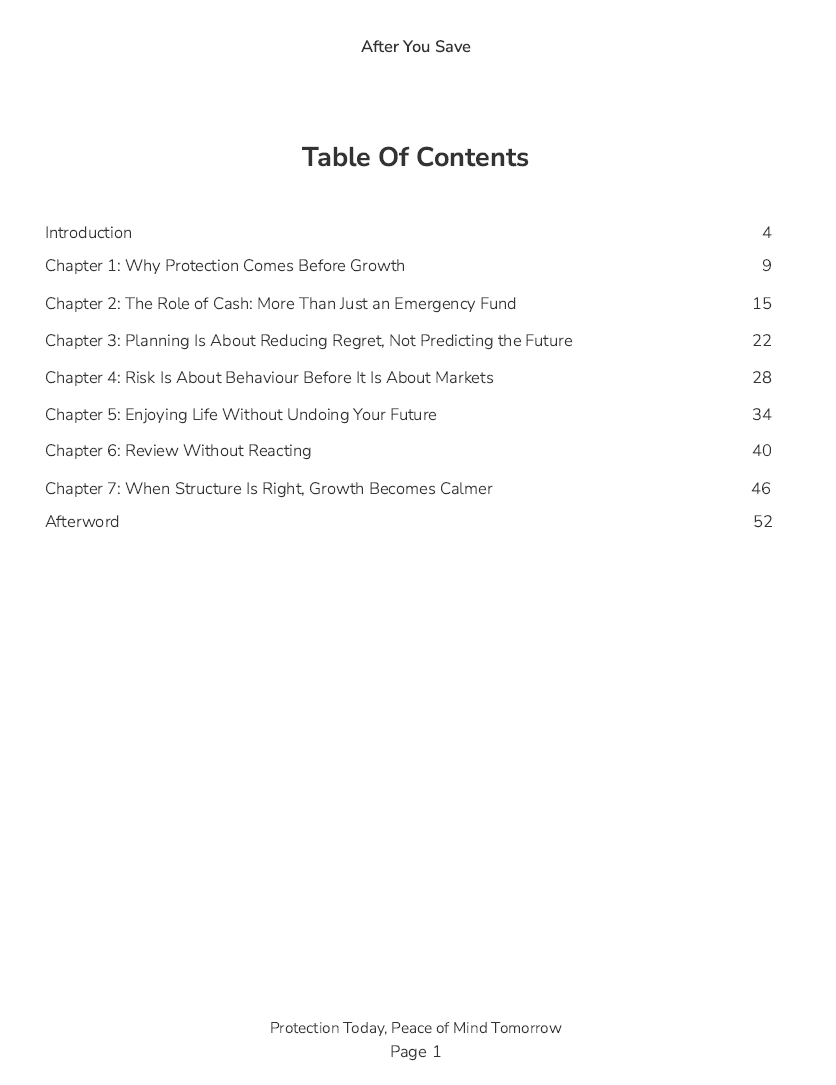
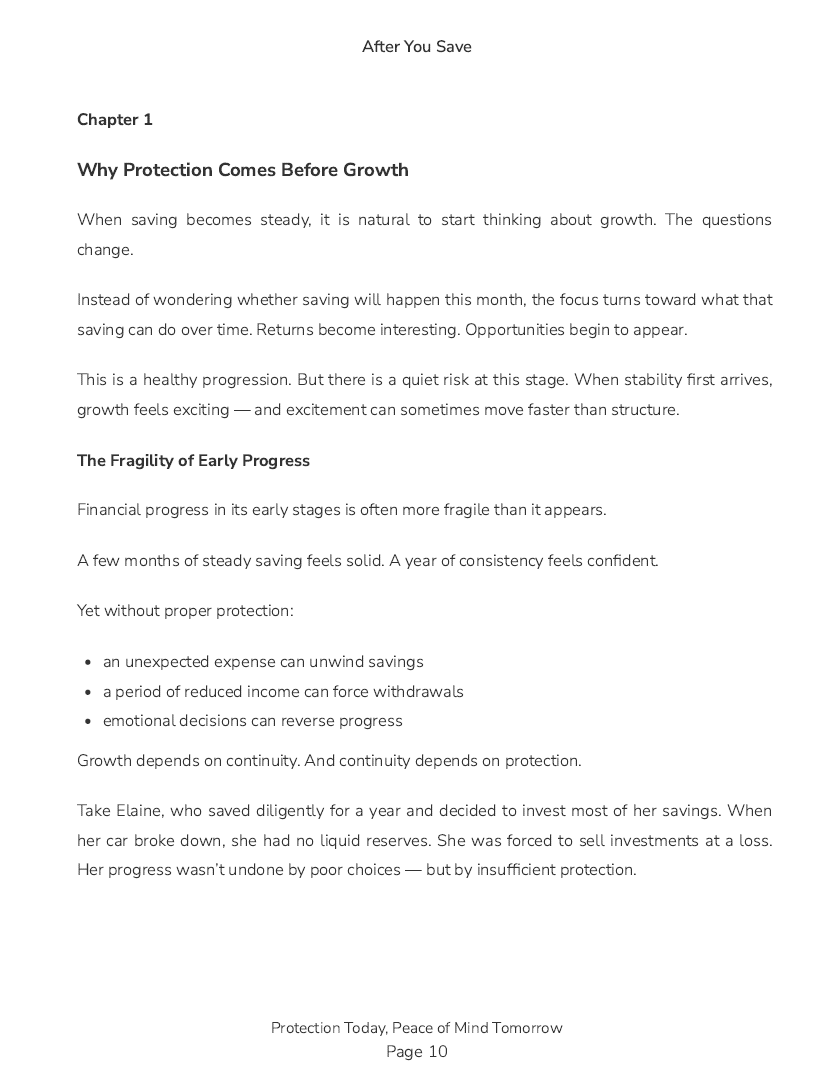
These ideas are explored more fully in After You Save, the second book in The Quiet Money Series.

It is written for people who have already started building good habits and now want to make progress feel steadier, calmer, and more sustainable.


Because saving is an important beginning.


But what happens after you save often matters just as much.


👉 After You Save

Why Protection, Structure and Calm Decisions Matter After Saving Begins

by Anna Ng & Richard Oon

Available now on the store.
Only -1 left
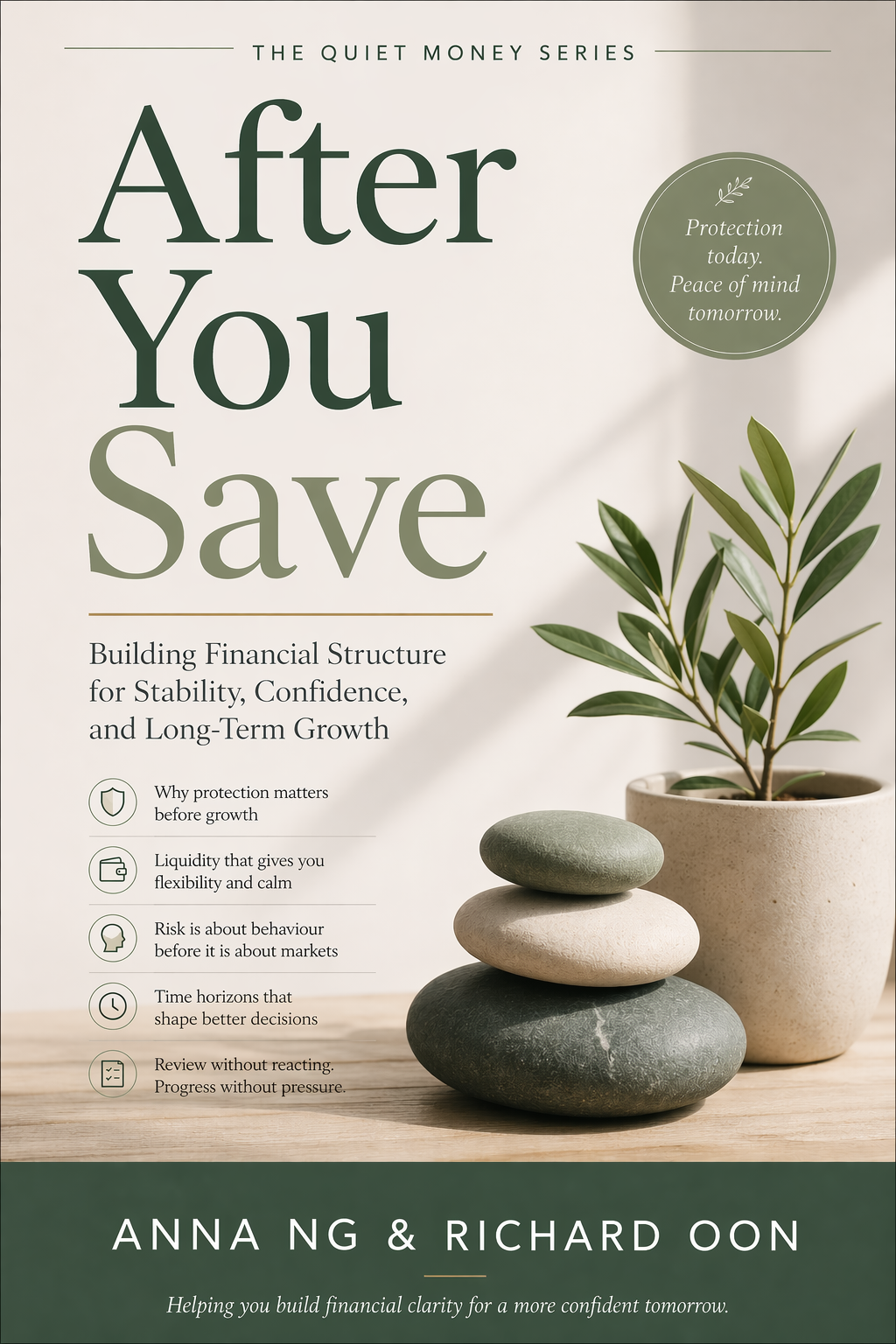
After You Save - Building Financial Structure for Stability, Confidence and Long-Term Growth
On Sale
MYR19.90
MYR19.90
Added to cart
Preview

After You Save

Why Protection, Structure and Calm Decisions Matter After Saving Begins

by Anna Ng & Richard Oon

The Quiet Money Series


What This Book Is About

Saving consistently is an important milestone.

But many people discover that once saving begins, a new set of questions appears:

  • How much cash should I keep aside?
  • How do I protect what I’ve built?
  • Why do markets still make me uneasy?
  • How do I make good decisions without constantly reacting?
  • What should happen after saving becomes normal?

After You Save is about that next stage.

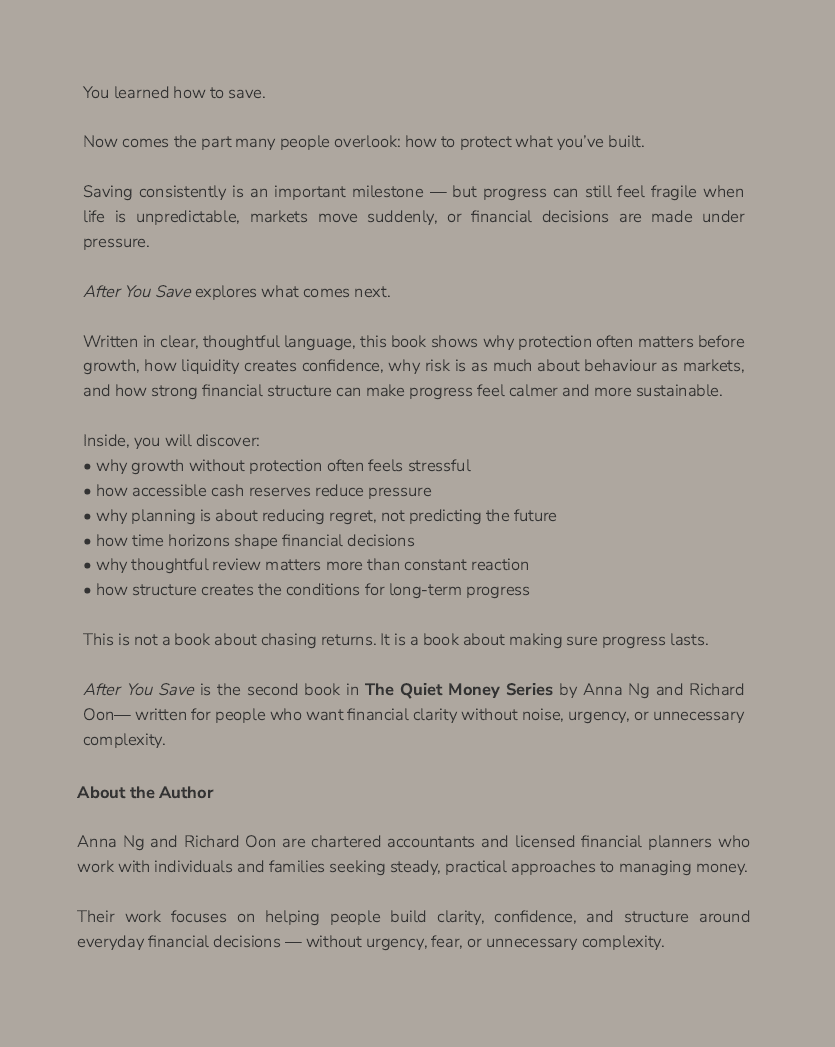
This book explores how to build protection, reduce fragility, and create the financial structure that allows progress to feel calmer, steadier, and more sustainable over time.


Who This Book Is For

This book is written for people who:

  • have started saving and want to make smarter next-step decisions
  • feel uncertain about how much cash to hold
  • want financial progress without constant stress
  • feel overwhelmed by market noise or conflicting advice
  • prefer thoughtful planning over hype and urgency
  • want to grow wealth carefully, not recklessly

You do not need investment expertise to benefit from this book.


What You’ll Learn

Written in clear, practical language, this book explores:

  • why protection often matters before growth
  • how cash reserves create confidence and flexibility
  • why planning is about reducing regret, not predicting the future
  • how risk is often behavioural before it is mathematical
  • why time horizons change how decisions feel
  • how to review finances without reacting emotionally
  • why strong structure makes long-term growth calmer

Why This Book Matters

Many people focus on earning, saving, or investing — but overlook the stage in between:

stabilising progress.

Without protection and structure:

  • setbacks feel bigger than they are
  • markets feel more stressful
  • short-term emotions disrupt long-term plans
  • growth feels pressured instead of patient

This book helps solve that problem.


What This Book Is Not

This is not:

  • a get-rich-quick guide
  • a stock-picking manual
  • a product recommendation book
  • a market prediction guide
  • a high-pressure wealth strategy course

There are no gimmicks here.

This is a calm, practical book about making progress easier to sustain.


Why Readers Appreciate This Approach

Instead of asking:

“How do I make more money quickly?”

This book asks:

“How do I build conditions where progress lasts?”

That shift changes everything.


About the Authors

Anna Ng is a financial planning professional who believes confidence with money is built through clarity, structure, and steady habits.

Richard Oon is a business advisor, author, and educator who specialises in turning complex subjects into practical, easy-to-understand ideas.

Together, they created The Quiet Money Series to offer a calmer, more thoughtful path to personal finance.


Part of The Quiet Money Series

Book 1: Before You Spend

How small saving habits decide your financial future.

Book 2: After You Save

How to protect progress and build calm financial structure.

Book 3: (Coming in Future)

Growth, investing, compounding, and staying steady over time.


Format

  • 📘 Digital Ebook
  • 📱 Readable on phone, tablet, or computer
  • ☕ Calm, thoughtful, non-technical writing style
  • 📝 Word count: 6,500 - 7,000 words

Final Thought

Saving is important.

But what you build after saving begins often determines whether progress lasts.

After You Save helps you build that next layer — quietly, thoughtfully, and without pressure.

You will get a PDF (405KB) file