

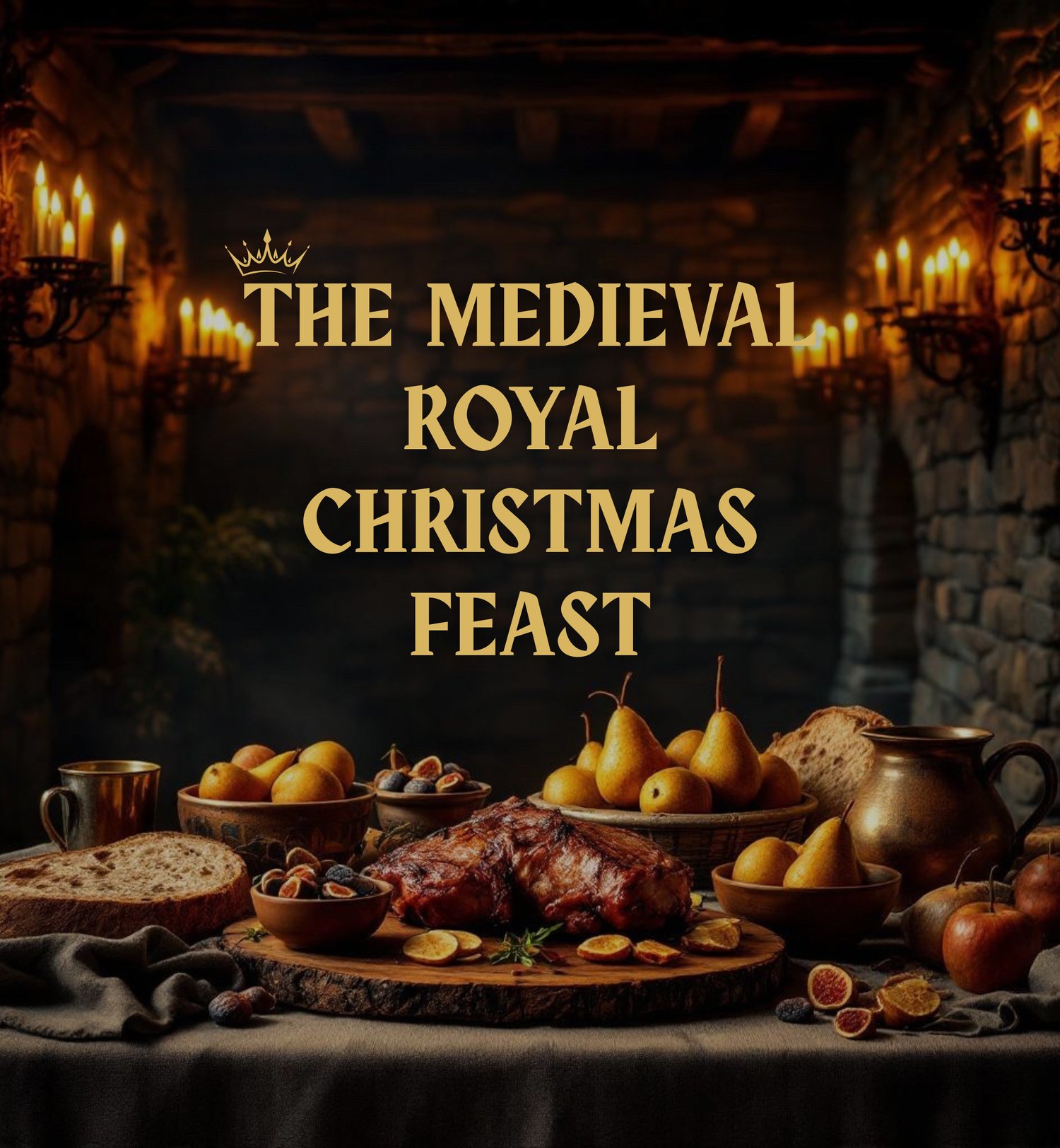
Banquet Hall Through the Eras Mini Series
Era 1: Approx. 1100–1400
Some eras feel like stepping into another world.
The medieval world was exactly that.
Stone halls.
Torchlight.
Winter pressing against the walls while warmth gathered inside.
This was a Christmas feast that felt powerful, sacred, and full of meaning.
And today, we are walking right into it together.
The Hall of Winter
Picture this.
A grand hall built of stone
quiet, cold, and waiting to come alive.
Tapestries hang on every wall
telling stories of courage, faith, and kingdoms long gone.
Fresh herbs are scattered across the floor
so every footstep releases perfume.
Candles glow in long rows.
A choir waits to begin.
And for one night
everyone breathes a little easier
because Christmas has arrived.
The Bread of the Kingdom
Medieval bread was simple
but never unimportant.
Wheat bread was a luxury
reserved for the noble tables.
Tonight, it is served warm
rustic and golden
with a fragrance that fills the hall.
When broken
it sends up a soft cloud of steam
as if blessing the meal before it begins.
The Roast That Ruled the Feast
At the center of the table sits the pride of the night.
A grand roast.
Boar, venison, or another winter game
slowly cooked over an open flame
until the entire hall smells rich and warm.
Spices traveled great distances to reach these kitchens
so a Christmas roast was a true celebration.
It meant abundance.
It meant gratitude.
It meant joy in the middle of winter.
Today, if the Queen brought her touch to a roast like this
a light hand of The King’s Mediterranean Blend
would echo the same earthy, warm tones they loved.
Not copying history.
Just honoring it.
Sweetmeats and Celebration
And then came the treats.
Because even in the 1100s
people knew dessert mattered.
Candied fruits.
Warm spiced wine.
Almond sweets shaped by hand.
Crisp wafers that nearly melt the moment you taste them.
Each sweet carried a story
a bit of trade
a bit of travel
a bit of Christmas magic.
A whisper of cinnamon or allspice
like the kind tucked gently into Crown Jewel Holiday Rub
would have fit perfectly into this world
where spices were treasured like gold.
The Hearth and the Heart
Music rises.
Candles flicker.
Servants move in a dance they have learned through years of practice.
Families lift their cups.
They share bread.
They laugh.
They give thanks.
Christmas in the medieval world was not just a celebration
it was a moment of peace
a moment to breathe
a moment to feel God’s presence in the middle of winter.
Faith in the Era
Faith guided medieval life from morning to night.
And at Christmas
everything slowed for the birth of Christ.
People gathered for midnight worship
their voices carrying through cold air.
They prayed by candlelight.
They greeted Christmas with reverence
because the Child in the manger
was their hope
their comfort
their light.
Every feast
no matter how grand or simple
was a reminder of Him.
A Subtle Thread Through Time
Some flavors travel through history
quietly
beautifully.
The oregano used in old roasts
lives softly in Queen’s Royal BBQ Rub.
The herbal sweetness of winter feasts
echoes through King Sagoun’s Coastal Blend,
a blend touched by tarragon and sumac
reminding us of spices carried across ancient lands.
The resinous notes once used in early confections
find a gentle reflection in Rachel’s Greek Citrus Crown
with its rare, elegant mastic.
These blends are not trying to recreate the past
but they honor it.
They nod to it.
They bring its warmth into our modern kitchens.
The Final Reflection
The Medieval Royal Christmas Feast was more than food.
It was strength in the cold.
It was joy shared around fire.
It was families and faith gathered together.
In that great hall
lit by candle and hope
people remembered the birth of Christ
the miracle in the manger
and the promise of light that would never fade.
May this ancient feast remind us
that every meal can carry meaning
every table can shine
and every Christmas
invites us back to the heart of the story
the birth of Jesus
the true King of Kings.
Comments ()