

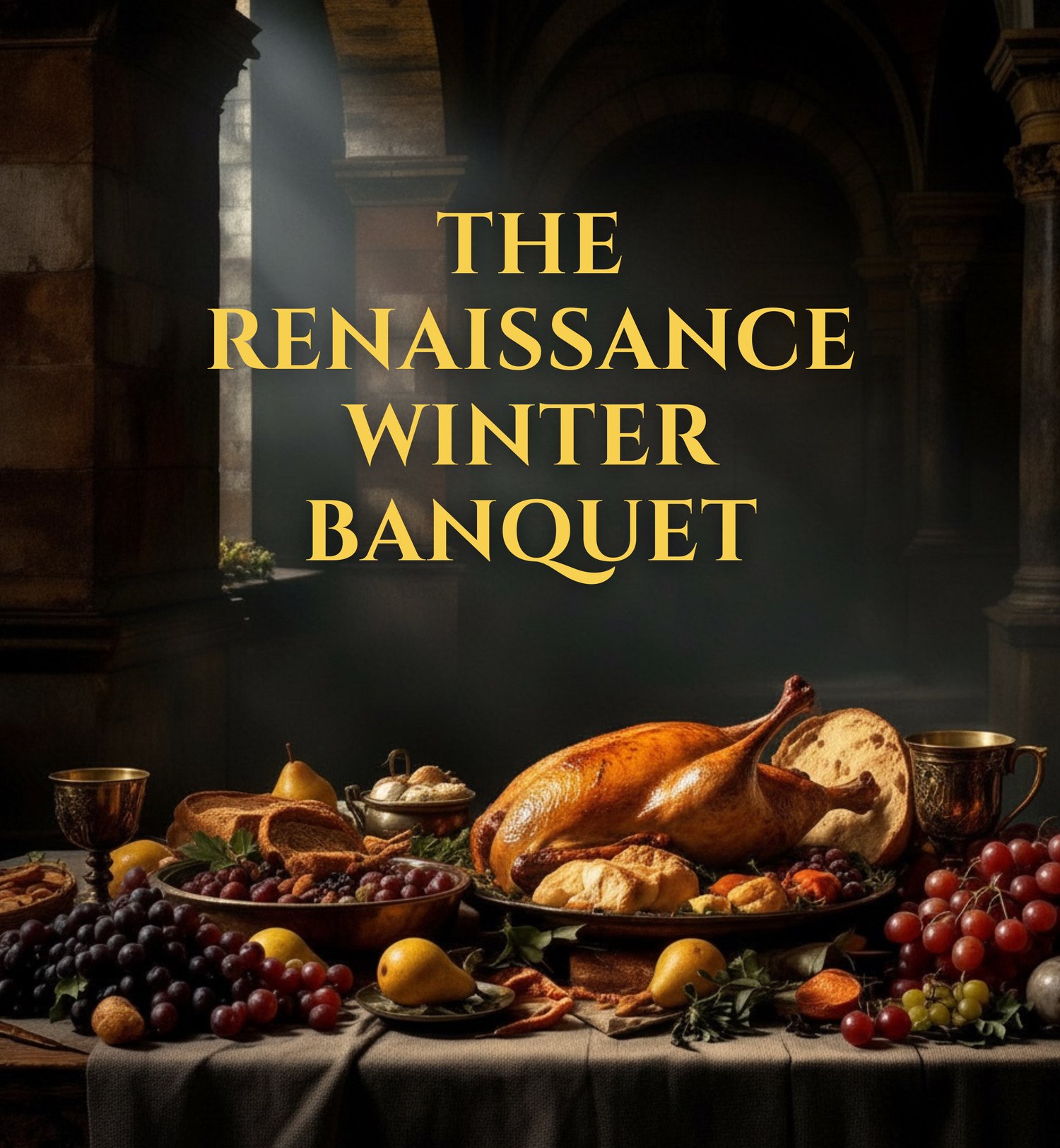
Banquet Hall Through the Eras Mini Series
Era 2: Approx. 1400–1600
Some eras feel like a doorway.
A moment when the world opened
wider
brighter
full of color and new ideas.
The Renaissance was exactly that.
Beauty became a language.
Art became a devotion.
And even the Christmas table became a place
where creativity and celebration met in perfect harmony.
Tonight, we step into a hall where elegance was born.
The Hall of Light
Picture a room washed in soft winter sun.
Tall arched windows
stone warmed by candle flame
and tapestries alive with color and movement.
This was the Renaissance.
A time when people believed beauty was a gift
meant to lift the spirit
and honor God with excellence.
The Christmas feast reflected this belief
in every detail.
Bread and Beginnings
The table begins with bread
just as it did in medieval times
but now it is presented with intention.
Golden loaves lightly scented with herbs
presented on carved platters
served with oil, fruit, or simple spreads
chosen for both flavor and grace.
Bread was no longer only nourishment
it was an invitation
a sign of welcome
a reminder that food, too, could be art.
The Renaissance Feast
The centerpiece of the table was often roasted fowl.
Duck, goose, or capon
slow roasted until tender
glazed with fruit or spiced wine
a display of both abundance and refinement.
Beside it, you might find:
• citrus arriving from distant coasts
• fresh herbs arranged like a painter’s palette
• roasted vegetables dressed in oils
• delicate pastries or sugared almonds
This was a table that celebrated the senses
with color
with fragrance
with harmony.
If the Queen were to offer a modern echo today
a gentle touch of Queen’s Royal BBQ Rub on roasted fowl
would bring herb-kissed warmth
perfectly aligned with the flavors they cherished.
Not a recreation
but a respectful nod to the era’s elegance.
Sweet Notes of Celebration
Renaissance desserts were thoughtful
sweet
and beautifully arranged.
Marzipan shaped into fruits or flowers
honey cakes touched with spice
candied citrus glowing like stained glass.
Everything was crafted with purpose
because beauty itself was seen as worship.
A subtle whisper of cinnamon or allspice
as found in Crown Jewel Holiday Rub
would blend naturally into this world of warm, glowing sweets
where flavor mirrored art.
Faith in the Era
Faith breathed through every part of Renaissance life.
Scripture inspired art.
Music rose in great cathedrals.
And during Christmas
families gathered to remember the birth of Christ
with reverence and amazement.
People believed that creativity honored God
because He was the Creator of all things.
So the Christmas feast
the music
the beauty
were expressions of devotion
offered in His name.
A Subtle Thread Through Time
Though centuries have passed
some flavors remain familiar.
The herbs prized in Renaissance kitchens
live quietly in Queen’s Royal BBQ Rub.
The fruit and citrus used in glazes and sweets
find soft reflection in Rachel’s Greek Citrus Crown
where mastic and lemon come together in elegant harmony.
And the deep, earthy notes favored in holiday roasts
resonate through The King’s Mediterranean Blend
a modern echo of old-world warmth.
Our blends do not imitate the past
but they honor it
celebrate it
and gently carry its beauty forward.
The Final Reflection
The Renaissance Winter Banquet was more than a meal.
It was gratitude expressed through beauty.
It was celebration wrapped in color and light.
It was a feast that lifted the eyes
and turned the heart toward the miracle of Christmas.
May this era remind us
to see beauty as a blessing
to give with joy
and to remember that every Christmas table
can become a work of art
when we celebrate the birth of Jesus
with hearts full of wonder.
Comments ()