

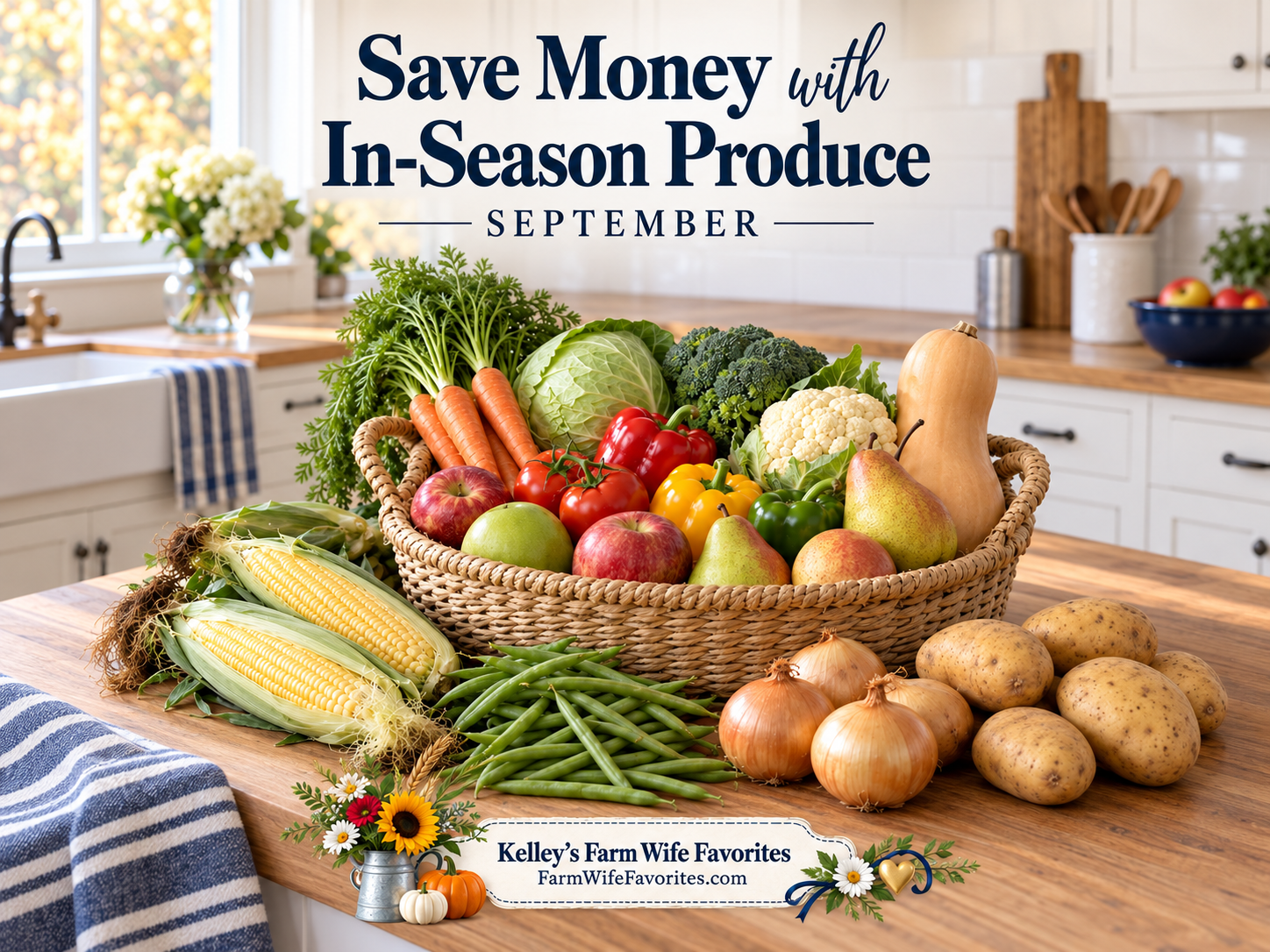
September is one of my favorite months for buying fresh produce. Summer gardens are still producing, fall crops are beginning to arrive, and local stands are often overflowing with affordable fruits and vegetables.
Buying produce while it is naturally in season is a simple way to stretch your grocery budget without sacrificing fresh, wholesome food. Seasonal produce is usually more plentiful, which can mean better prices at grocery stores, farmers markets, produce auctions and roadside stands.
Here in Ohio, I especially enjoy visiting our nearby Amish produce stands. You never know what you might find—or how much fresh food you can bring home for just a few dollars!
What Produce Is in Season During September?
Availability will vary depending on your location and the weather, but these are some of the fruits and vegetables commonly available during September:
- Apples
- Pears
- Grapes
- Tomatoes
- Sweet corn
- Bell peppers
- Mild peppers
- Green beans
- Zucchini
- Cucumbers
- Broccoli
- Cauliflower
- Cabbage
- Carrots
- Potatoes
- Onions
- Pumpkins
- Acorn, butternut and other winter squash
You may still find plenty of late-summer produce while cooler-weather vegetables begin appearing. That overlap gives us lots of affordable options for meal planning.
Shop Produce Stands Before the Season Ends
Local produce stands can be wonderful places to find fresh food at reasonable prices. Look for roadside stands, Amish markets, farmers markets and small family farms in your area.
Produce that is slightly imperfect may be marked down even further. A tomato does not have to be perfectly round to make delicious soup, salsa or pasta sauce!
If you plan to buy a larger quantity, politely ask whether a bulk price is available. Some growers offer discounts on baskets, boxes or produce that needs to be used quickly.
Remember to bring cash. Many smaller stands do not accept cards, and an honor-system box may require exact change.
Check Grocery Store Sales and Markdowns
Local stands are not your only option. Grocery stores often feature seasonal produce in their weekly sales because it is plentiful and readily available.
Check the store advertisement before planning your meals. If cabbage, potatoes, peppers or apples are on sale, build a few meals around those ingredients.
Also check the marked-down produce area. Slightly bruised apples are perfect for applesauce or baked oatmeal. Soft tomatoes can become soup or sauce, while ripe peppers can be chopped and frozen.
Just be realistic about how quickly you can use or preserve your purchase. Discounted produce is only a bargain when it does not end up in the trash.
Plan Meals Around What Is Affordable
Instead of choosing every meal first and then buying the ingredients, look at what is in season and on sale.
Use those ingredients to help shape your menu.
A few easy September meal ideas include:
- Vegetable soup with tomatoes, green beans, carrots, corn and potatoes
- Stuffed peppers with rice, ground beef or ground turkey
- Sheet-pan chicken with potatoes, onions and carrots
- Sausage with cabbage, onions and potatoes
- Broccoli or cauliflower cheese soup
- Farmhouse goulash with fresh tomatoes and peppers
- Roasted butternut squash served with pork or chicken
- Tomato sandwiches or BLTs for an easy lunch
- Apple cinnamon oatmeal for breakfast
- Apple crisp for a simple seasonal dessert
A warm loaf of homemade beer bread would be especially good with vegetable soup, broccoli-cheddar soup, chili or a hearty fall stew.
Buy Extra—But Have a Plan
When you find a particularly good price, buying extra can save money in the months ahead. Before filling your basket, decide exactly how you will use or preserve everything.
Freeze It
Many September vegetables freeze beautifully. Peppers and onions can be chopped and frozen for casseroles, soups, chili and skillet meals. Tomatoes can be frozen whole and used later in cooked recipes. Corn and green beans generally keep their best quality when blanched before freezing.
Freeze produce in portions that fit the way your family cooks. A one- or two-cup package is often easier to use than one large frozen bag.
Preserve It
September is a great time to make:
- Applesauce
- Apple butter
- Salsa
- Tomato sauce
- Diced tomatoes
- Pickles
- Relish
- Jams and jellies
Always use current, tested canning instructions from a reliable source. Safe processing methods are especially important when preserving low-acid vegetables.
Make Freezer-Friendly Meals
Turn fresh produce into meals before freezing it. Prepare vegetable soup, chili, stuffed peppers, casseroles or pasta sauce while the ingredients are inexpensive. Those meals will be especially welcome on a busy evening later in the year.
Prevent Produce Waste
Saving money is not just about paying less at the store. It is also about using what you bring home.
Keep the most perishable produce where you can see it. Add a “use first” container to your refrigerator for vegetables and fruits that need attention. Check it before planning lunch or supper.
Try giving leftover produce a second purpose:
- Roast several vegetables together as a side dish.
- Add peppers, onions or tomatoes to scrambled eggs.
- Stir extra vegetables into soup, pasta sauce or casseroles.
- Use apples and pears in oatmeal, muffins or crisps.
- Chop and freeze vegetables before they spoil.
- Save suitable vegetable scraps for homemade stock.
A simple weekly refrigerator check can prevent several dollars’ worth of food from quietly going to waste.
Keep a Seasonal Price List
Produce prices can vary quite a bit by store and location. Keep a small list on your phone or in your meal-planning binder of the prices you usually pay.
After a few shopping trips, you will begin recognizing a truly good deal. You will also know whether that large basket at the farm stand is a bargain for your area.
Record the item, price, quantity and store or stand. This little habit can make planning bulk purchases much easier.
Start Small
You do not need to can dozens of jars or fill an entire freezer to benefit from seasonal shopping.
Start with one affordable purchase and one practical plan. Buy extra peppers to freeze, turn a basket of apples into applesauce, or make two batches of vegetable soup—one for supper and one for the freezer.
Small efforts add up. Each package of vegetables, jar of sauce or freezer meal can help lower your grocery spending later.
September gives us a wonderful opportunity to enjoy the last flavors of summer while preparing for the cozy meals of fall. Shop what is plentiful, plan around what you buy and preserve only what your family will genuinely use.
That is how seasonal produce becomes more than a pretty farm-stand purchase—it becomes a practical way to feed your family well while making your grocery dollars go further.
What September produce do you look forward to buying every year?
If you need more help simplifying mealtime, planning affordable meals and making better use of what you already have, browse my practical guides and blog posts here. 😊
From my kitchen table to yours,
Kelley’s Farm Wife Favorites 🤍