

The Post-Easter Reset
I’ve just surfaced from a week off following a hectic Easter. Being bi-vocational, running my own business alongside working for the church, means there are seasons where I feel like I just don't stop. By the time the Easter Sunday service finished, I was absolutely spent.
It wasn’t a "holiday" in the glamorous sense; there were no sandy beaches or palm trees. Instead, it was a much-needed week of catching up on sleep, the telly, and the daunting pile of laundry I’d been avoiding for weeks. I was tempted to just quickly check my work emails, but I’ve learned the hard way that a quick check always spirals into two hours of work. True rest requires boundaries. Something I’m still learning!
The Holy Habit of Boredom
During the quiet of those few days, I’ve been reflecting on the life of Jesus. We often focus on his public ministry, which lasted only three years. Reading the Gospels gives the impression of a whirlwind: miracles, sermons, constant travel, and deep conversations. I’m certain there was even more happening that never made it onto the page.
However, I also imagine there were moments of profound boredom, especially for the disciples. Supporting Jesus involved plenty of admin and repetitive tasks to make sure that things happened. They spent hours simply walking from one village to the next.
I went for a long solo walk during my time off, and while I loved the rolling English countryside, I definitely hit a wall. Walking with heavy legs along a footpath with no view felt monotonous. I was bored and desperate for a change of scenery, but there were no shortcuts to be had. The views from my walk were worth the boring parts!
It must have been similar for the disciples as they trudged along those well-worn roads. In the long gaps while Jesus went off to be alone with the Father, what were they doing? Did they feel close to God in the waiting, or were they just checking their metaphorical watches?
The Hidden Years in the Workshop
Then there are the hidden years of Jesus. We get the Nativity, a brief, fascinating glimpse of him at twelve years old in the Temple, and then… silence. Until he hits thirty, Jesus seems to have lived a remarkably ordinary life.
In Mark 6, we see that the locals knew him simply as a carpenter. He had followed in his earthly father’s footsteps, so when he returned to his hometown and spoke in the synagogue. Those who had watched him grow up were amazed.
"Isn’t this the carpenter? Isn’t this Mary’s son...? And they took offence at him." — Mark 6:3
Jesus spent the vast majority of his life living an ordinary life. If he performed any miracles in his youth, they weren't recorded; he was just a man from the local carpentry workshop.
I’ve dabbled in woodwork myself, and it involves a lot of repetition: sawing, sanding until the grain is smooth, and hammering nails. I’ve found that these rhythmic actions can become quite meditative, a space to quieten the mind and listen for that still, small voice of God.
Maybe Jesus spent that time in the workshop listening to his heavenly Father as well as his earthly Father.
Worship in the Mundane
These are the moments where we can have real conversations with God. This is what Paul means in Romans 12:1 when he urges us to offer our bodies as a "living sacrifice." The Message paraphrase puts it brilliantly:
"Take your everyday, ordinary life—your sleeping, eating, going-to-work, and walking-around life—and place it before God as an offering."
When Jesus taught, he rarely used high-brow religious jargon. He reached for the everyday: seeds, farming, fishing, salt, light, bread, and wine. He took the mundane and made it sacred.
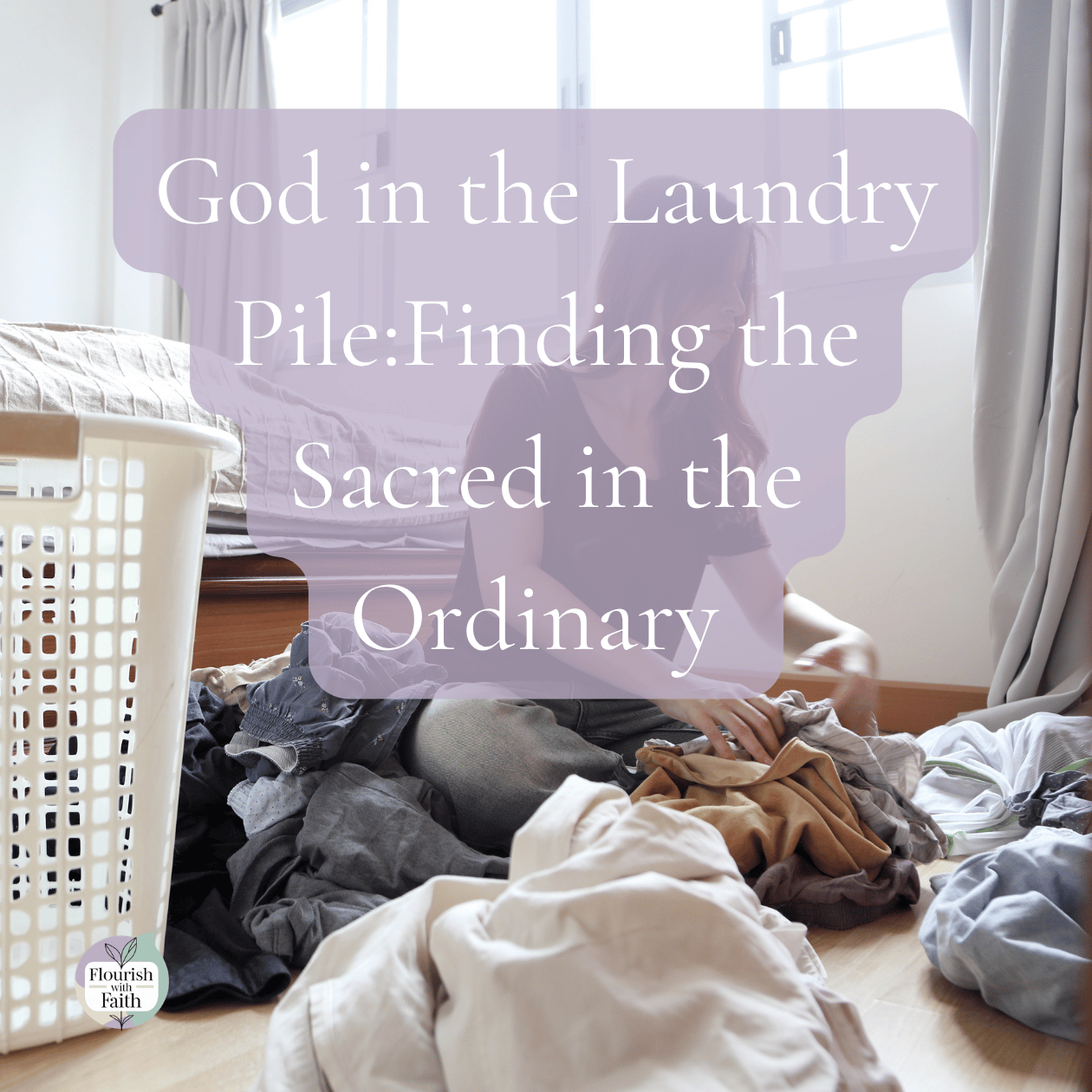
Finding God in the Laundry Pile
I’ll admit, I’m often guilty of expecting God to speak only through religious trappings. I used to think I could only connect with Him at a church event or a conference with a loud worship band and a polished speaker. Or I had to pray, using fancy language that I wouldn't use in a normal conversation.
While I still love those experiences, I’ve realised that as I’ve got older, God often does his best work in the slow, unremarkable moments. It’s about learning to see the Divine in the laundry pile. God is there when you’re sorting socks for the millionth time just as much as He is in a cathedral.
As Psalm 139:7 reminds us:
"Where can I go from your Spirit? Where can I flee from your presence? If I go up to the heavens, you are there; If I make my bed in the depths, you are there."
The Process is the Point
When we start to notice God's presence in our ordinary lives, we find we need the big events less to sustain our faith. In life and in carpentry, we don’t just arrive at a finished cabinet; the hours of sanding are part of the process.
When was the last time you noticed God in the ordinary, mundane moments of your day?
Journal Prompts
Grab a notebook and spend some time with these questions:
On the Value of the Ordinary
- If your hidden years (the mundane parts of your life) are just as important as your public ministry (your big achievements), how does that change the way you look at today’s to-do list?
- What is one task you currently view as "chore" or "admin" that could actually be a space for reflection?
On Rhythms and Boundaries
- When you feel the "itch" of boredom or the desire for a shortcut, what is that restlessness trying to tell you?
- How do you distinguish between a "mountain-top" high and the sustainable, daily energy you need to keep going?
On Noticing and Presence
- If God is present in the laundry pile, what are you currently stepping over or ignoring because it looks too ordinary?
- When you look back at the end of a hectic day, where can you spot the small moments of grace that you missed in the heat of the moment?
On the Process
- We often want the finished "cabinet" (the goal). What part of the "sanding" (the process) are you currently trying to skip, and what is the cost of skipping it?
- How can you turn a repetitive movement in your day (a commute, washing up, walking) into a meditative anchor?