
If your child struggles in a traditional classroom setting, it is easy to worry about their future. Standardized schooling often sends a quiet message: if you don’t fit into our box, you aren’t smart.
As Grammie Em reminds us, "Everyone is a genius, but if you judge a fish by its ability to climb a tree, it will spend its life feeling incapable". History proves that many celebrated thinkers, creators, and innovators either avoided formal schooling entirely or actively resisted its rigid, compulsory structure.
The Thinkers Who Learned Beyond the Classroom
Some of history's greatest minds did their best learning far away from institutional walls:
- Beatrix Potter was never sent to traditional school, reflecting later: "Thank goodness I was never sent to school; it would have rubbed off some of the originality."
- Margaret Mead credited her unconventional path to family wisdom: "My grandmother wanted me to have an education, so she kept me out of school."
- Thomas Edison struggled in the classroom, noting: "I remember that I was never able to get along at school. I was at the foot of the class."
- Albert Einstein observed that compulsory methods and forced memorization risked strangling genuine scientific inquiry.
- Mark Twain famously captured the divide between institutional instruction and true wisdom: "I have never let my schooling interfere with my education."
Understanding the VARK Method: How Does Your Child Learn Best?
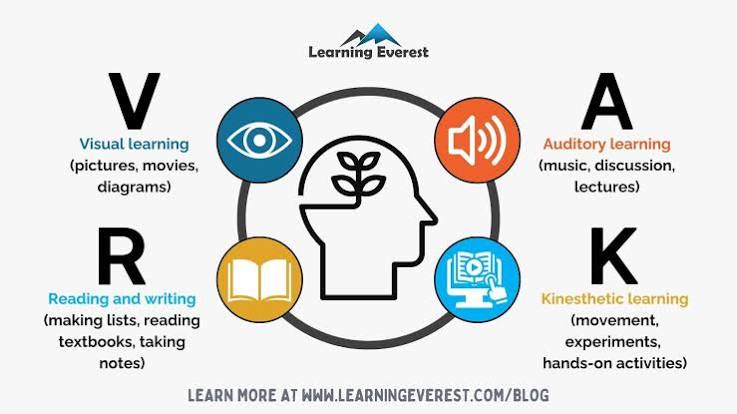
Part of the reason traditional classrooms fail so many bright minds is that they rely heavily on standardized instruction. To understand how children actually process information, educators turn to the VARK model, developed by Neil Fleming in 1987. VARK stands for four distinct sensory modalities:
- Visual (V): Learners who absorb information best through graphic symbols, charts, diagrams, flowcharts, patterns, and visual relationships.
- Aural / Auditory (A): Learners who thrive on spoken dialogue, lectures, podcasts, group discussions, and talking concepts out loud to process them.
- Read/Write (R): Learners who excel with text-based input and output—reading books, writing detailed notes, making lists, and reviewing manuals.
- Kinesthetic (K): Learners who process knowledge through physical movement, tactile engagement, real-world examples, demonstrations, and trial-and-error.
Note: Most children are multimodal, meaning they combine two or more of these styles depending on the situation.
How to Identify Your Child’s Learning Style
Discovering your child's natural sensory preference can instantly lower academic stress and make learning at home fun again. Here are three practical ways to identify their style:
Observe Their Natural Play and Problem-Solving: Pay attention to how your child naturally approaches a new toy, game, or task.
- Do they look for pictures, maps, or diagrams? (Visual)
- Do they ask you to explain it verbally or talk out loud to themselves while figuring it out? (Auditory)
- Do they look for written instructions or bulleted lists? (Read/Write)
- Do they immediately grab the pieces and try to assemble them by trial-and-error? (Kinesthetic)
Experiment with Multi-Sensory Teaching: When teaching a new concept, try presenting it four different ways over a few days—such as drawing a sketch, telling a story, reading a short passage, or building a physical model—and observe which approach produces the highest engagement and retention.
Use Diagnostic Scenario Tools: Age-appropriate assessment tools, such as the VARK Questionnaire for Younger People, present everyday scenarios to help families map out a child's sensory preferences.
How GWOTA Bridges the Gap for Every Learner
Traditional public schooling is overwhelmingly designed around the Read/Write modality (worksheets, textbooks, and standardized tests). When a child fights back tears at the kitchen table over a worksheet, it isn't because they aren't smart—it's because their brain processes the world differently.
Grammie’s Way of Teaching Academy (GWOTA) was built specifically to bridge the gap for visual, auditory, and kinesthetic learners. GWOTA's golden rule is simple: we fit the teaching to the child, not the child to the teaching.
- If a child needs to move, we move.
- If they need to touch, build, or take things apart, that is exactly how the lesson is taught.
- Through the GWOTA Manual, Week-Long Workshop Kits, and Weekend/Day Passes, learning trades worksheet frustration for real-world wonder, replacing screen time with hands-on discovery.