
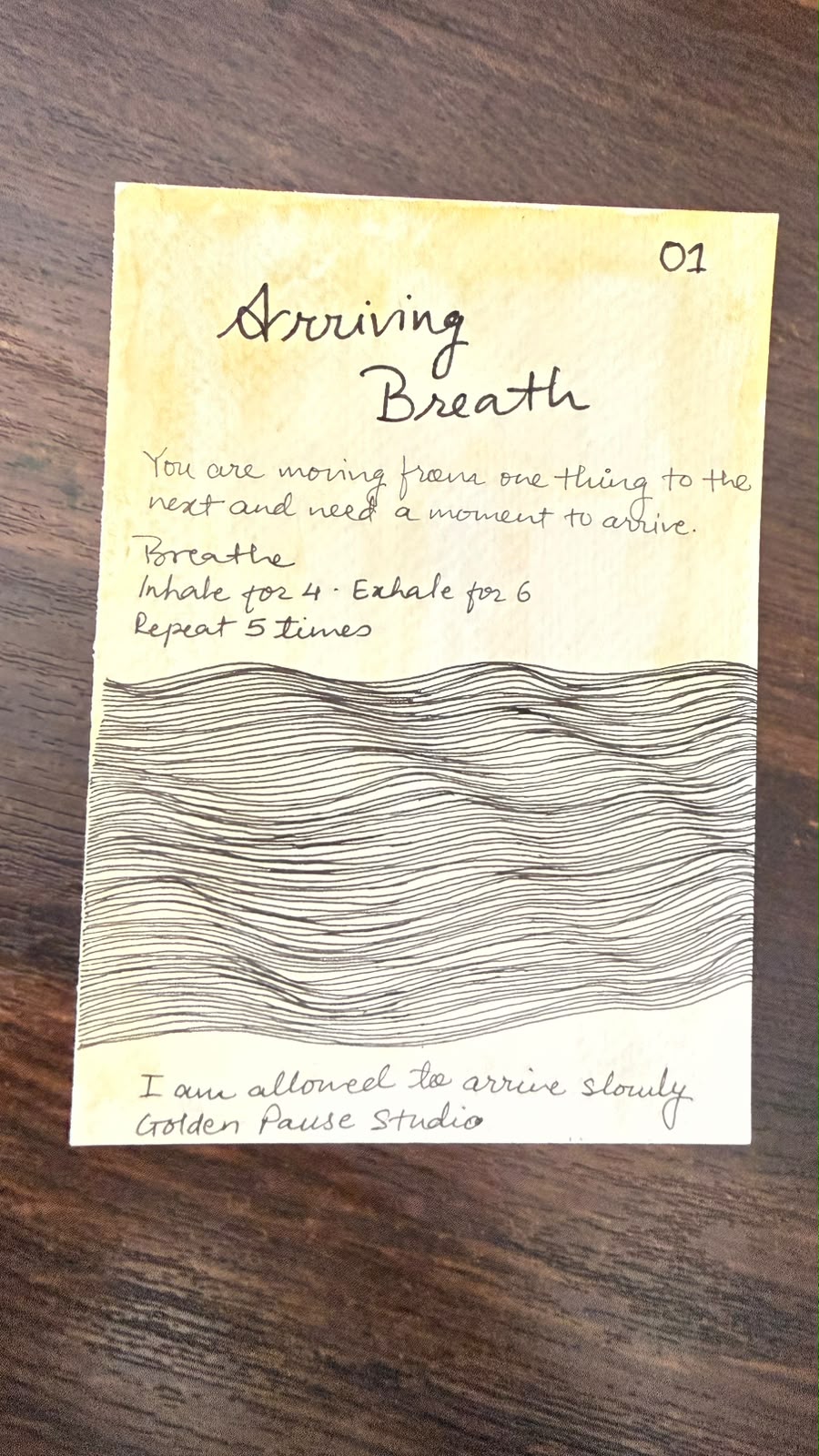
There's a particular kind of tired that doesn't come from doing too much. It comes from being too many things to too many people, all under one roof.
I live in a house with three generations. My parents, still holding on to the rules and rituals that raised them — rules that raised me too, once, and that I no longer fully believe in. And the generation after me, wanting something else entirely — more freedom, more explanation, more me, in ways I'm still learning how to give.
Somewhere between the two, I disappeared for a while.
Not dramatically. No one noticed, not even me, for a long time. It happens quietly — you stop finishing your own sentences because someone's already decided what you meant. You stop picking the small things — what you eat, what time you sleep, how you spend a free hour — because there's always a version of it that keeps the peace better than your version would. You start mistaking keeping everyone comfortable for being yourself.
I wasn't rebelling against my parents' traditions. I wasn't failing the newer generation's expectations either. I was just standing in the middle of two directions, trying to hold both, and slowly running out of room to hold mine.
The strange part is nobody in that house was doing anything wrong. My parents were loving me the only way they know — through rules, through continuity, through the shape of a life they trust because they've lived it. The younger ones were asking for something honest — just newer, less scripted. Everyone was right, in their own language. I just hadn't found my language yet.
That's the thing nobody tells you about being the middle generation: you're not just a bridge between two eras. You're expected to be the bridge — sturdy, quiet, load-bearing — while also, somehow, remembering you're a person and not a structure.
I started writing during this time, not to fix it, but because I needed somewhere to be fully, unapologetically my version. Not the daughter-version. Not the mother-version. Just — mine. At first it was messy. Half-sentences about being tired. Lists of things I missed about myself. Questions I didn't have answers to yet, like what do I actually want my evenings to look like, or when did I last make a decision nobody else weighed in on.
Slowly, those messy pages became something else. A pattern. A prompt. A page that asked: where in your day did you disappear today, and where did you show up? Not to blame anyone. Just to notice. Because noticing is the first thing you get to reclaim.
That's where this journal came from. Not from a place of having it figured out, but from needing a space that didn't ask me to be anyone's version of me — not the old rules, not the new expectations. Just a page that waited for whatever I actually had to say.
If you're in a house like mine — three generations, three sets of expectations, and somewhere in the middle, a version of you that's gone quiet — I don't have a fix. I don't think there is one. But I do think there's a difference between disappearing and simply not yet having a place to reappear.
Maybe this is that place.
