


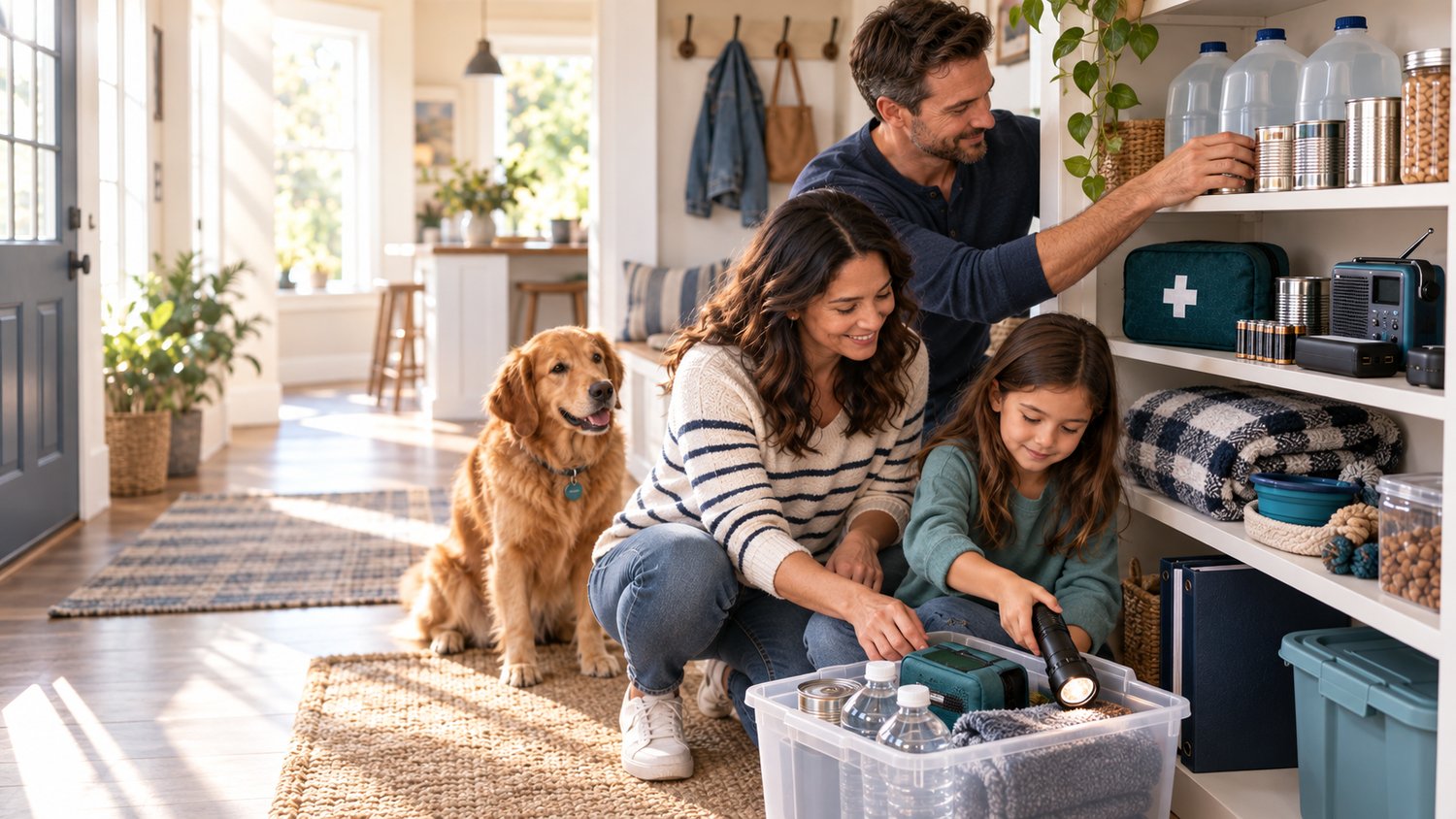
Practical preparedness is not about expecting the end of the world. It is about making sure an ordinary disruption does not become a household crisis.
The word prepper can bring some dramatic images to mind: underground bunkers, rooms packed with supplies, tactical equipment, or people preparing for society to collapse.
That is not what we mean by a practical prepper.
A practical prepper is an ordinary person who takes reasonable steps to protect the people, pets, home, and responsibilities that depend on them. They prepare for the emergencies most likely to affect everyday life—power outages, severe weather, water interruptions, unexpected evacuations, illness, job loss, and temporary shortages.
They are not driven by panic. They are guided by a plan.
What Is Practical Preparedness?
Practical preparedness is the habit of identifying realistic risks and addressing them a little at a time.
It begins with simple questions:
- What would we do if the power went out tonight?
- Could everyone in our household reach one another if phone service became unreliable?
- Where would we meet if we had to leave home quickly?
- Do we have enough water, food, medication, light, and battery power to manage for several days?
- Could someone else find our essential contacts, insurance information, and medical details if we could not?
- Have we included children, older adults, disabilities, medical needs, and pets in the plan?
Federal preparedness guidance encourages households to make a communication plan and assemble essential supplies before an emergency occurs. The CDC also recommends storing at least one gallon of water per person per day for three days, with additional water for medical needs, pets, pregnancy, illness, or hot climates.
Practical preparedness turns that broad advice into a system your household can actually maintain.
What a Practical Prepper Is—and Is Not
A practical prepper does not try to predict every possible disaster. No family has unlimited money, space, or time, and no collection of equipment can remove every risk.
Instead, practical preppers concentrate on preparations that are:
- Useful: The supplies and plans address realistic household problems.
- Affordable: Preparedness is built gradually without creating financial hardship.
- Organized: Family members can locate and use what has been prepared.
- Personal: The plan reflects the household's actual people, health needs, pets, location, and risks.
- Maintained: Food, water, batteries, documents, and contact information are reviewed periodically.
- Calm: Decisions are made before an emergency, when there is time to think clearly.
Practical preparedness is not hoarding. It is not fear-based shopping. It is not filling a cart because a frightening headline appeared online.
In fact, a prepared household may be less likely to panic-buy. When basic needs are already covered, the family can stay home, assess reliable information, and leave limited store inventory for neighbors with immediate needs.
Preparedness Is More Than a Kit
Emergency supplies matter, but ownership alone is not readiness. A flashlight with dead batteries, water nobody can locate, or a binder filled with outdated information will not perform as expected.
Practical preparedness rests on five connected parts:
1. A household plan
Everyone should understand what to do, where to go, and how to reconnect. Children should know the plan at an age-appropriate level, and adults should agree on responsibilities before stress enters the picture.
2. Essential supplies
Start with water, shelf-stable food your household already eats, necessary medications, first aid, flashlights, batteries, phone power, sanitation supplies, and a way to receive emergency information.
3. Accessible information
Keep important contacts, medication lists, insurance details, identification records, pet information, and household instructions together. Protect sensitive documents appropriately, but make sure a trusted household member can access what may be needed.
4. Useful skills
Knowing how to shut off household utilities, use a fire extinguisher, keep food safe during an outage, treat minor injuries, and recognize reliable official alerts can be more valuable than owning specialized gear.
5. Regular maintenance
Preparedness is not a one-time project. Twice a year, check expiration dates, recharge power banks, replace batteries, update contacts and medications, confirm clothing still fits, and talk through the plan again.
Start With the Most Likely Disruption
You do not need to prepare for everything today. Begin with one event that could realistically happen where you live.
For most households, a power outage is a sensible starting point. It can happen almost anywhere, and preparing for it builds capabilities that also help during storms, heat events, winter weather, and other disruptions.
This week, take five manageable steps:
- Put working flashlights where everyone can find them.
- Fully charge at least one portable power bank.
- Write down essential household and emergency contacts.
- Store an initial three-day supply of drinking water appropriate for your household.
- Hold a ten-minute family conversation about what to do if the power goes out.
That is practical preparedness. No bunker. No panic. No enormous purchase—just five useful improvements that make your home more resilient than it was last week.
Preparedness Is an Act of Care
At Home Heart & Harbor, we believe preparedness should feel less like fear and more like stewardship.
You prepare because someone may look to you when the lights go out. You organize important information because emergencies do not wait for the one person who knows where everything is kept. You include medications, mobility needs, pets, and comfort items because people are not interchangeable checklist entries.
A practical prepper does not live in constant expectation of disaster. A practical prepper makes reasonable preparations—and then gets back to living.
That is the heart of practical preparedness: calm planning, useful supplies, shared knowledge, and steady care for the people who call your house home.
Take Your First Step
Download the free Power Outage: First 30 Minutes guide from Home Heart & Harbor. It gives your household a clear, calm sequence to follow when the lights go out—so you can protect people, preserve food, reduce confusion, and make better decisions from the beginning.