


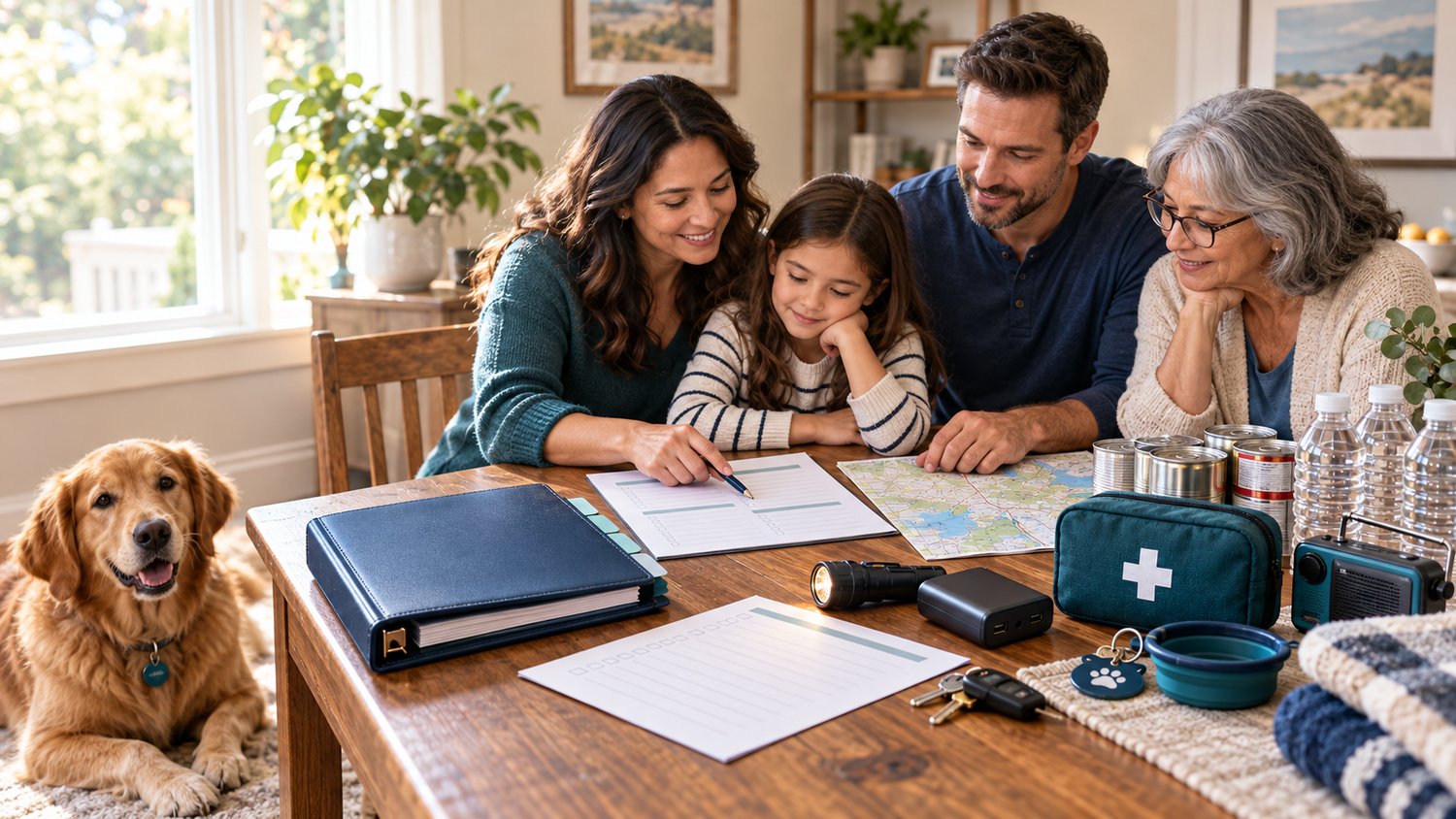
The word prepper still creates a certain picture in people’s minds.
Maybe it is an underground bunker. Shelves holding years of food. A remote cabin. Someone preparing for the end of civilization while everyone else goes about normal life.
That version exists. It also misses the point for most families.
In May 2026, Inc. reported that approximately 20 million Americans now identify as preppers, roughly twice the number reported in 2017. The article focused heavily on the growing bunker business, where shelters can cost anywhere from $25,000 to millions of dollars. But the most important part of the story was not what wealthy people are buying. It was how widely the basic idea of preparedness has spread. (Inc., May 10, 2026)
Reuters previously reported that disaster-resilience researcher Chris Ellis developed the 20-million estimate using household-resiliency data from FEMA. Reuters also found that the movement had become younger, more diverse, and less tied to any single political identity. (Reuters, March 9, 2024)
CNN returned to the same estimate in August 2026, describing preparedness as an increasingly mainstream response to how vulnerable many people feel. (CNN, August 24, 2026)
The exact number is still an estimate, not a national registry or official headcount. But the direction is clear: preparedness is no longer a fringe interest.
It is becoming part of responsible adult life.
What Is a Practical Prepper?
A Practical Prepper is not someone who lives in fear of everything that might happen.
A Practical Prepper is someone who looks honestly at what does happen and prepares accordingly.
Power goes out.
Water service is interrupted.
Storms block roads.
Cell networks become overloaded.
Prescriptions run low during a disruption.
Families become separated between work, school, and home.
Insurance information becomes difficult to find after property damage.
None of those situations requires the end of the world. They only require one ordinary system to stop working long enough to expose how dependent we have become on it.
Practical prepping means reducing that dependence where we reasonably can.
Preparedness Is Not Panic
Fear-driven prepping starts with the biggest catastrophe imaginable and works backward toward expensive purchases.
Practical prepping starts with the most likely disruption and asks a few simple questions:
- What would we need during the first 30 minutes?
- Could everyone in the household contact one another?
- Do we have enough water, food, medication, lighting, and phone power for several days?
- Do we know when to stay, shelter, or leave?
- Could another adult find our insurance, medical, pet, and utility information if we were unavailable?
- Who would check on an older neighbor or family member?
These are planning questions, not political questions. They apply in cities, suburbs, and rural communities. They apply to homeowners and renters. They apply to young families, retirees, people living alone, and households caring for pets or family members with medical needs.
The Government Already Tells Us to Prepare
Practical preparedness is not a rejection of emergency services. It supports them.
Ready.gov recommends that households make an emergency plan, stay informed, and assemble essential supplies. Its basic emergency-supply guidance includes water, nonperishable food, flashlights, batteries, first aid supplies, a radio, phone-charging options, cash, local maps, and household-specific medical items. The longstanding baseline is at least several days of self-sufficiency, including approximately one gallon of water per person per day. (Ready.gov Emergency Supply List)
FEMA’s 2024 National Household Survey found that 69 percent of respondents had assembled emergency supplies. Among those households, 88 percent believed their supplies would last more than three days—but only 34 percent said they could last more than two weeks. (FEMA 2024 National Household Survey)
That tells us something important: many Americans have started, but far fewer have built a complete household system.
Start With the Disruptions You Already Understand
You do not need to prepare for every possible event at once.
Begin with what is most likely where you live.
For many households, that means a power outage. A short outage can affect lighting, phone charging, refrigerated food, medical equipment, heating, cooling, well pumps, and the ability to receive information.
CDC guidance says a closed refrigerator can keep food safe for about four hours. A full unopened freezer can maintain safe temperatures for about 48 hours, while a half-full freezer can do so for about 24 hours. Those are simple facts, but they matter only if someone in the household knows the outage start time and keeps the doors closed. (CDC Food Safety During a Power Outage)
That is practical preparedness: knowing what matters, writing it down, and making the right action easier.
Build Capability Before You Buy Gear
Preparedness is becoming a large consumer market. The Inc. article described Americans spending billions on emergency preparation and a bunker industry projected to exceed $175 million by 2030.
But buying equipment is not the same as being prepared.
A household with an expensive generator but no safe operating plan can create a deadly carbon-monoxide hazard. A closet full of food does not solve a medication problem. A go-bag does not tell your child who is authorized to pick them up. A stack of bottled water does not replace an evacuation destination that accepts your pets.
The strongest first investments are usually modest:
- A written household communication plan.
- Two agreed-upon meeting locations.
- Several days of water, food, medications, lighting, and charging capacity.
- A plan for children, dependents, pets, and medical equipment.
- Accessible insurance, utility, vehicle, and emergency-contact information.
- A yearly date to review and update everything.
The gear should support the plan. The plan should not be an excuse to buy more gear.
Prepared Households Strengthen Communities
Practical prepping is not about sealing the door and ignoring everyone outside it.
It is about knowing your neighbors. Checking on people who may be vulnerable to heat, cold, or a medical interruption. Sharing accurate information instead of rumors. Avoiding preventable calls to emergency services. Being able to help without becoming another person who immediately needs help.
During a widespread emergency, professional responders must concentrate first on immediate threats to life. A household capable of handling its basic needs for several days gives the larger community more room to respond where the danger is greatest.
Self-reliance and community responsibility are not opposites. Done correctly, they reinforce each other.
Every American Should Be a Practical Prepper
Not because catastrophe is guaranteed.
Not because institutions never work.
Not because we should live suspicious, isolated, or afraid.
Every American should be a Practical Prepper because normal life depends on systems that sometimes fail—and a small amount of preparation can prevent a manageable disruption from becoming a household crisis.
You do not need a bunker.
You need a plan you can understand, supplies you can actually use, information you can find, and people you can count on.
Start with the next likely problem. Build from there. Review it once a year.
That is not doomsday thinking.
That is practical citizenship.
Start With the First 30 Minutes
Home Heart & Harbor created the free Power Outage: First 30 Minutes checklist to help households take the right first steps without panic or guesswork.
Download the free checklist and explore the Harbor Ready collection
Harbor Guides are independent planning tools from Home Heart & Harbor. During an actual emergency, follow local authorities and emergency services.